Updated on May 06, 2026
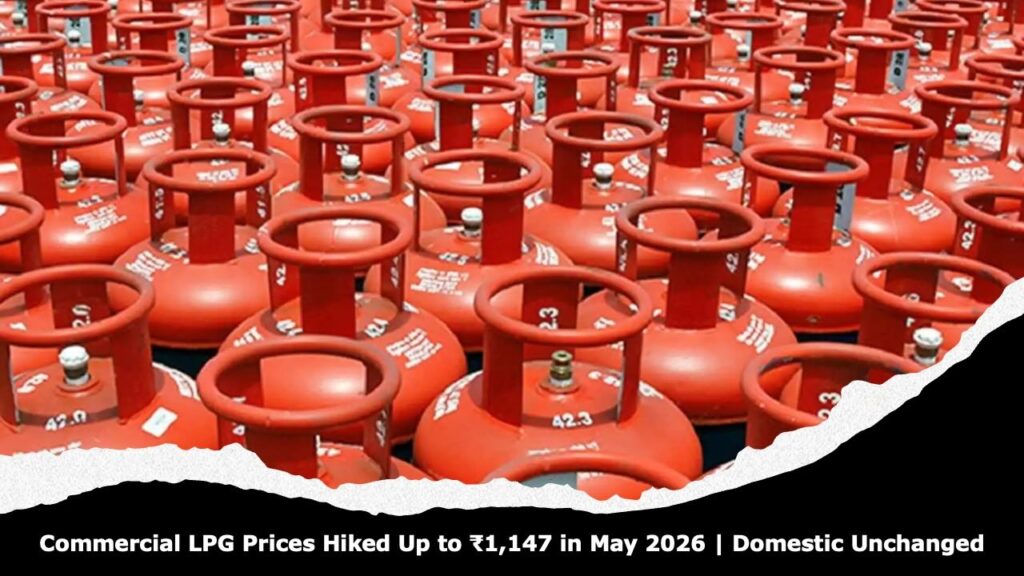
Commercial LPG Prices Surge by Up to ₹1,147 as OMCs Pass On Global Crude Shock; Domestic Cylinders Spared
New Delhi, May 1, 2026 – Restaurants, hotels, cloud kitchens, dhabas and small food businesses across India woke up to a significant cost shock today as oil marketing companies (OMCs) implemented a steep hike in commercial LPG prices.
The price of a 19-kg commercial (non-subsidised) LPG cylinder has been raised by ₹993 in Delhi to ₹3,071.50. Hikes are steeper in other metros: ₹1,015.50 in Mumbai (new price ₹3,046.50), ₹1,013 in Chennai (₹3,259.50) and a sharp ₹1,147 in Kolkata (₹3,355). This marks the biggest single-month jump in commercial LPG in recent memory and the fourth consecutive upward revision since March 1, 2026 (i.e., post Israel-U.S. attack on Iran).
The 5-kg Free Trade LPG (FTL) cylinder, widely used by smaller establishments, has also been increased by ₹261 per cylinder. In stark contrast, the subsidised 14.2-kg domestic LPG cylinder used by over 33 crore households remains completely unchanged for May 2026.
Indian Oil Corporation (IOC) confirmed the calibrated approach, stating that domestic LPG prices have been held steady while commercial and bulk segments (less than 1% of total LPG consumption) have been revised in line with international benchmarks. Petrol, diesel and domestic ATF prices have also been kept unchanged.
Why the Sharp Hike in Commercial LPG Prices Now?
The revision follows escalating geopolitical tensions in West Asia, particularly disruptions in the Strait of Hormuz the route for nearly 88% of India s LPG imports. Global crude prices have stayed elevated, forcing OMCs to align commercial rates with international benchmarks while continuing to shield household consumers through subsidies.
Cumulative Impact Since March 2026
The pressure on commercial users has been building steadily.
In Delhi, today s ₹993 increase follows April s ₹195.50 hike, the March 7 revision of ₹114.50 and the March 1 adjustment of ₹28, taking the total rise since March to ₹1,331 per 19-kg cylinder.
Mumbai recorded a ₹1,015.50 hike on May 1 after ₹196 in April, ₹114.50 on March 7 and ₹28.50 on March 1, accumulating to ₹1,354.50. Kolkata saw the steepest May jump at ₹1,147, building on ₹218 in April, ₹114.50 on March 7 and ₹31 on March 1 for a cumulative ₹1,510.50. Chennai s May 1 hike of ₹1,013 came after ₹203 in April, ₹114.50 on March 7 and ₹29.50 on March 1, reaching a total of ₹1,360 since March. Domestic LPG Prices: What Consumers Need to Know LPG prices in India are determined monthly by the three public-sector oil marketing companies Indian Oil Corporation (IOC), Bharat Petroleum (BPCL) and Hindustan Petroleum (HPCL). The pricing follows the Import Parity Price (IPP) mechanism, which factors in global LPG benchmark rates (mainly Saudi Aramco), ocean freight, insurance, customs duty, port charges and the rupee-dollar exchange rate. Commercial LPG and bulk LPG cylinders are fully market-linked with no government subsidy. Domestic 14.2-kg cylinders, however, continue to receive direct subsidy support to protect household budgets. As of May 1, 2026, the subsidised 14.2-kg domestic LPG cylinder price stands unchanged at ₹913 in Delhi, ₹912.50 in Mumbai, ₹939 in Kolkata and ₹928.50 in Chennai. Impact on Businesses and Consumers Restaurant and hotel associations have described the hike as a major cost pressure. A mid-sized eatery using 10 15 commercial cylinders monthly could see its fuel bill rise by ₹10,000 15,000 overnight. Industry experts anticipate partial pass-through to menu prices, which could affect food delivery platforms and dine-out budgets in the coming weeks. Small roadside dhabas and street-food vendors operating on thin margins are likely to be hit the hardest, with some already exploring costlier alternatives such as induction cookers or firewood. On the brighter side, the government and OMCs have maintained their consumer-first policy by keeping domestic LPG, petrol and diesel prices frozen, thereby protecting the vast majority of households and transport users from the global energy storm. Tattvam News Takeaway While the headline numbers appear alarming for commercial users, the clear distinction between subsidised domestic and market-linked commercial LPG reflects a deliberate policy to shield ordinary citizens. The real test ahead will be whether restaurants, caterers and small businesses can absorb or pass on these costs without affecting demand in an already inflation-sensitive economy. Monthly reviews will continue as global energy markets remain volatile due to the West Asia situation. (This is an independent, original report compiled and cross-verified from official OMC communications, industry sources and city-wise price data. Tattvam News Today TNT)