Walking the Dragon’s Back: Our Unforgettable Day at Mutianyu Great Wall, April 2011
Updated on May 07, 2026
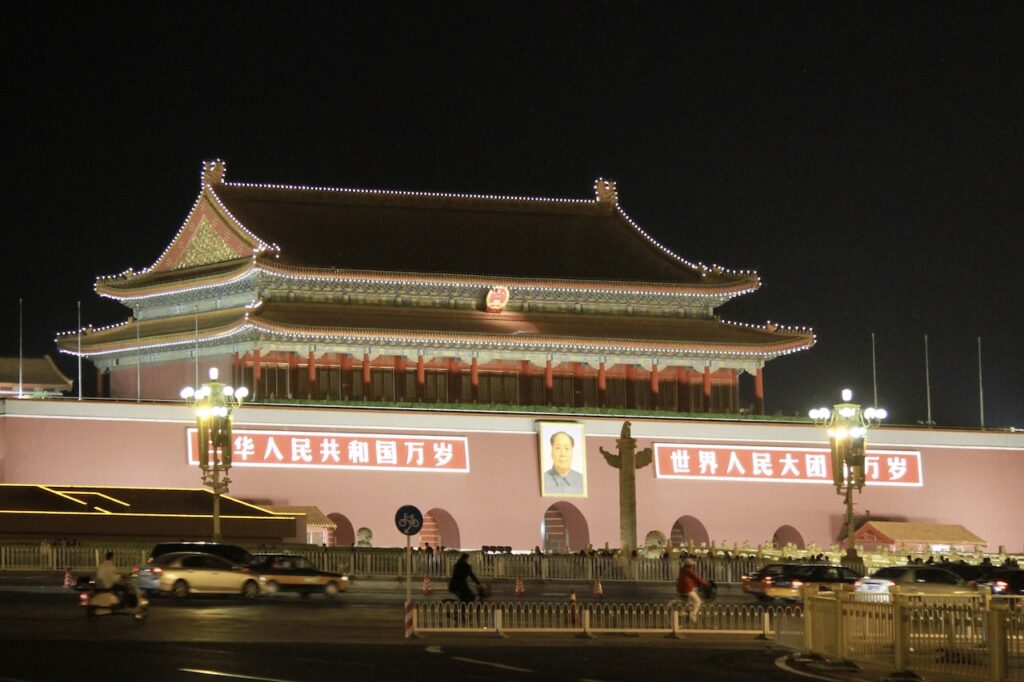
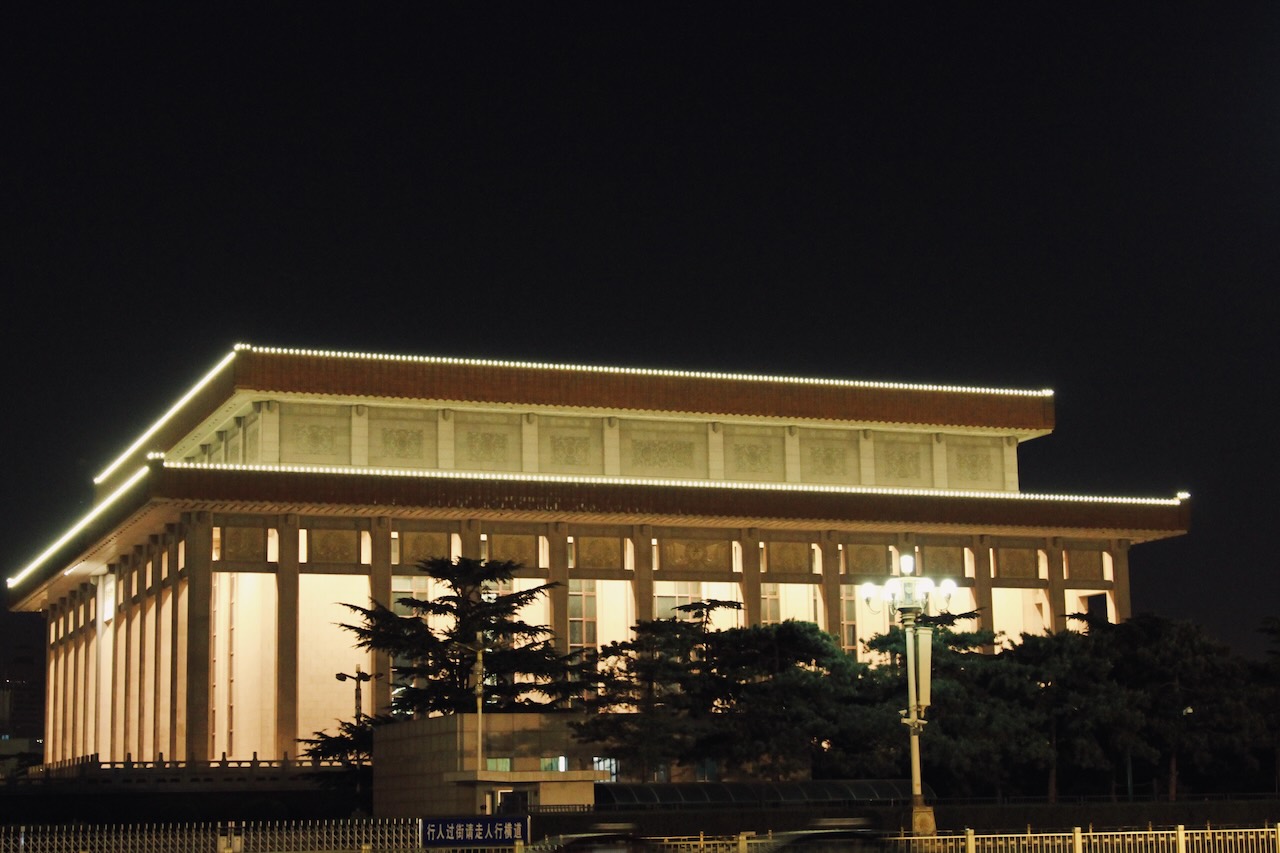
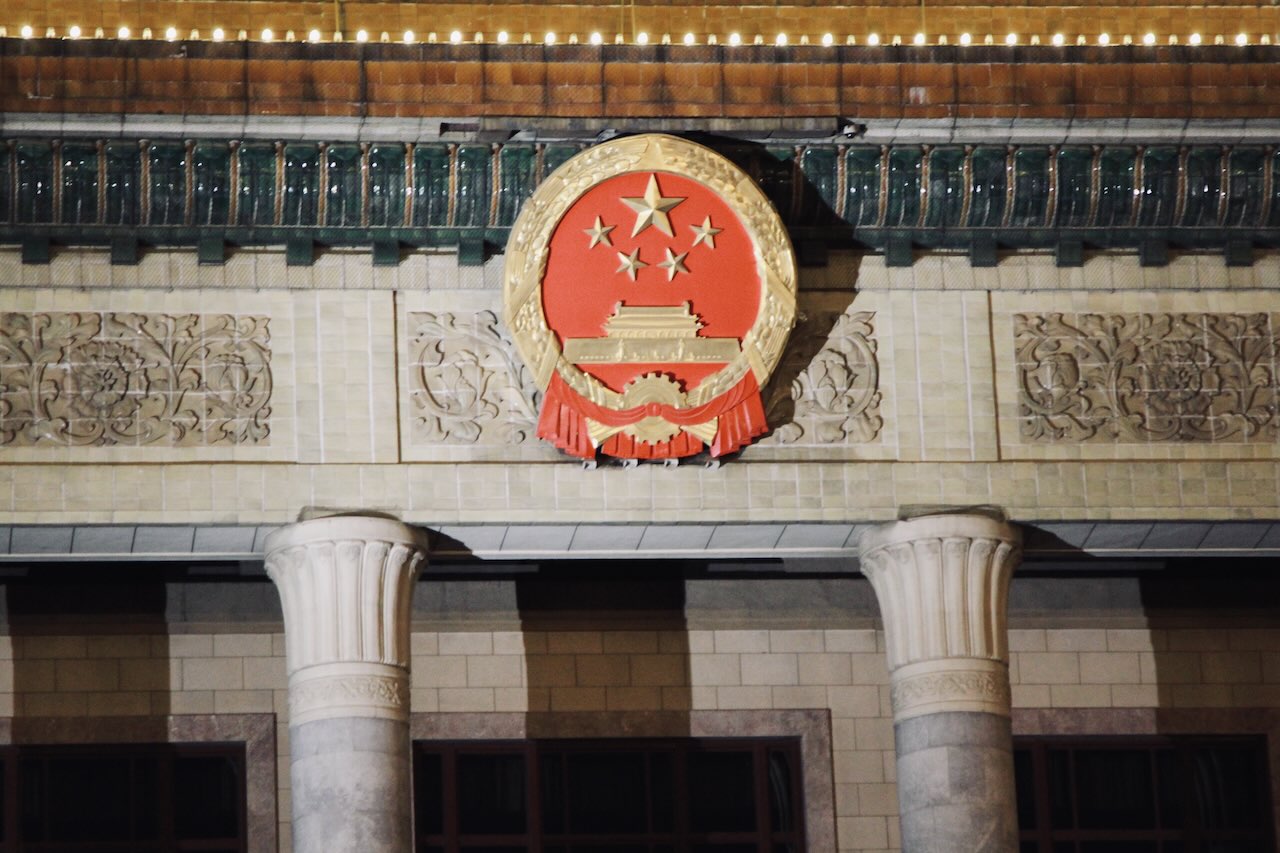
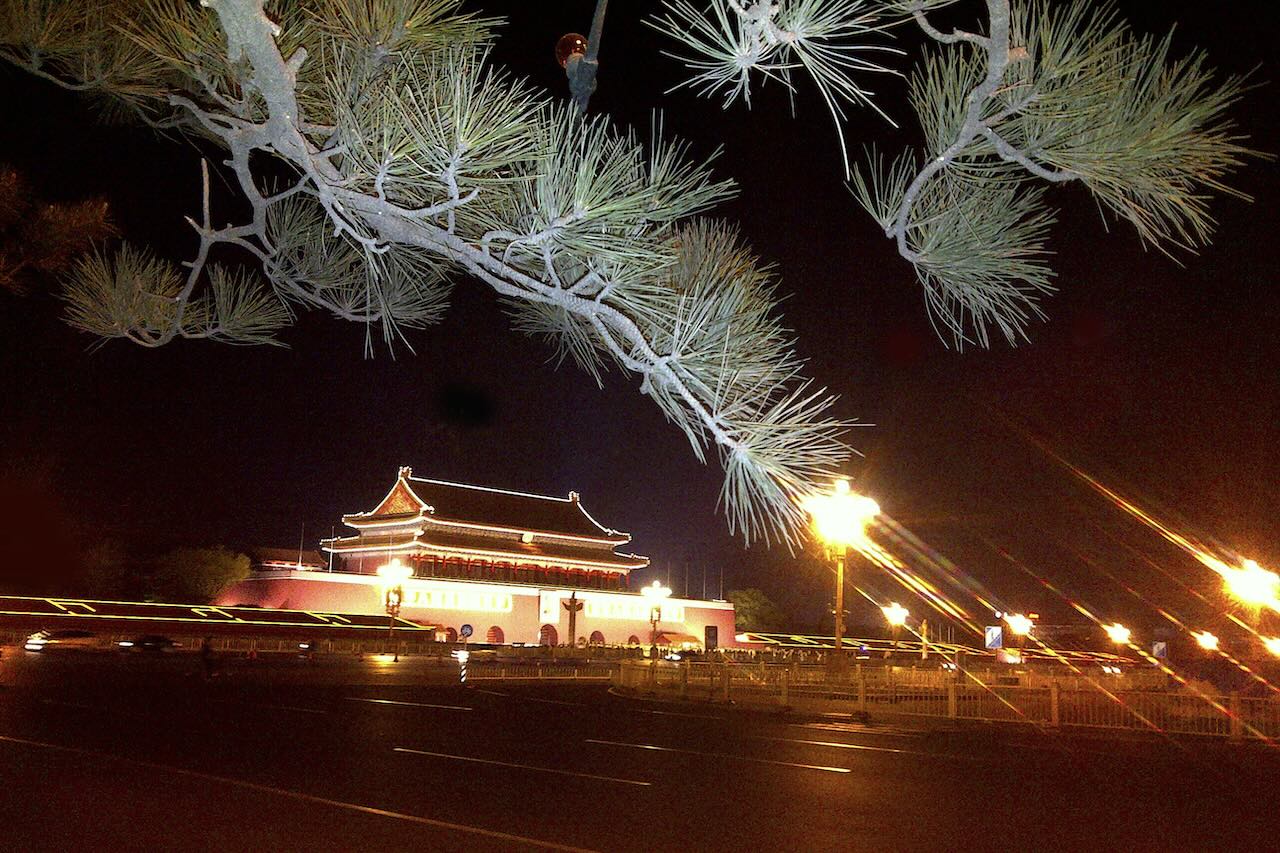
Fifteen years ago, in April 2011, four of us landed in Beijing for a demanding five-to-six-day business trip filled with intense meetings, long strategy sessions, and endless cups of green tea. Despite the packed schedule, we were determined not to leave China without seeing one of the world’s greatest wonders. We managed quick evening visits to Tiananmen Square (viewed from outside under floodlights and Mao’s giant portrait) and the neon-lit Wangfujing street market. But the undisputed highlight was the full day we dedicated to the Great Wall of China at the stunning Mutianyu Great Wall section.
Choosing the Right Section
There are many accessible sections of the Great Wall within 1 to 2.5 hours from downtown Beijing. Our local contacts recommended six top spots: Mutianyu Great Wall (1.6 hr), Jinshanling (≈2 hr), Simatai (2 hr), Huanghuacheng (1.8 hr), Badaling (1.5 hr), and Jiankou (1.7 hr). Other popular options include Juyongguan (1 hr) and Gubeikou (2 hr).
We chose Mutianyu Great Wall. While Badaling is the most famous and easiest to reach, it is also the most crowded and commercialised. Mutianyu offered the perfect balance — dramatic scenery, well-preserved Ming architecture, a high density of watchtowers, and far fewer tourists. We wanted an authentic experience, not a theme-park rush. We booked a private van through our hotel and set off early.
The Great Wall: History & Purpose
The Great Wall is not one wall but a vast network of fortifications stretching over 21,196 km. Its construction spanned more than 2,300 years — from around the 7th century BC (as early as 680 BC) through the Ming Dynasty (1368–1644 AD).
Early walls were built by warring states for defence. Emperor Qin Shi Huang unified and expanded them around 221 BC. However, the impressive brick-and-stone sections visitors walk today were largely built or rebuilt during the Ming Dynasty to protect Beijing from Mongol invasions. The Wall also controlled trade, regulated migration, and served as a communication system using beacon towers.
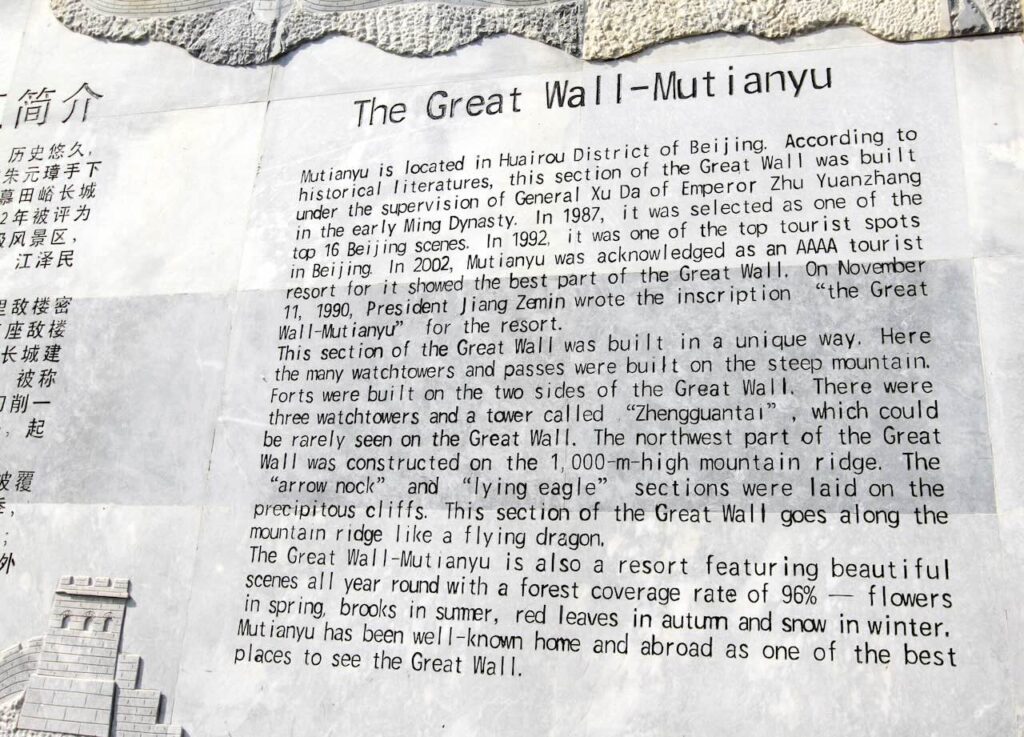
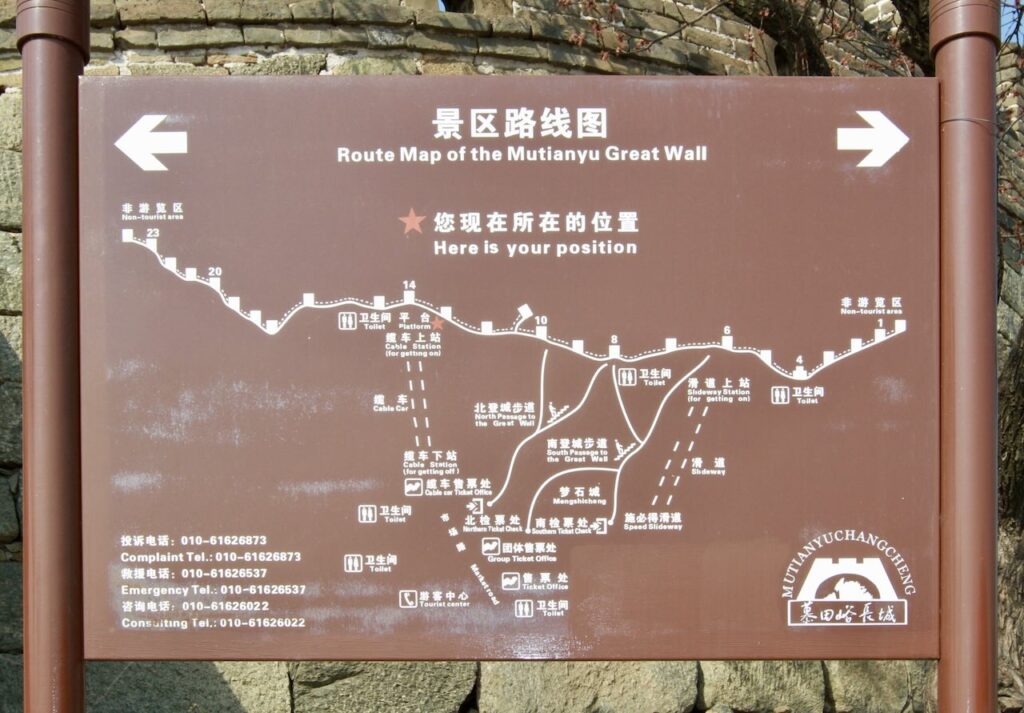
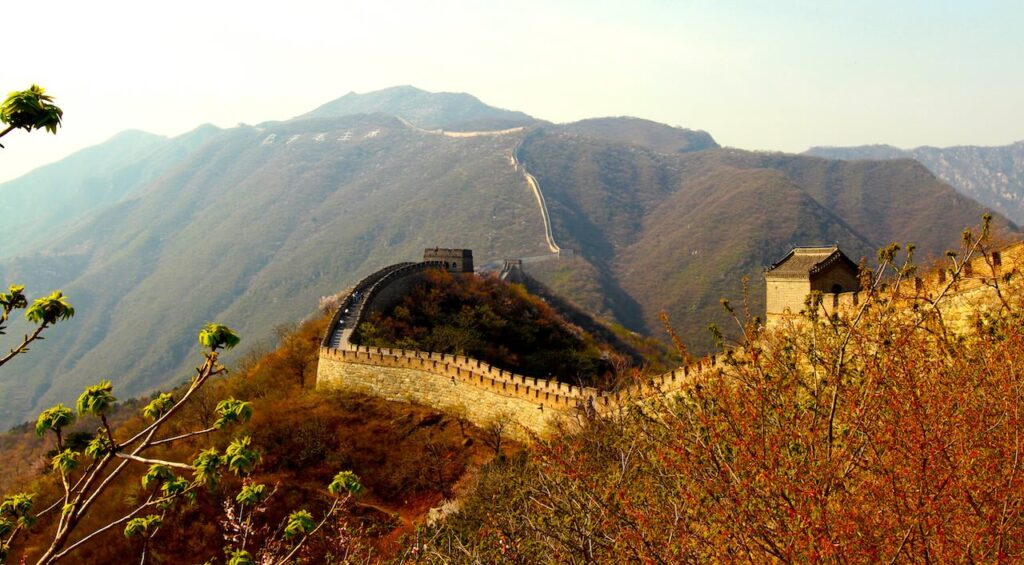
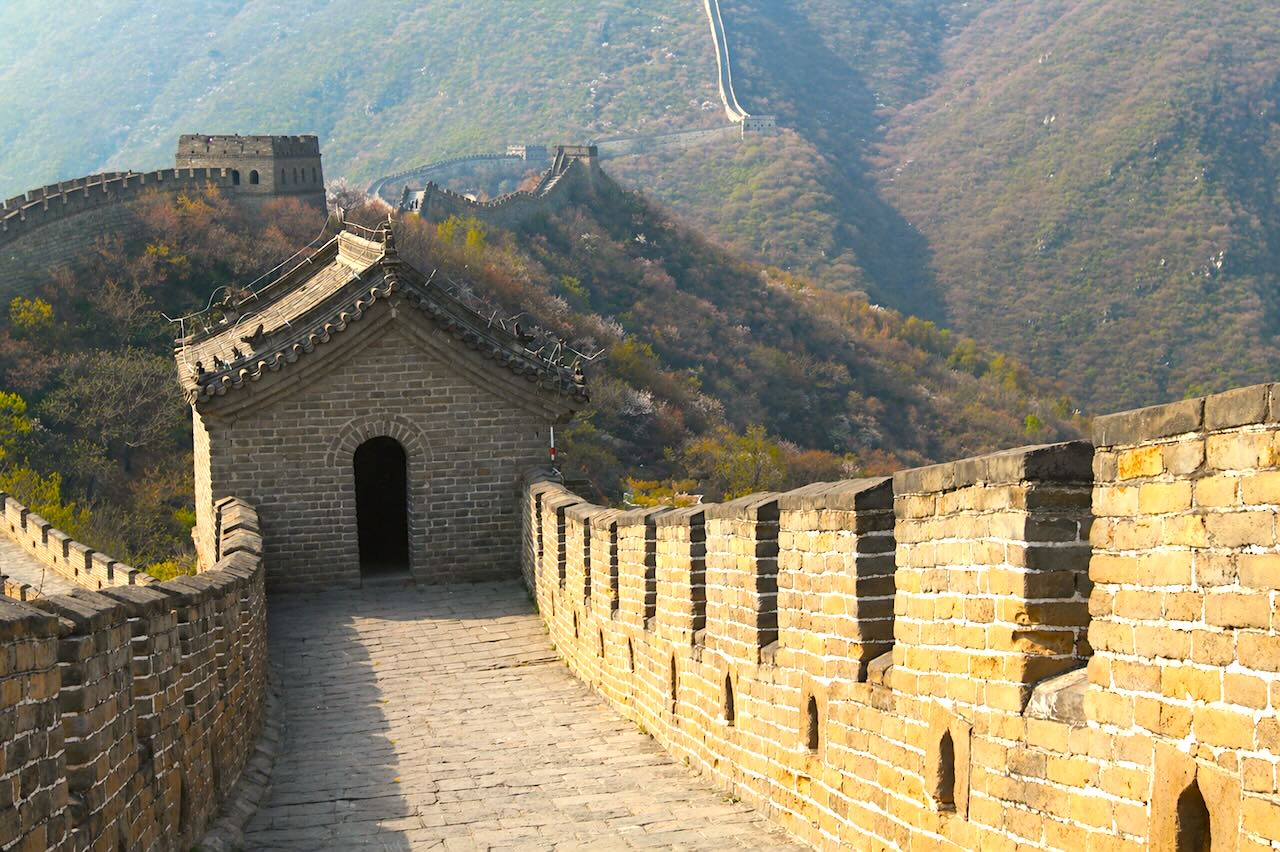
Mutianyu beautifully represents this legacy. Its foundations date to the Northern Qi Dynasty (550–577 AD). Major Ming reconstruction began in 1368 under General Xu Da and was strengthened in 1569 by generals Qi Jiguang and Tan Lun. The section stretches 5.4 km with 23 watchtowers, features rare double-sided battlements, and connects key strategic passes. Nestled in the Jundu Mountains of Huairou District (70–75 km northeast of Beijing), it enjoys 98% vegetation coverage, making it one of the greenest and most scenic stretches near the capital.
Our Day at Mutianyu Great Wall: Cable Car & the Adventure
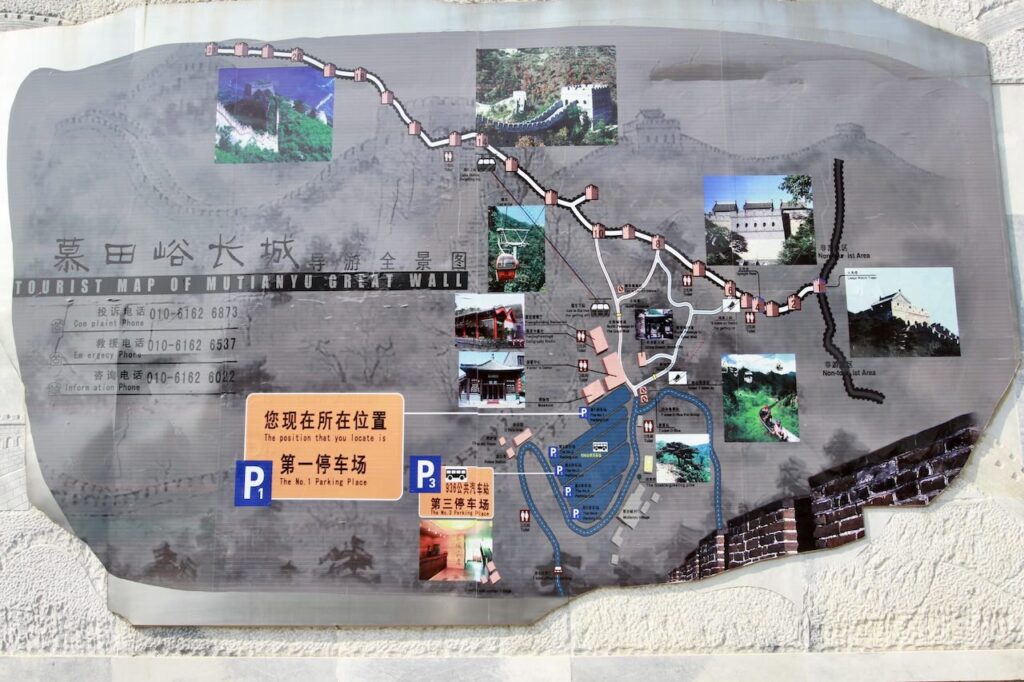
We reached Mutianyu Great Wall mid-morning after a smooth 1.5-hour drive. The base area was well-organised with parking, ticket counters, and shops. Mid-April weather in Beijing was mild (daytime 16–20°C), but it felt noticeably cooler at Mutianyu — around 12–18°C with a sharp mountain wind. We layered up with wind-cheater jackets, scarves, and sturdy walking shoes.
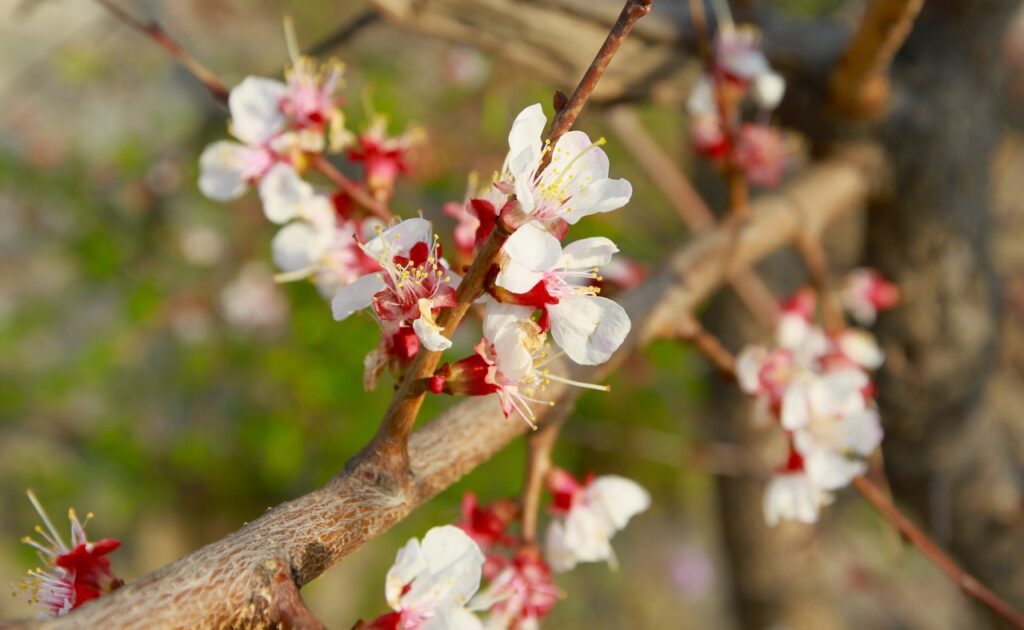
Cherry blossoms and early apricot blooms were in full glory. Pink and white petals swirled across the hillsides and even along the Wall — creating a magical contrast with the ancient grey stones.
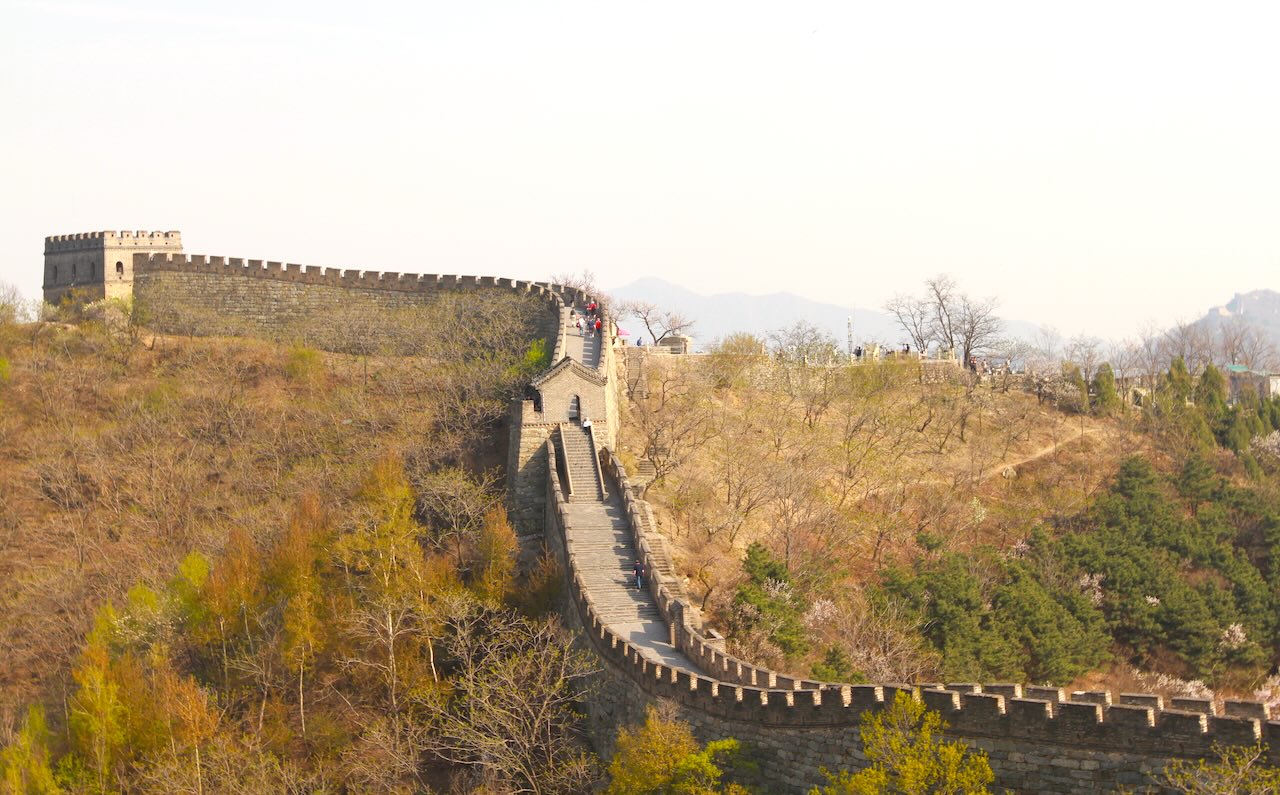
Instead of hiking up from the base, we took the round-trip cable car (≈ ¥140 in 2011; similar today). The smooth gondola ride offered our first breathtaking view of the Wall snaking like a dragon across the ridges. It dropped us near Watchtower 14, right beside the famous Hero Stone viewpoint.
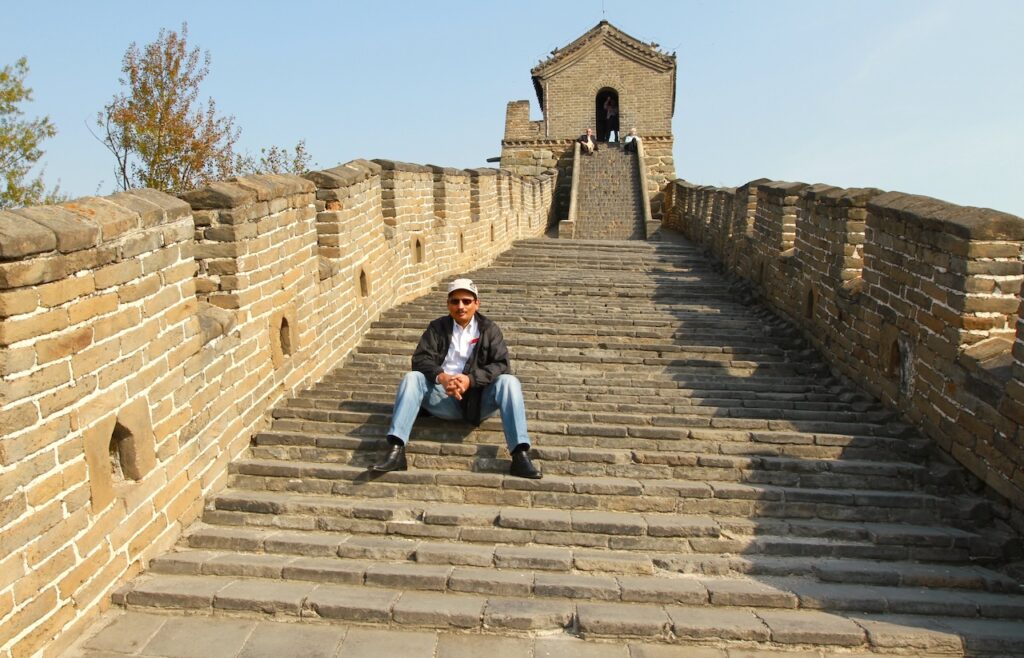
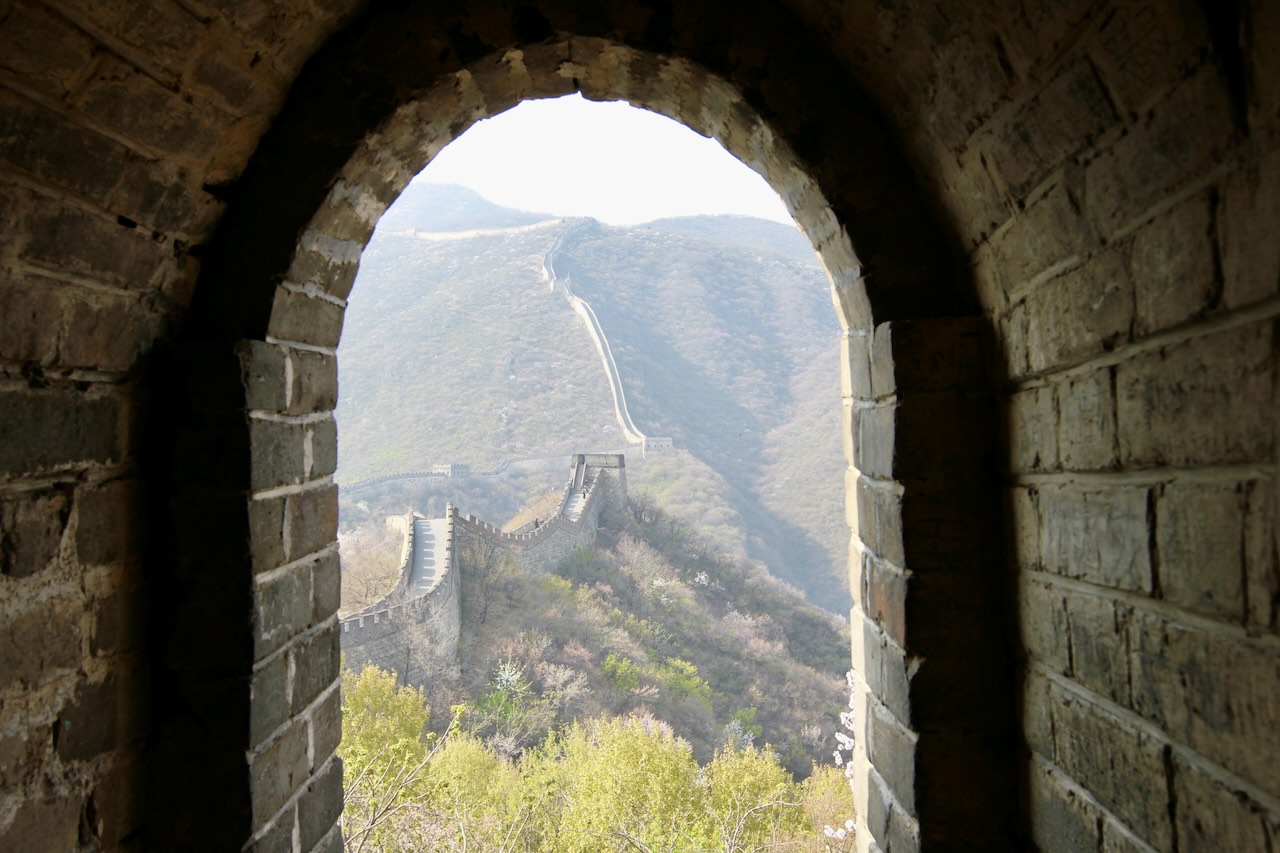
Stepping onto the Wall was surreal. The wide stone path allowed comfortable walking, yet the steep ups and downs, narrow passages, and ancient watchtowers made it feel like a real adventure. We walked in both directions for several hours, exploring multiple towers, catching our breath at panoramic viewpoints, and soaking in the sweeping views of forested valleys. The wind howled, petals danced around us, and the sheer scale of the engineering left us speechless. It felt like a genuine hike through living history.
Things Not to Miss at Mutianyu Great Wall
- Cable car ride up for dramatic arrival
- Watchtower 14 & Hero Stone for classic photos
- Walking towards Watchtowers 6–20 (densest tower section)
- The thrilling toboggan slide descent (highly recommended!)
- Spring blossoms and mountain scenery
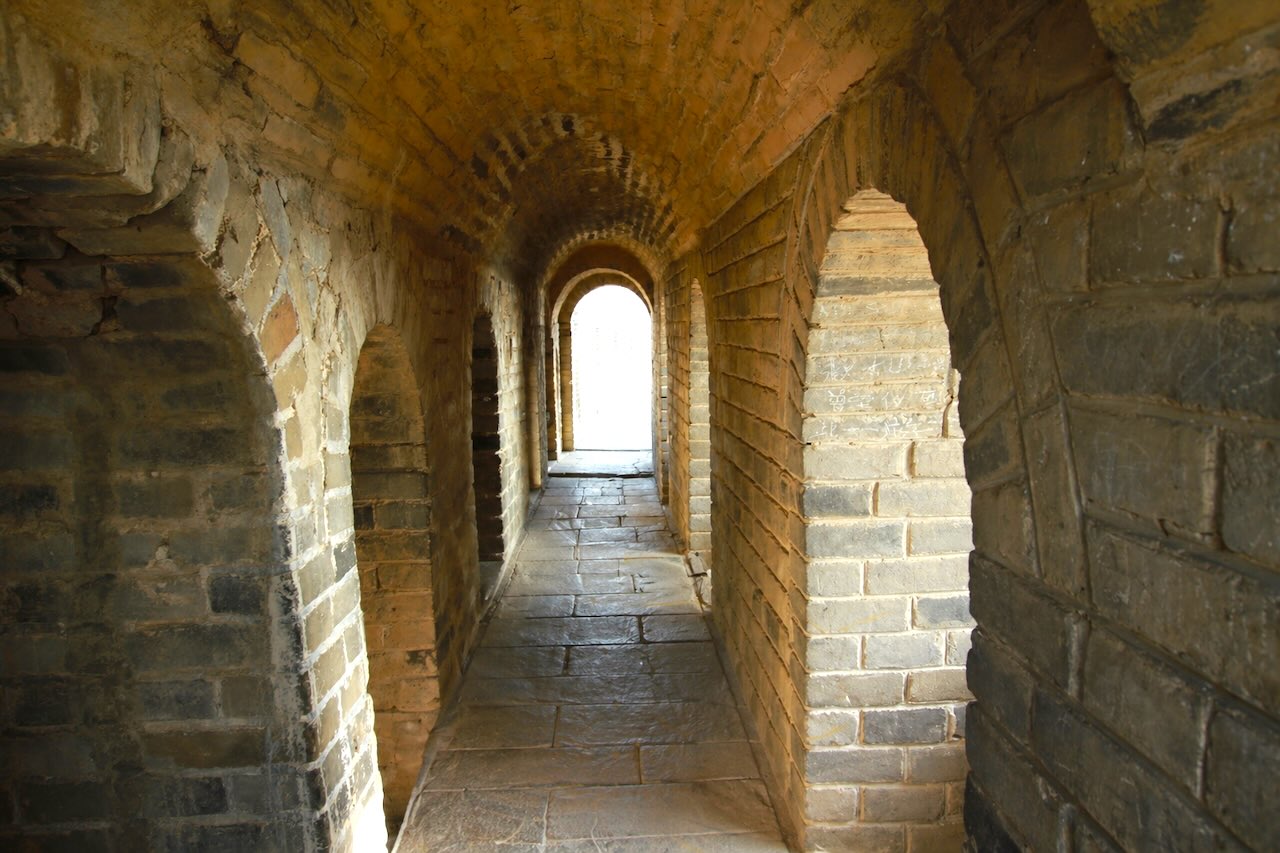
- Quiet moments inside a watchtower
Practical Tips for Visiting Mutianyu
- Getting There: Private car/tour is easiest. Public options include Bus 916 + shuttle or Didi.
- Tickets (2026): Entrance ¥40–60; cable car/toboggan extra. Open ~7:30 AM–5:30/6:00 PM.
- Best Time: April–May for blossoms or September–October for clear skies. Visit on weekdays.
- What to Carry: Comfortable grippy shoes, layers, water, sunscreen.
Other Beijing Highlights We Missed
Our tight schedule meant we couldn’t visit: Forbidden City, Summer Palace, Temple of Heaven, traditional Hutongs, Lama Temple, 798 Art District, and Jingshan Park. These remain top recommendations for a future trip.
Visa, Stay & Food Tips for Indian Travellers
Visa: Indian passport holders need a Tourist (L) Visa in advance through the Chinese Visa Application Service Centre. Single-entry costs approx. ₹4,000–₹5,500. Apply 4–6 weeks ahead with standard documents (passport, itinerary, financial proof, etc.).
Hotels:
- 4-Star (₹8,000–₹15,000/night): Park Plaza Wangfujing, Novotel Peace, Sun world Hotel.
- 5-Star (₹15,000–₹35,000+/night): The Peninsula, Four Seasons, Waldorf Astoria, Grand Hyatt.
Food: Don’t miss Peking Duck (Quanjude or Siji Minfu), hotpot, dumplings, and Jianbing. Wangfujing Snack Street is fun. Most good hotels offer Indian/vegetarian options.
Final Travel Tips
- Download WeChat and Alipay
- Use Didi for local transport
- Carry layers for the Wall (it’s always windier)
- Get travel insurance
- Respect local customs and carry your passport
Final Reflections
That crisp April day at Mutianyu Great Wall remains one of our most cherished travel memories. Between back-to-back meetings, we stood on a 2,300-year-old engineering marvel, surrounded by blooming cherry blossoms and endless mountain views. It reminded us why we travel — to create stories that last a lifetime.
If you’re planning a trip to Beijing, make Mutianyu your Great Wall choice. You won’t regret it.
Have you visited the Great Wall? Which section did you choose? Share your experiences in the comments!
Safe travels!