Ultimate Travel Guide to Ladakh 2026: Our Family’s Breathtaking Journey
Part 4: Acute Mountain Sickness (AMS) | What We Feared, What We Experienced, and How We Stayed Safe
Updated on May 14, 2026
Planning a trip to Ladakh brings tremendous excitement, but for many travellers, especially families, it also brings a quiet anxiety about Acute Mountain Sickness (AMS). We were no exception. Stories of people being rushed down from high passes with oxygen masks, families cutting trips short, and even fit travellers battling severe headaches and nausea at Leh’s 3,500 m altitude made us seriously consider cancelling our dream journey. As a family with kids and middle-aged members who had never been above 2,500 m before, AMS was our biggest concern.
In Part 1, we planned everything carefully, including gradual acclimatisation and the overnight halt in Kargil. Yet the fear lingered until we actually experienced the thin air. This Travel Guide to Ladakh Part 4 is our honest, detailed account combining our real family experience with clear technical and medical explanations so you can prepare properly and truly enjoy Ladakh instead of just surviving it.
Series Navigation
- Part 1: Complete Planning Guide
- Part 2: Srinagar to Leh Highway
- Part 3: Exploring Leh, Nubra and Pangong
- Part 4: Acute Mountain Sickness (AMS) Guide (You are here)
- Part 5: Ladakh Buddhist Heritage
Our Personal AMS Story: The Anxiety, the Near-Miss, and How We Stayed Safe
Even before we left home, AMS dominated our family discussions. We worried especially about the children and the middle-aged members. On Day 1 after arriving in Leh, the first mild symptoms appeared. One middle-aged member woke up with a light headache and slight nausea after the long highway drive. The kids complained of tiredness and loss of appetite. We were anxious. Was this the start of something worse?
We didn’t panic. Instead, we followed our pre-planned routine strictly. Within 24-36 hours the symptoms eased, and by Day 3 everyone felt strong enough to begin gentle sightseeing. There was no severe AMS in our family, but that near-miss on the first morning taught us how quickly altitude can affect even careful travellers. The lesson was clear: preparation and patience are everything.
Our Daily Acclimatisation Routine in Leh – What Actually Worked for Us
We treated the first 48-72 hours in Leh as non-negotiable acclimatisation days. Here is exactly what we did every day:
Morning: Wake up slowly, drink 500 ml of water with a pinch of salt and sugar before getting out of bed. Light breakfast. No heavy or oily food.
Daytime: Complete rest or very short, flat walks only. We limited ourselves to the hotel garden or a slow stroll in the Leh market on Day 2. No monasteries, no passes, no photography outings.
Hydration: Minimum 4-5 litres of water per person per day. We carried electrolyte sachets and sipped constantly.
Meals: Light, high-carbohydrate food: khichdi, thukpa, fresh fruits, and plenty of ginger-lemon tea. No alcohol, no caffeine-heavy drinks, no cold beverages.
Evening: Early dinner by 7:30 pm. We used an oxygen concentrator (rented from the hotel) for 30-45 minutes if anyone felt breathless. We monitored oxygen saturation with a small pulse oximeter (kept readings above 88-90%).
Sleep: Head slightly elevated with an extra pillow. We avoided sleeping pills.
This simple routine, combined with the overnight halt in Kargil from Part 2, made the difference. By the end of Day 2, the mild headache and nausea had disappeared completely, and we were ready for the higher passes in Nubra and Pangong.
Understanding Acute Mountain Sickness in Ladakh
Ladakh is not just another hill station like Shimla, Manali, or Srinagar. It is a wonderful yet challenging destination that demands respect for its unique high-altitude terrain.
Imagine planning a dream vacation to the Himalayas with anticipation of stunning views and thrilling adventures, only to be struck down by a throbbing headache, nausea, and fatigue within hours of arriving in Leh. This scenario is all too common for travellers who overlook the importance of acclimatisation, turning an eagerly awaited journey into an uncomfortable ordeal.
Acute Mountain Sickness (AMS) is a real and prevalent concern in Ladakh. It can affect anyone, regardless of health, stamina, fitness, or lifestyle. While severe cases can be life-threatening, even mild symptoms can disrupt travel plans, diminish the joy of exploration, and force an early descent. Therefore, listen to experts rather than those who dismiss AMS because they were fortunate enough to avoid it. Plan your journey to ensure proper acclimatisation. Once acclimatised, the risk of AMS reduces significantly, allowing you to fully enjoy Ladakh’s beauty and adventure.
What is Acute Mountain Sickness?
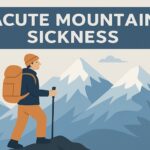
Acute Mountain Sickness (AMS), or altitude sickness, occurs when the body struggles to adapt to changes in atmospheric conditions at high altitudes, typically above approximately 2,500 meters (8,200 feet). Initially, mild symptoms appear, and if left unattended, severe life-threatening symptoms may develop quickly.
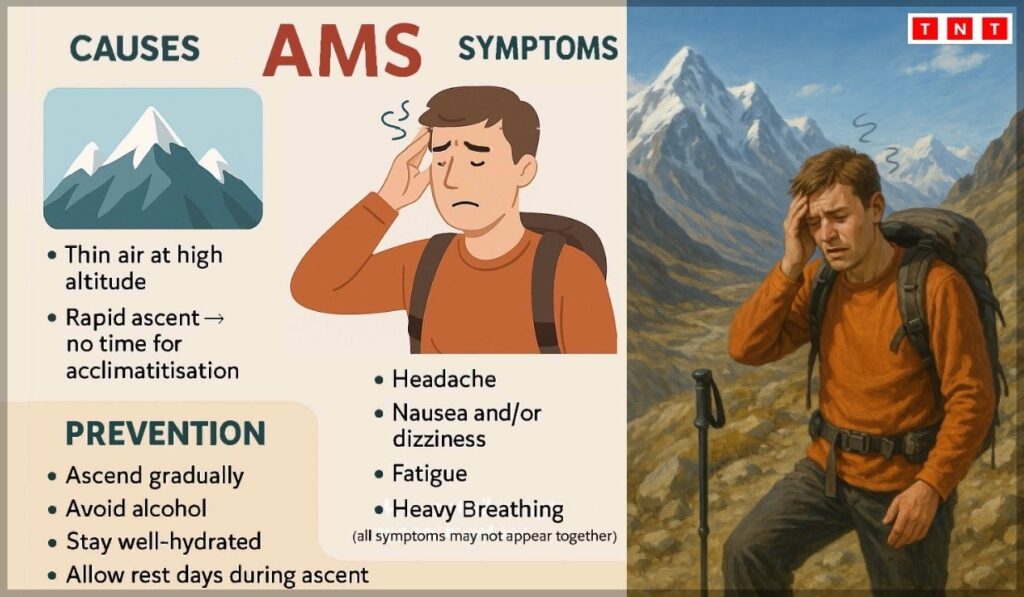
Mild Symptoms include headache, nausea, vomiting, fatigue, weakness, dizziness, insomnia, disturbed sleep, loss of appetite, and shortness of breath on exertion. These symptoms typically appear within 6-12 hours of gaining altitude and worsen if ignored.
Severe Symptoms (HAPE/HACE) appear if mild symptoms are left untreated, and this kind of AMS can rapidly progress to life-threatening conditions:
- HAPE (High-Altitude Pulmonary Edema): Breathlessness, frothy sputum, chest tightness, and bluish lips.
- HACE (High-Altitude Cerebral Edema): Severe headache, confusion, hallucinations, loss of coordination, and coma.
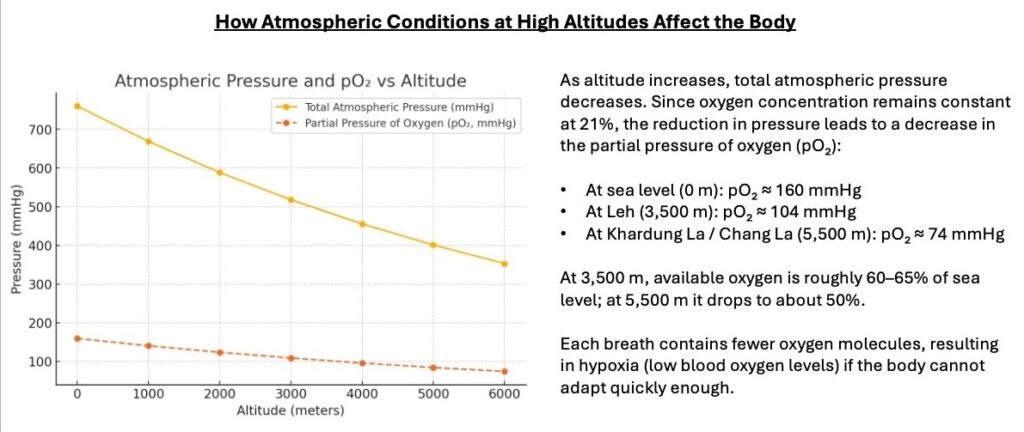
How Our Body Acclimatises at High Altitudes
Acclimatisation is the body’s gradual adaptation to reduced oxygen levels. The physiological adjustments occur in stages:
Immediate Response (Minutes to Hours)
- Increased ventilation (hyperventilation) to draw in more oxygen.
- Respiratory alkalosis (blood becomes more alkaline due to CO₂ loss); kidneys gradually excrete bicarbonate to restore balance.
- Increased heart rate to circulate oxygen faster.
Early Acclimatisation (Hours to Days)
- Kidneys release erythropoietin (EPO), stimulating red blood cell production.
- Increased 2,3-BPG in red blood cells helps release oxygen more easily to tissues. Long-Term Acclimatisation (Days to Weeks)
- Increased capillary density for better oxygen delivery.
- Enhanced mitochondrial efficiency.
- Gradual normalisation of breathing and heart rate.
Why 48 Hours in Leh Is Essential
For most travellers, a rest period of 24-48 hours at Leh (3,500 m) allows the body to make initial adjustments. If you travelled by road and stayed overnight in Kargil (2,676 m), 24 hours may sometimes suffice, but we strongly recommend 48 hours in Leh before proceeding to higher altitudes like Khardung La (5,359 m). Some people may need 72 hours or more depending on age, fitness, and pre-existing conditions.
Recommended 48-Hour Acclimatisation Approach
- First 24 hours: Complete rest, minimal activity, good hydration, light meals, Diamox if prescribed.
- Next 24 hours: Light activities (gentle walks in Leh town), continue hydration and diet.
- After 48 hours: If feeling well, short trips to lower areas are possible; delay high passes until Day 3 or later.
Altitude Gain After Leh
After proper acclimatisation in Leh, most people can safely proceed to Nubra Valley (3,000-3,500 m) or Pangong Lake (4,350 m). For even higher destinations like Tso Moriri (4,575 m), a 72-hour rest in Leh is advisable. Always follow the rule: gain no more than 300-500 m in sleeping altitude per day.
AMS Symptoms at Varying Altitudes
- 2,500-3,000 m (e.g., Kargil): Mild fatigue or dizziness possible.
- 3,000-3,500 m (Lamayuru, Thiksey, Nubra Valley, Leh Town): Mild AMS symptoms commonly appear.
- 3,500-4,500 m (Pangong Tso, Tso Moriri): Moderate symptoms more common; careful monitoring needed.
- Above 4,500 m (Khardung La, Chang La): High risk of AMS; potential for HAPE/HACE without proper acclimatisation.
- Above 5,500 m – Death Zone (Umling La): Severe challenges even for acclimatised individuals; sustained stay not recommended.
Common Misconceptions About AMS
- Being young or physically fit guarantees immunity – False.
- Previous high-altitude experience provides lasting protection – False.
- A short descent is enough – False. A significant drop is usually required.
- Hydration alone prevents AMS It helps, but over-hydration can be dangerous.
- Medications are always necessary Proper acclimatisation remains the best prevention.
- Oxygen cures AMS It provides temporary relief only.
- AMS affects only trekkers Tourists and leisure travellers are equally vulnerable.
Prevention and Precautions
Basics
According to the Institute for Altitude Medicine, proper acclimatisation can reduce AMS incidence by up to 80%. The golden rule: After 3,000 m, gain no more than 300-500 m per day in sleeping altitude, and take an extra rest day after every 900-1,000 m gain. Climb high, sleep low is highly effective.
Pre-Trip Preparation
- Plan gradual ascent.
- Allow buffer days.
- Consult a doctor if you have any health issues.
- Carry portable BP monitor and pulse oximeter.
- Consider Diamox (Acetazolamide) as prescribed.
- Do not travel if feeling unwell.
- Read Health Advisory issued by Leh District Tourist Management System
- Note on Diamox (Acetazolamide): It can help prevent AMS if started 1-2 days before ascent or even after arriving at Leh (typical dose 125-250 mg twice daily). Always consult your doctor before taking it.
During the Trip
- Avoid alcohol, nicotine, and caffeine.
- Eat small, frequent, high-carbohydrate, low-fat meals.
- Stay hydrated but avoid over-hydration.
- Avoid strenuous activity initially.
- Avoid daytime naps in the first few days.
- Sleep with head slightly elevated.
- Use oil-filled radiators instead of coil heaters.
- Monitor symptoms closely and communicate openly.
People Who Should Strictly Avoid High Altitudes (Above 10,000 ft / 3,000 m)
Certain individuals are particularly vulnerable and should avoid high altitudes unless cleared by a medical professional:
- People with heart or lung conditions (COPD, emphysema, severe asthma, uncontrolled hypertension, coronary artery disease, pulmonary hypertension).
- Blood disorders (sickle cell anaemia, severe anaemia).
- Neurological conditions (epilepsy, severe migraines).
- Pregnant women (especially first and third trimesters).
- Young infants and elderly people.
- Severe obesity (BMI > 40).
- Anyone recently recovered from major illness or surgery.
- Uncontrolled diabetes, liver or kidney disease.
- History of severe AMS, HAPE, or HACE.
Handling AMS on the Spot
Immediate Actions
- Stop ascending.
- Rest, stay warm, and hydrate.
- Take prescribed medication (Acetazolamide or pain relief).
- Descend by 300-1,000 m if symptoms worsen.
Emergency Measures
- Immediate descent of at least 1,000 m for suspected HAPE/HACE.
- Administer oxygen if available.
- Seek urgent medical help. Leh has good high-altitude medical facilities.
2026 Travel Update
AMS risk remains unchanged. Improved roads do not reduce the physiological need for proper acclimatisation. Always carry a pulse oximeter and have Diamox ready after medical consultation, and follow expert guidelines.
Practical Tips from Our Experience
- Rent a pulse oximeter in Leh (₹200-300 per day).
- Pack ginger candies and electrolyte sachets.
- Inform hotel staff about any pre-existing conditions.
- Listen to your body, rest an extra day if needed. The mountains will wait.
AMS is real, but highly preventable when you understand both the science and the practical steps. Our family not only avoided serious trouble but fully enjoyed every high pass and turquoise lake because we respected the altitude from Day 1. We hope this detailed account helps you travel with confidence and joy.
This Travel Guide to Ladakh series continues in Part 5, where we explore the profound Buddhist heritage that added a deeper spiritual dimension to our journey.
References:
- CDC Yellow Book on High-Altitude Travel and Altitude Illness
- The National Center for Biotechnology Information (NCBI), StatPearls Acute Mountain Sickness – Detailed Medical Review