Ultimate Travel Guide to Ladakh 2026: Our Family’s Breathtaking Journey
Part 5 Understanding Ladakh and Its Profound Buddhist Heritage
Updated on May 14, 2026
After the dramatic highway journey in Part 2, the challenging yet rewarding explorations of Leh, Nubra, and Pangong in Part 3, and the careful management of altitude in Part 4, something deeper and more lasting began to unfold during our family trip.
Standing quietly in front of centuries-old monasteries perched on rocky hills, spinning prayer wheels with the rhythmic sound of mantras, watching colourful prayer flags flutter wildly in the high-altitude wind, and hearing the gentle greeting Juley from smiling locals, we realised that Ladakh is far more than just dramatic landscapes and turquoise lakes. It is a living, breathing centre of Tibetan Buddhism that touches the heart and calms the mind in ways we had not expected.
This final part of our Travel Guide to Ladakh 2026 is our personal and detailed reflection on Ladakh’s rich Buddhist heritage. We share not only what we saw during our visits to Thiksey, Hemis, Alchi, Lamayuru, Diskit and other monasteries, but also the deeper meaning behind the symbols we encountered everywhere: prayer flags, prayer wheels, stupas, rock carvings, and the warm Ladakhi greeting Juley. We also include practical tips on how to experience this heritage respectfully so that your trip gains a spiritual dimension that stays with you long after you return home.
Series Navigation
- Part 1: Complete Planning Guide
- Part 2: Srinagar to Leh Highway
- Part 3: Exploring Leh, Nubra and Pangong
- Part 4: Acute Mountain Sickness (AMS) Guide
- Part 5: Understanding Ladakh & Its Buddhist Heritage (you are here)

First Impressions: Buddhism in the Landscape
From the moment we crossed Zoji La in Part 2, the landscape began to change in a spiritual way. Whitewashed stupas (chortens) appeared on hilltops, colourful prayer flags fluttered on high mountain passes and bridges, and giant rock carvings of the Buddha greeted us long before we reached Leh. These were not mere tourist attractions or decorations, they were constant, quiet reminders of compassion, wisdom, impermanence, and living in harmony with the harsh mountain environment.
Ladakh is often called Little Tibet, for good reason. Its culture, language (Ladakhi is closely related to Tibetan), monasteries, and Buddhist traditions have flourished here for more than a thousand years, protected by remote valleys and towering peaks. The Buddhism practised here belongs to the Tibetan Vajrayana tradition, with a strong emphasis on compassion, mindfulness, and the teachings of the Dalai Lama and other great masters.
Key Symbols of Ladakh’s Buddhist Heritage
During our explorations, these symbols were everywhere on roadsides, mountain passes, monastery walls, and even rooftops of local homes. Here is what we learned and felt:
Prayer Flags (Lungta – Wind Horse )
The five-coloured rectangular flags we saw strung across high passes, monastery rooftops, and bridges follow a sacred fixed order:
- Blue: represents the sky and space
- White: represents air and wind
- Red: represents fire and energy
- Green: represents water and balance
- Yellow: represents earth and stability
As the strong Ladakh wind blows through them, the sacred mantras printed on the flags are believed to be carried far and wide, spreading peace, compassion, strength, and wisdom to all living beings. We were told never to step on fallen flags or write anything on them they are considered sacred offerings. Watching them flutter against the barren mountains became one of the most peaceful and memorable sights of our trip.

Prayer Wheels
Large cylindrical wheels, often beautifully decorated and filled with thousands of rolled-up mantras, are spun clockwise by devotees and visitors. Each rotation is believed to release the power of the mantras into the world, accumulating merit and spreading blessings. At many monasteries we saw long rows of prayer wheels that locals and travellers spin while softly chanting Om Mani Padme Hum, the famous mantra of compassion associated with Avalokiteshvara (Chenrezig).

Stupas (Chortens)
The white dome-shaped structures we saw everywhere along roadsides, mountain passes, and near monasteries symbolises the enlightened mind of the Buddha. Many contain sacred relics, scriptures, or consecrated items. Every time we passed a stupa during our drives, we felt an immediate sense of calm and protection wash over us. Walking clockwise around them is considered auspicious and is believed to bring blessings and positive energy.
Types of Stupas in Buddhism
Although stupas may look similar at first glance, each type symbolises a different important stage in Buddha’s life. There are eight primary types:
- Stupa of Heaped Lotuses (Birth Stupa): Symbolises Buddha’s birth in Lumbini. Its circular base resembles lotus petals, representing purity and spiritual awakening.
- Stupa of Enlightenment (Bodh Gaya Stupa): Represents Buddha’s enlightenment under the Bodhi tree. It features a square base and a prominent dome.
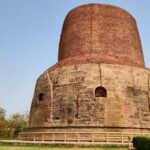
- Stupa of Turning the Wheel (Dharmachakra Stupa): Marks Buddha’s first sermon at Sarnath, where he set the wheel of Dharma in motion. It often includes steps symbolising the noble eightfold path to enlightenment.
- Stupa of Miracles: Commemorates Buddha’s display of miraculous powers at Shravasti. It is usually cylindrical and sometimes multi-tiered.
- Stupa of Descent from Tushita Heaven: Symbolises Buddha’s return after teaching his mother in the Tushita heaven. Stair-like features represent his descent to earth.
- Stupa of Reconciliation: Marks Buddha’s resolution of disputes among monks in Rajgir. It features an octagonal base.
- Stupa of Complete Victory: Represents Buddha extending his life in Vaishali. The tall spire symbolises triumph over death and impermanence.
- Stupa of Parinirvana (Final Nirvana): Symbolises Buddha’s passing into final nirvana in Kushinagar. Its large, rounded shape represents complete liberation from the cycle of rebirth.
Regional Variations of Stupas
In Ladakh, a distinctive style we noticed is the two-eyed stupa, commonly seen at monastery entrances. In Nepal, famous stupas like Swayambhunath and Boudhanath feature large painted eyes on all four sides, symbolising the all-seeing wisdom and compassionate awareness of the Buddha.
Meanings of Colours in Stupas and Prayer Flags
The colours used in Buddhist symbols, including stupas and prayer flags, carry deep spiritual significance and reflect the balance of the five elements:
- White: Represents air/space, peace, and wisdom.
- Yellow: Represents earth, stability, and prosperity.
- Blue: Represents sky, healing, and protection.
- Red: Represents fire, energy, and transformation.
- Green: Represents water, nature, and harmony.
Together, these colours symbolise the harmonious balance of the five elements that sustain life.
Mani Stones and Rock Carvings
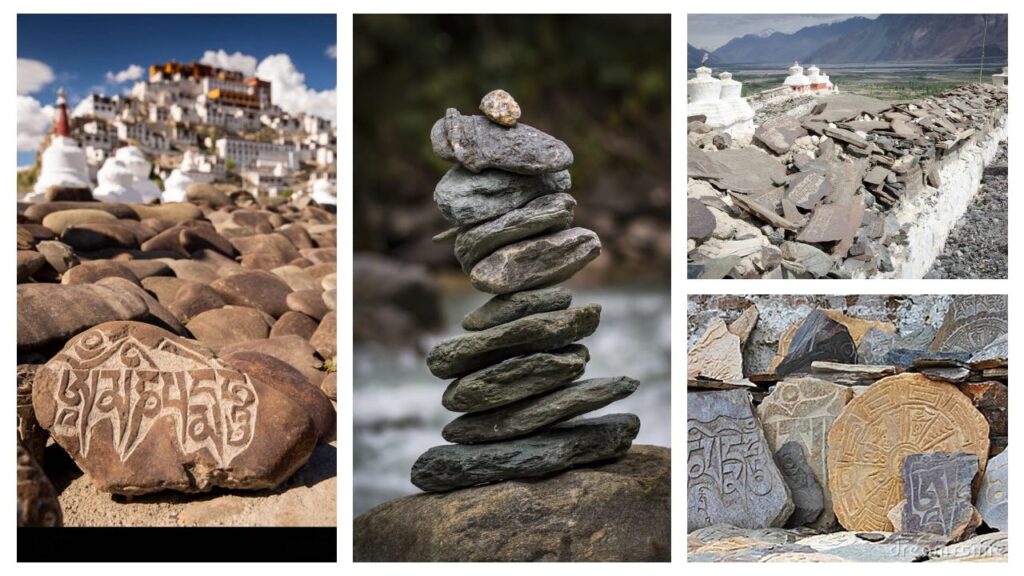
Large stone slabs carved with the mantra “Om Mani Padme Hum,” or images of Buddha are placed along paths and near monasteries. The giant 30-foot Maitreya Buddha rock carving at Mulbekh (which we saw in Part 2) and the massive statue at Diskit in Nubra left a particularly deep impression on our family.
The Warm Greeting “Juley“
Juley is the all-purpose Ladakhi word that means hello, thank you, goodbye, and even please. It is always said with a warm smile and often accompanied by folded hands. Using Juley respectfully opened many conversations and hearts during our trip and made us feel genuinely welcomed.
Monasteries We Visited and Their Living Significance
Our explorations in Part 3 brought these symbols to life in powerful ways:
Thiksey Monastery: A magnificent 12-storey gompa that resembles the Potala Palace in Lhasa. The highlight is the beautiful 40-foot seated Buddha statue on the top floor. We spent a quiet morning there watching monks in maroon robes going about their daily prayers.
Hemis Monastery: One of the largest and richest monasteries in Ladakh. It is famous for its annual Hemis Tsechu festival with colourful masked dances. The ancient murals and peaceful courtyards gave us a deep sense of history and devotion.
Alchi Monastery: An 11th-century treasure and tentative UNESCO World Heritage site. The exceptionally well-preserved wall paintings and intricate wooden carvings are among the finest examples of early Buddhist art in the region. Wandering through its ancient temples felt like stepping back centuries.
Lamayuru Monastery: Dramatically perched above the surreal Moonland landscape, we had seen on the highway in Part 2. The monastery’s location against the eroded lunar-like terrain made it one of the most visually striking places we visited.
Diskit Monastery: In Nubra Valley, famous for the giant Maitreya Buddha statue overlooking the valley. The view from here of the sand dunes and mountains was unforgettable.
Each monastery felt like a living centre of learning, meditation, and community rather than a mere tourist site.
How Buddhist Heritage Changed Our Understanding of Ladakh
Standing at Thiksey during a quiet morning prayer session, listening to the deep resonant sound of long horns and the chanting of monks, we felt a profound sense of peace wash over us. The simplicity of spinning a prayer wheel or watching prayer flags dance in the wind taught us valuable lessons in patience, mindfulness, and letting go, qualities that complemented the physical challenges of high altitude we had faced in Part 4.
Ladakh’s Buddhist culture is not confined to monasteries. It is visible in the kindness and hospitality of the local people, their deep respect for nature, and their calm acceptance of the harsh mountain life. The greeting Juley became more than just a word for us, it became our way of expressing gratitude to this land and its people.
Practical Tips for Respectfully Experiencing Buddhist Heritage
- Always circumambulate (walk clockwise) around stupas, monasteries, and prayer wheels.
- Ask permission before taking photographs of monks or inside prayer halls. Some areas prohibit photography entirely.
- Never step on or write on prayer flags if they fall to the ground.
- Mani Stones should never be moved or disturbed as they are considered holy offerings.
- Speak softly and remove shoes when required inside monasteries.
- Learn and use Juley generously, it shows respect and often leads to warm interactions with locals.
2026 Travel Update (As of April 2026)
Ladakh’s Buddhist heritage remains vibrant and well-preserved. Major monasteries continue to welcome respectful visitors, and festivals like Hemis Tsechu (usually held in June or July) are celebrated with great enthusiasm and colour. Responsible tourism helps protect these living spiritual treasures for future generations.
Final Reflections from Our Family
Our journey through Ladakh was not only about conquering high passes or photographing turquoise lakes. The Buddhist heritage we experienced gave our trip its deepest and most lasting meaning. The symbols we encountered, the fluttering prayer flags, the spinning wheels, the silent stupas, and the warm Juley reminded us that true beauty lies in compassion, harmony with nature, and inner peace.
We left Ladakh with lighter hearts, clearer minds, and a new appreciation for the spiritual dimension of travel. The lessons we learned here have stayed with us long after we returned home.
Thank you for reading our complete five-part Travel Guide to Ladakh 2026 series. We hope it helps you plan a safe, respectful, and deeply fulfilling journey to this extraordinary land.
Juley!
Recommended Resources on Ladakh Buddhist Heritage: Leh District Administration Tourism: https://leh.nic.in/tourism/ Official Ladakh Buddhist Sites Information (via Leh Tourism)