A Serene Detour in Sarnath: Our Family’s Unexpected Highlight on the Road from Vindhyachal to Gorakhpur
We had just finished a powerful and crowded darshan at the Vindhyachal Devi Temple (near Mirzapur, Uttar Pradesh), the kind of place where the divine energy feels ancient, intense, and overwhelming in the best possible way. Tired but content, our family climbed back into the car for the long onward journey to Gorakhpur.
At the time of our trip in 2023, the Purvanchal Expressway and Gorakhpur Link Expressway were still not operational, so we had to rely on the older route passing through Varanasi, Azamgarh, and Doharighat, expected to be an exhausting 8+ hours’ drive. Rather than push through in one stretch, we decided to break the journey and stay overnight in Varanasi.
The roughly two-hour drive from Vindhyachal to Varanasi felt manageable after the temple crowds. We checked into a peaceful guesthouse near Assi Ghat, spent the evening unwinding by the river, watched a quiet Ganga aarti, and finally got the kind of restful sleep only long road journeys can earn.
The next morning, after a relaxed breakfast, we packed the car and resumed our drive toward Gorakhpur. Just as we were leaving Varanasi, I suggested making a quick stop at Sarnath, located barely 10 km away.
Everyone agreed immediately.
What we imagined would be a brief 45-minute halt unexpectedly became one of the most memorable experiences of our entire Uttar Pradesh road trip.
Entering Sarnath: From Highway Noise to Complete Calm
The transition was almost immediate.
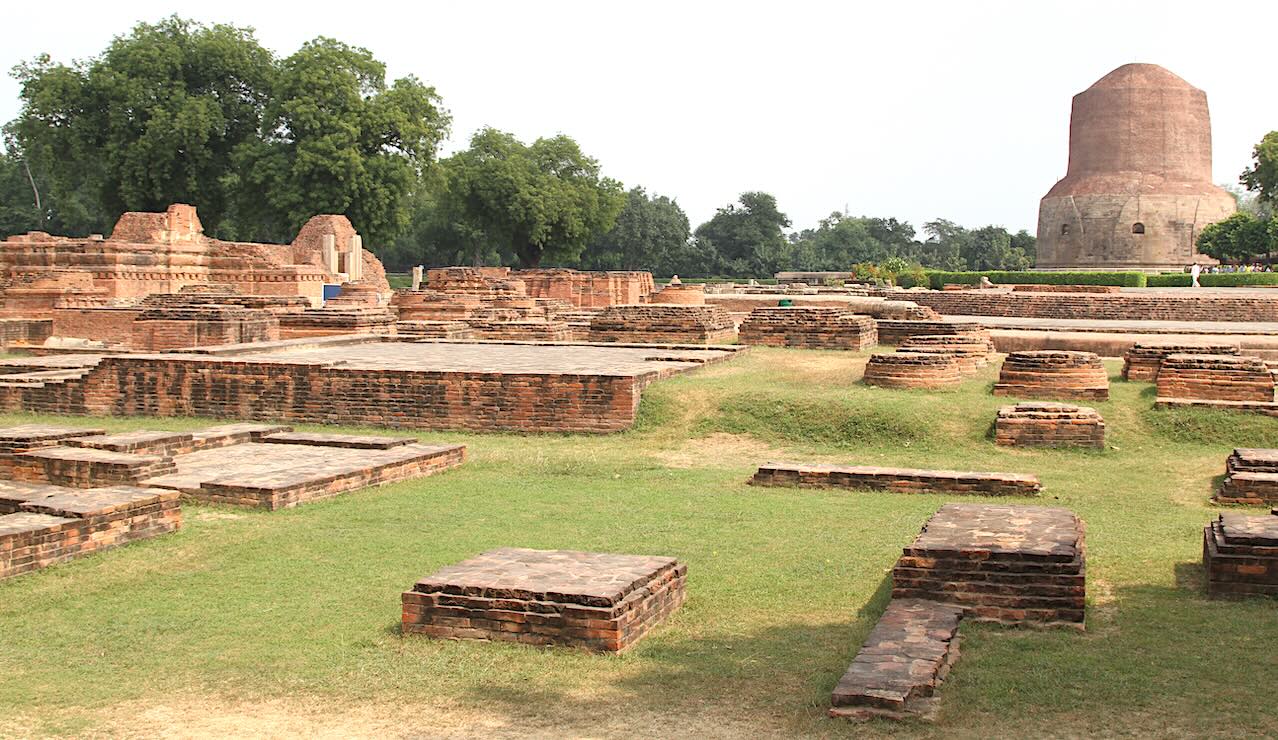
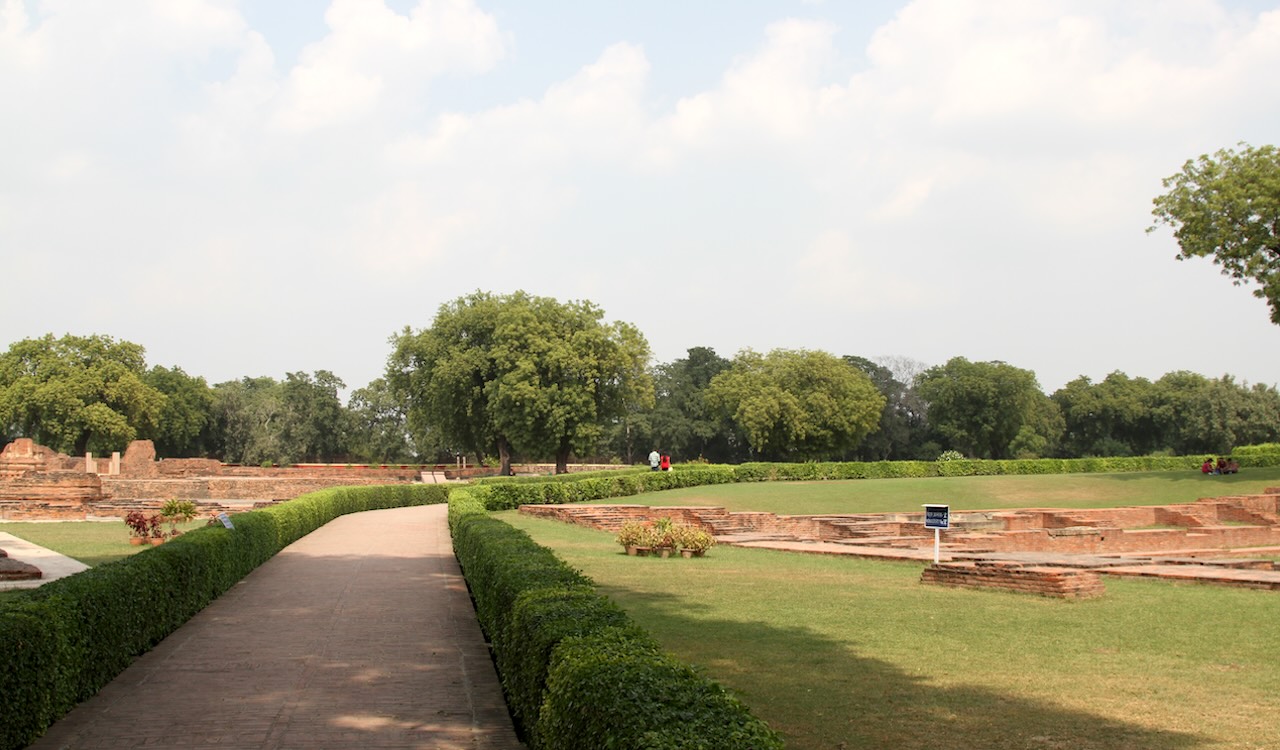
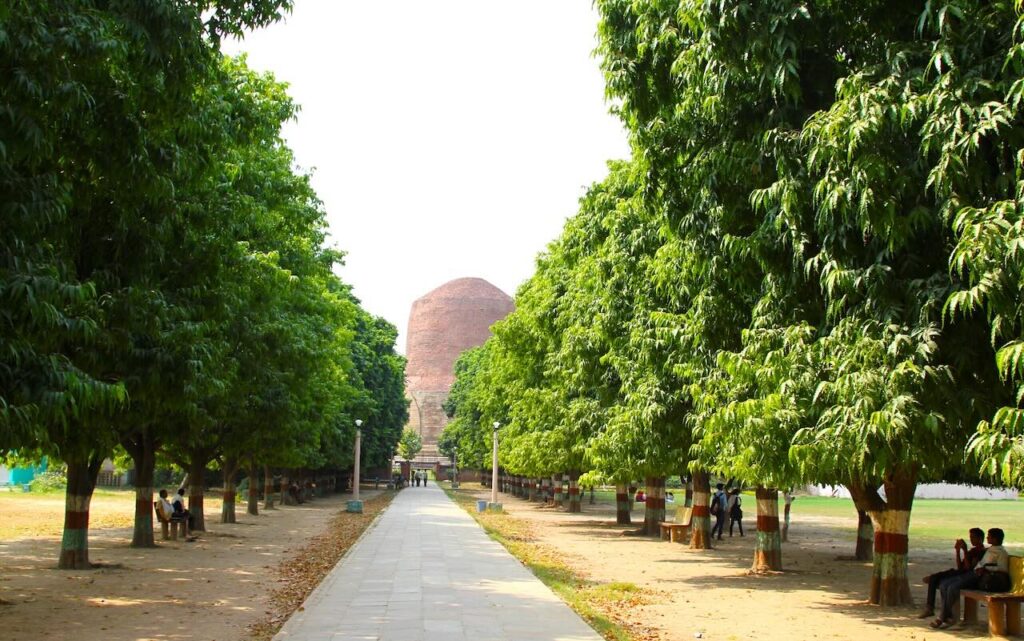
As soon as we entered the archaeological complex, the noise of traffic disappeared. In its place came birdsong, soft chants drifting from distant monasteries, and wide green lawns dotted with ancient ruins. After several days of hectic travel and crowded temple visits, the atmosphere felt almost therapeutic.
My family, who had been slightly restless after so many hours on the road, suddenly became energetic again, walking ahead excitedly and pointing toward the towering Dhamek Stupa.
There was something deeply serene about the place. Unlike many historic sites that feel frozen behind barriers and plaques, Sarnath felt alive, not loud or dramatic, but quietly alive.
Standing Where Buddha Delivered His First Sermon
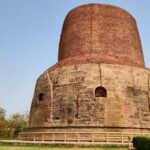
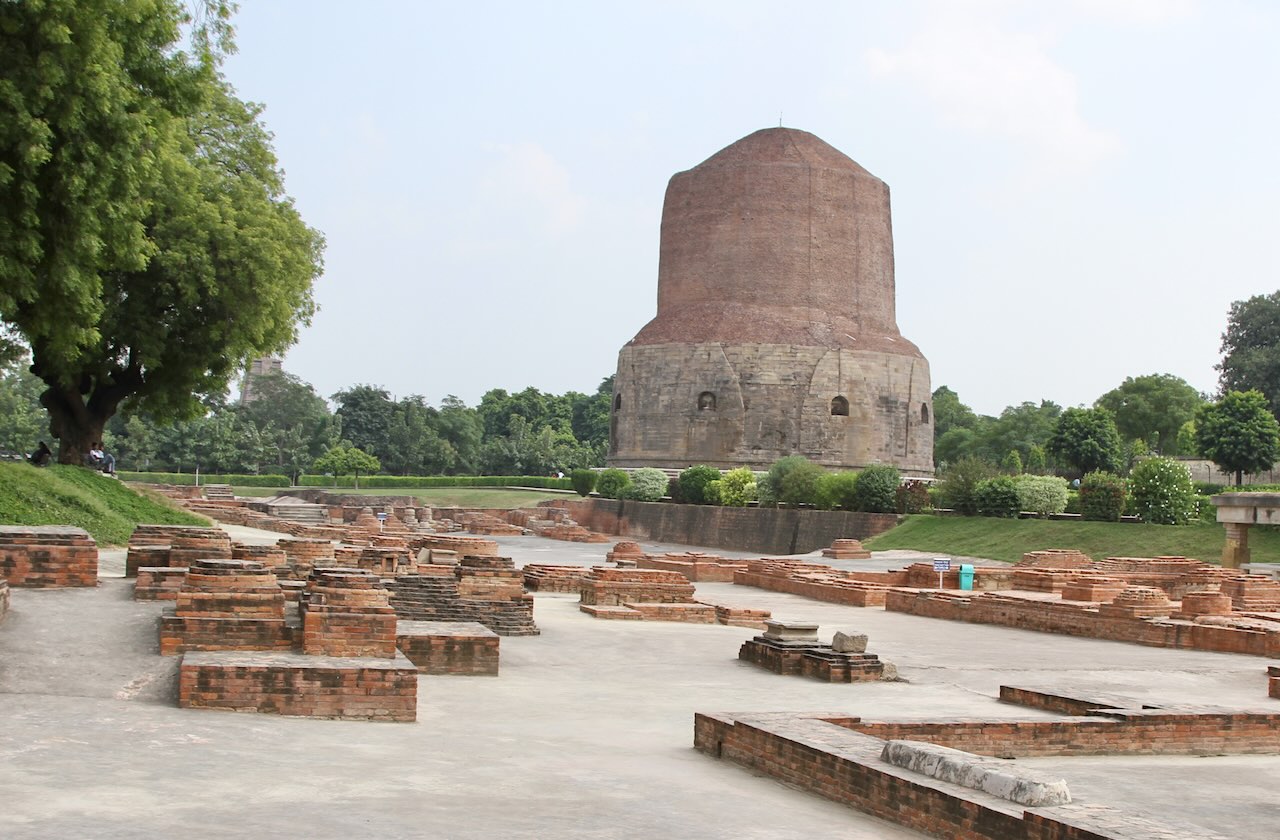
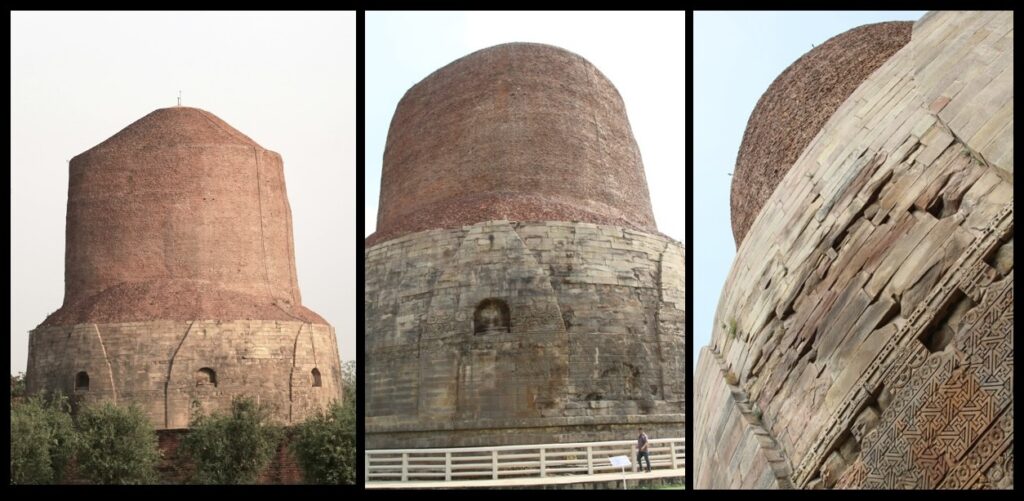
We spent a long time slowly circling the massive Dhamek Stupa, imagining the moment over 2,500 years ago when Gautama Buddha delivered his first sermon here after attaining enlightenment in Bodh Gaya.
This was the place where he first taught the Dharma to his five former companions, setting in motion what Buddhists call the Wheel of Dharma. In many ways, this peaceful site marks the beginning of Buddhism as a living spiritual tradition.
The feeling was difficult to describe.
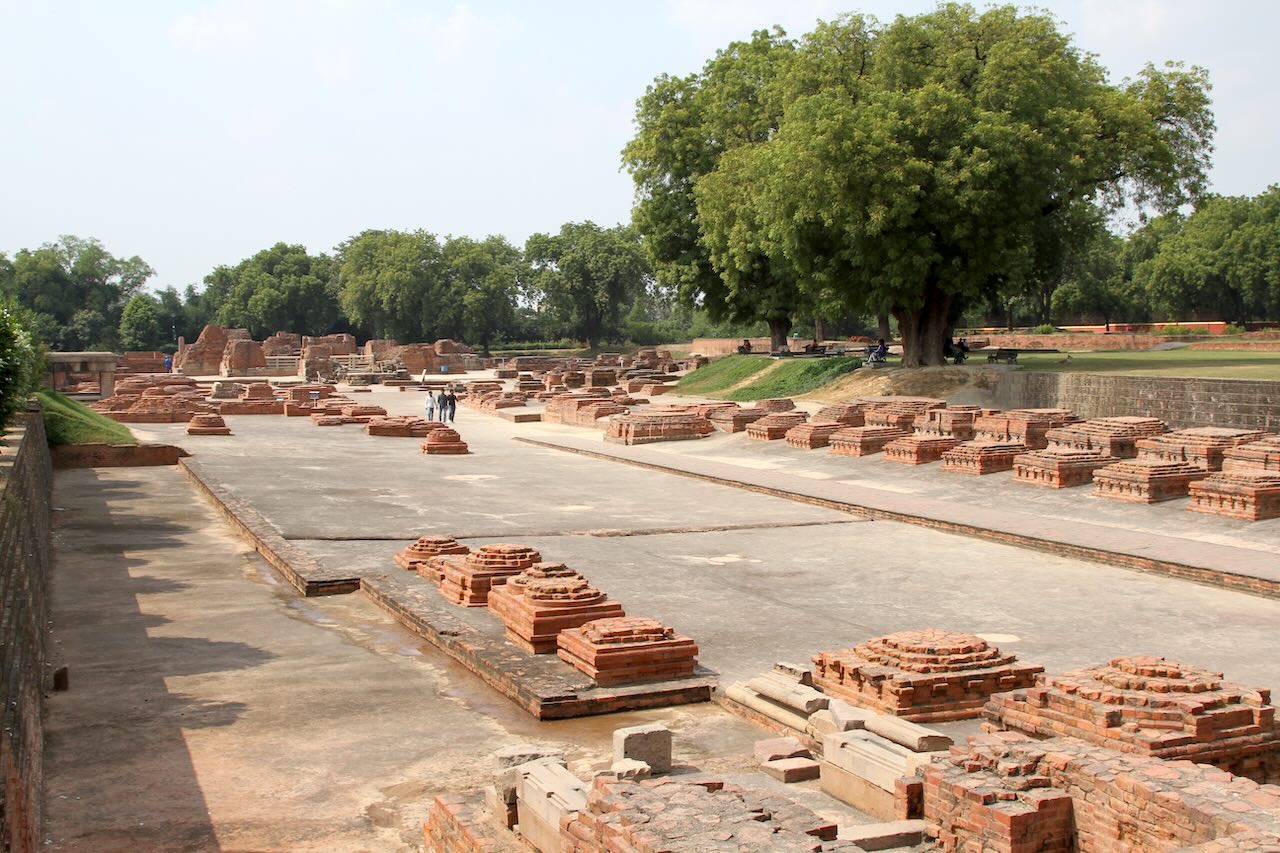
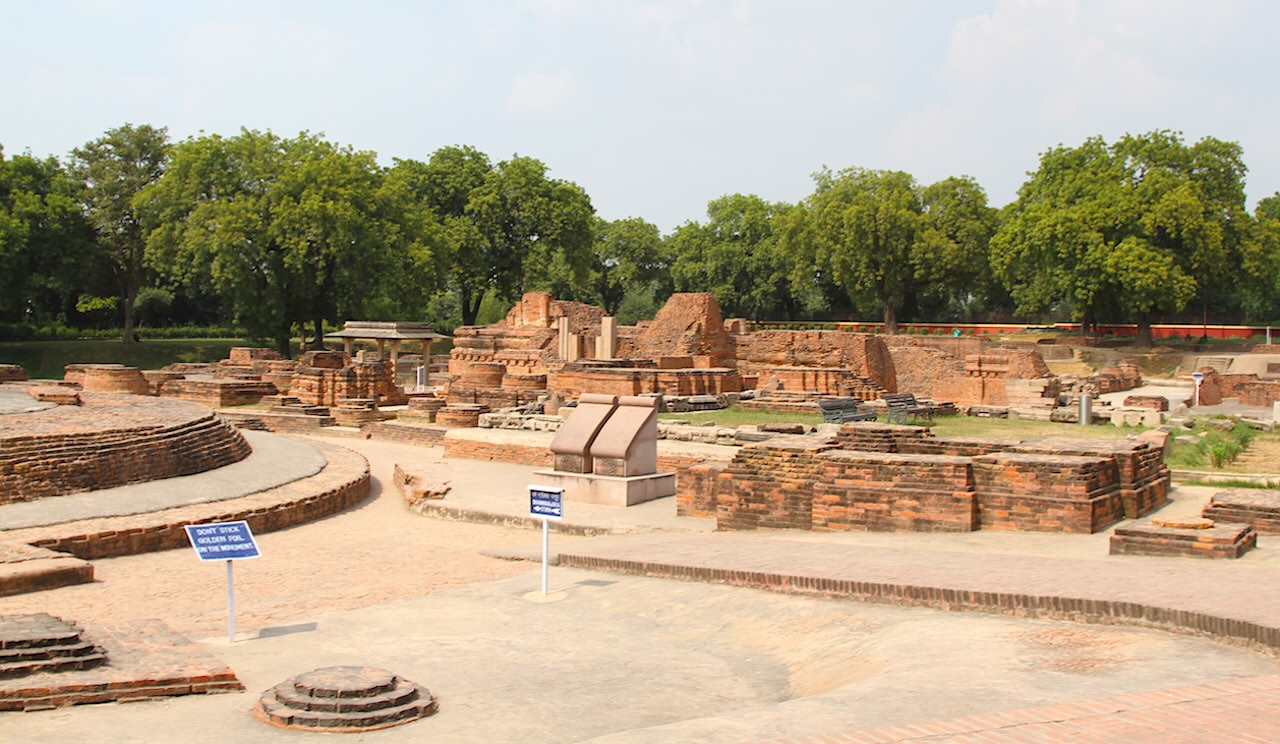
There are historical places you admire intellectually, and then there are places where history feels emotionally present. Sarnath belonged firmly in the second category. Walking through the ruins, under old trees and beside weathered brick foundations, genuinely felt like “history breathing.”
My wife and son especially loved spotting the deer roaming peacefully through the grounds, a beautiful reminder of Sarnath’s ancient identity as Mrigadava, or Deer Park.
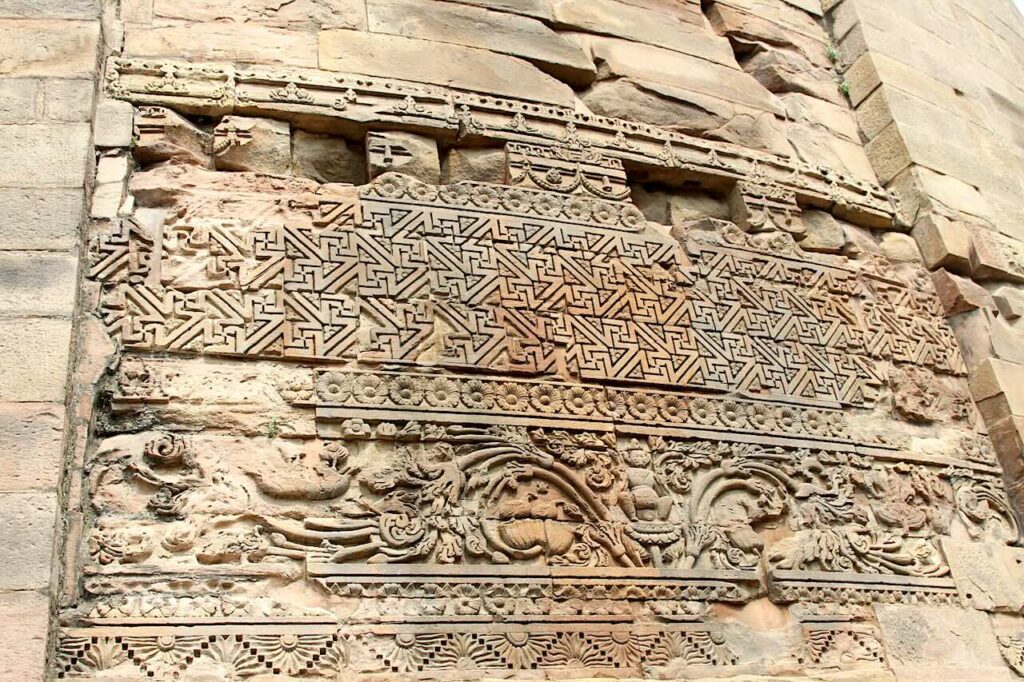
Temples, Murals, and Quiet Family Moments
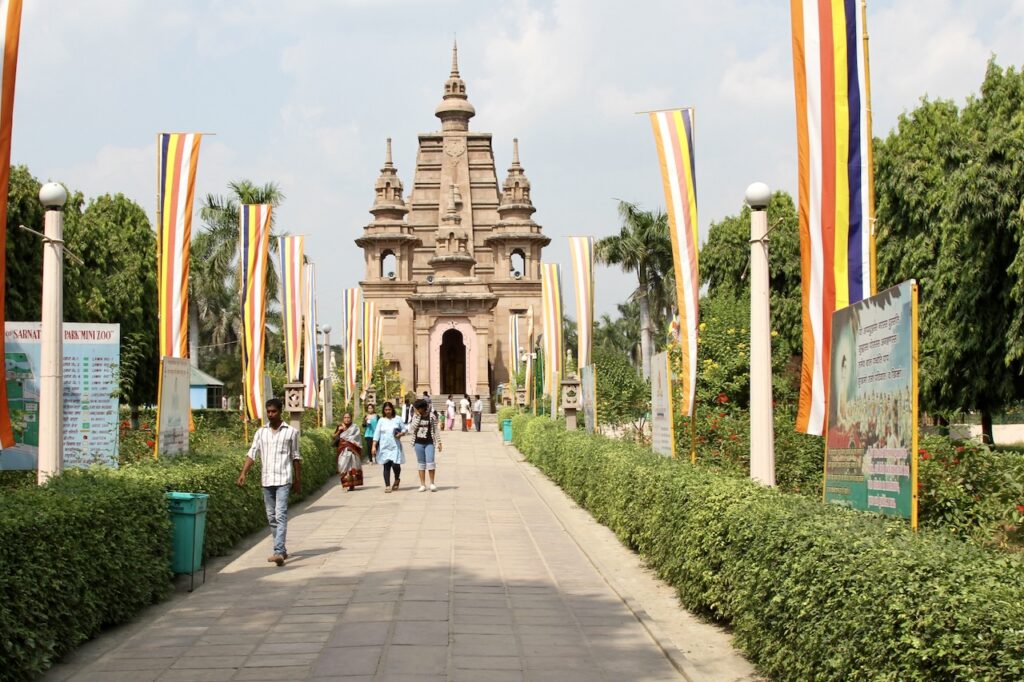
From the ruins, we walked toward the serene Mulagandha Kuti Vihara.
The temple’s atmosphere was wonderfully meditative. Inside, vibrant murals depicting the life of Buddha covered the walls, while the fragrance of incense drifted through the prayer hall. Outside stood a sacred Bodhi tree said to be grown from a sapling linked to the original tree at Bodh Gaya.
We spent time sitting quietly there before continuing through the monastery complex.
One of our favourite family memories from the visit was taking photographs in front of the giant standing Buddha statue nearby, simple moments that somehow felt more meaningful in the peaceful surroundings of Sarnath.
Why Sarnath Feels Different from Varanasi
Varanasi overwhelms the senses.
The ghats, chants, crowds, temple bells, smoke, boats, narrow lanes, and constant movement create an energy that is unforgettable, but also exhausting after a while.
Sarnath felt like the perfect counterbalance.
Where Varanasi is intense and immersive, Sarnath is spacious and reflective. After the emotional and sensory intensity of temple visits across Uttar Pradesh, this stop reminded us why Buddha chose this place for his first teaching: peace, clarity, and stillness.
For our family, it became the most restorative part of the journey.
A Brief History of Sarnath
Sarnath is one of the holiest Buddhist pilgrimage sites in the world, located just northeast of Varanasi in Uttar Pradesh.
Known historically as Mrigadava (Deer Park) or Rishipatana, it was here, around 528 BCE, that Gautama Buddha delivered his first sermon after attaining enlightenment at Bodh Gaya. This teaching, known as the Dhammacakkappavattana Sutta (“Setting in Motion the Wheel of Dharma“), marked the formal beginning of Buddhism as a preached religion and the formation of the Buddhist Sangha.
In the 3rd century BCE, Emperor Ashoka visited Sarnath and commissioned stupas, monasteries, and the famous Ashokan pillar here. Over the centuries, the site flourished as a major centre of Buddhist learning before declining after invasions in the 12th century. Excavations during the British colonial period later uncovered the remarkable ruins visible today.
Modern Sarnath now combines ancient archaeological remains with active monasteries and temples built by Buddhist communities from Thailand, Japan, Tibet, Sri Lanka, and other countries.
Must-Visit Places in Sarnath
1. Dhamek Stupa
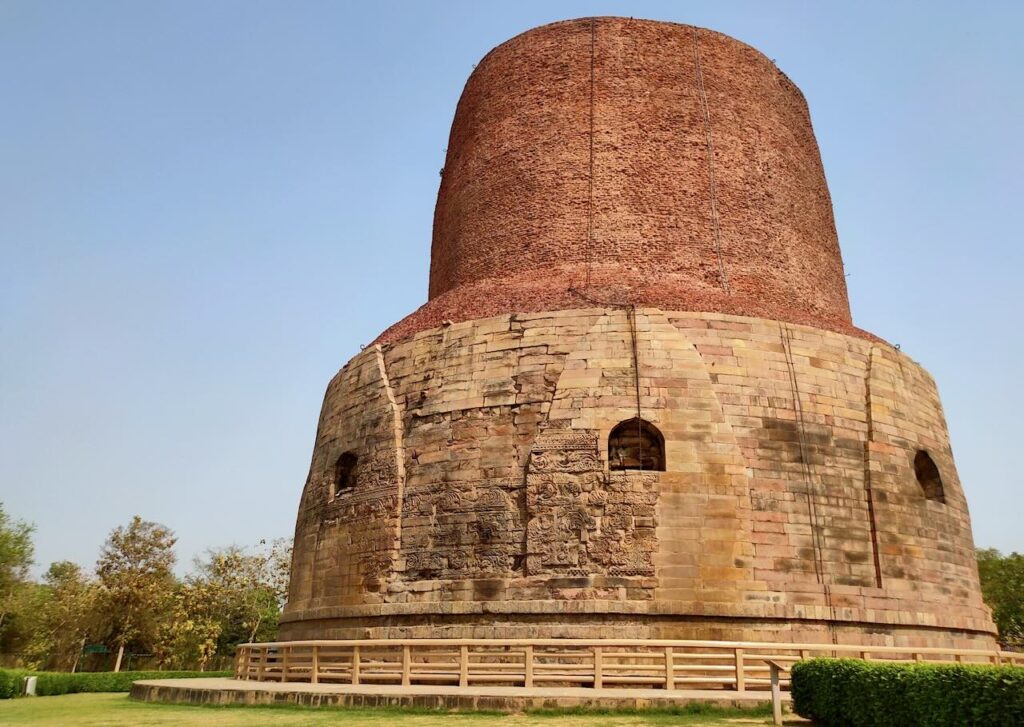
The spiritual and visual centrepiece of Sarnath. Standing approximately 44 metres high, this massive cylindrical stupa marks the spot traditionally associated with Buddha’s first sermon. The intricate stone carvings on its lower sections remain remarkably detailed despite centuries of history. Simply walking around the stupa slowly and quietly became one of the highlights of our visit.
2. Archaeological Ruins & Deer Park
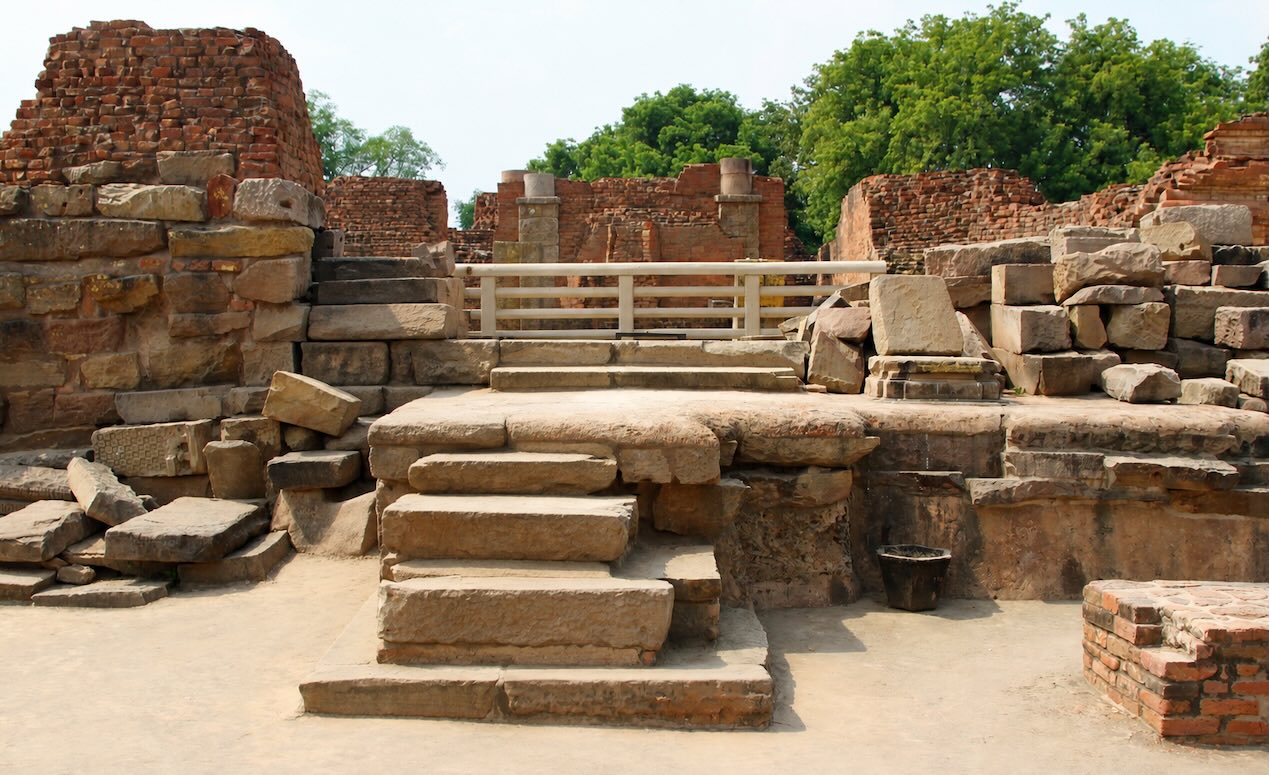
The landscaped archaeological complex contains the remains of monasteries, prayer halls, votive stupas, and ancient brick foundations dating back centuries. The freely roaming deer add a unique emotional connection to the site’s ancient identity as Deer Park.
3. Mulagandha Kuti Vihara
This modern Buddhist temple is known for its peaceful prayer hall, striking murals, and sacred Bodhi tree. Evening prayers here are said to be particularly beautiful.
4. Sarnath Archaeological Museum
Small but absolutely worth visiting. The museum houses the original Lion Capital of Ashoka, now India’s national emblem, along with exquisite Buddha sculptures and important archaeological finds from the region. We initially thought we would spend only 10 minutes there but stayed for nearly half an hour.
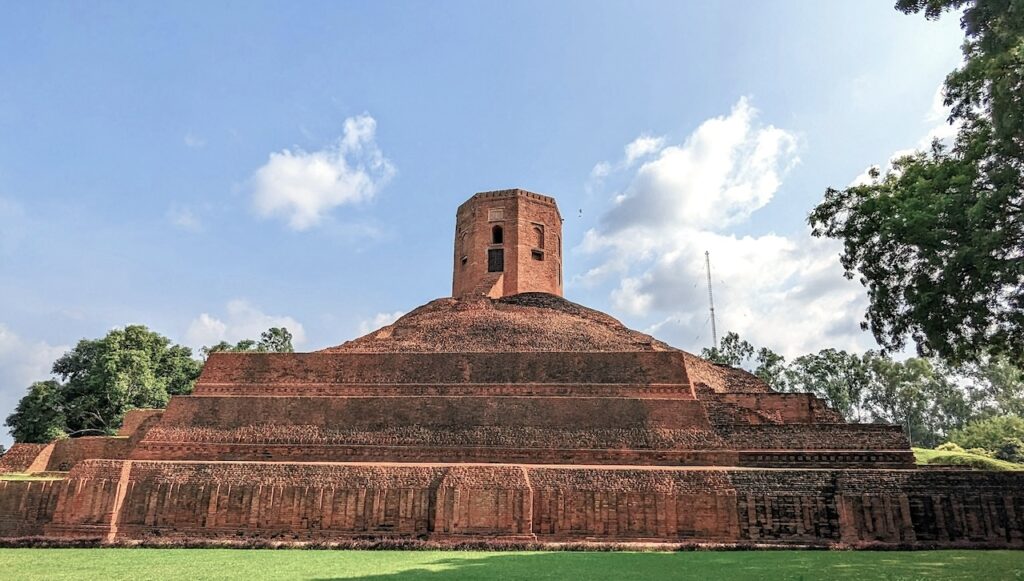
5. Chaukhandi Stupa
This distinctive stupa, topped with an octagonal Mughal-era tower, is believed to mark the place where Buddha first met his disciples before delivering his sermon.
6. International Monasteries & Buddha Statues
The Thai monastery, Tibetan temples, Japanese structures, and giant Buddha statues scattered around Sarnath create a fascinating international spiritual atmosphere.
Quick Essentials for Sarnath Visitors
Sarnath is located about 10 km from Varanasi and makes for an easy half-day or full-day trip. Calm, green, and deeply spiritual, it offers a complete contrast to the intensity of Varanasi’s ghats and crowds.
How to Reach
- From Varanasi: 30-45 minutes by auto-rickshaw, taxi, Ola/Uber, or private car.
- Nearest Airport: Lal Bahadur Shastri International Airport (around 25-30 km away).
- Nearest Railway Station: Varanasi Junction Railway Station.
Entry Fees & Timings
- Archaeological complex entry is inexpensive for Indian visitors, while foreign tourist tickets are higher as per ASI rates (₹40 for Indians, ₹600 for foreigners +₹50 for museum combo).
- Sarnath Archaeological Museum requires a separate ticket Total (₹25 for Indians, ₹300 for foreigners).
- The site is generally open from sunrise to sunset, while the museum usually operates from morning till evening.
Best Time to Visit
October to March is ideal, with pleasant weather for walking and sightseeing. Early mornings and late afternoons are especially peaceful, with softer light and fewer crowds.
Avoid Peak Summer (April-June) due to extreme temperature, sometimes crossing 44-48 °C; and Monsoon (July-September) due to heavy unpredictable rains, humidity and muddy paths.
Practical Travel Tips from Our Visit
- Come early if possible, though late afternoon worked beautifully for us because the light was softer and crowds were thinner.
- Wear comfortable shoes, there’s a fair amount of walking across grass, uneven stone, and brick pathways.
- Carry water and light snacks, especially if travelling with children.
- Don’t skip the museum, even if you’re short on time.
- Plan at least 2-3 hours for the visit. We originally planned less than an hour and could easily have stayed longer.
- Dress modestly if you plan to enter monasteries or temples.
- Winter months (October-March) are ideal for exploring comfortably.
Why You Shouldn’t Skip Sarnath
Many visitors to Varanasi focus on the ghats, Kashi Vishwanath Temple, and evening aartis, often skipping Sarnath due to tight schedules or fatigue from the city’s intensity. However, Sarnath deserves a dedicated half-day, located just 10 km from Varanasi.
Unlike Varanasi’s crowded lanes, Sarnath offers peaceful green spaces, shaded pathways, and active international monasteries from countries like Japan, Thailand, and China. It provides a calm contrast and is family-friendly with easy walking, deer spotting, and less physical strain. Visitor numbers have grown, yet it remains far less crowded than central Varanasi. Allocating 2-3 hours here creates a balanced, enriching experience rather than missing one of Buddhism’s four most important pilgrimage sites (Lumbini, Bodh Gaya, Sarnath and Kushinagar).
Sarnath is simply worth the visit while in Varanasi.
Quick Varanasi Tips from Our Family Stay
Since we spent a couple of days in Varanasi before going to Vindhyachal, a few things worked particularly well for us:
- Staying near Assi Ghat gave us a quieter and more family-friendly base compared to the busier central ghats.
- Local thali restaurants near the ghats offered excellent vegetarian meals.
- Brown Bread Bakery was reliable for simple vegetarian and Continental food that the kids enjoyed.
- A sunrise boat ride on the Ganges is absolutely worth waking up early for.
- The evening Ganga aarti at Dashashwamedh Ghat remains one of the most visually unforgettable experiences in India.
We’ll share our full Varanasi experience separately, but these basics made our stay comfortable and memorable.
Most travellers prefer staying in Varanasi, especially near Assi Ghat, and visiting Sarnath as a day trip. For travellers exploring eastern Uttar Pradesh, Sarnath is more than a historical site it’s a rare pause of calm, reflection, and silence amid an otherwise hectic journey.
2026 Update: Enhanced Road Connectivity & Sarnath Developments
Uttar Pradesh’s expressway network has significantly improved access since 2023. The 91.35 km Gorakhpur Link Expressway, inaugurated in June 2025, connects directly to the Purvanchal Expressway. This reduces Gorakhpur to Sarnath/Varanasi travel time to around 4 hours and Gorakhpur to Vindhyachal to about 5 hours, enabling smoother family drives with better safety and fewer delays.
The 594 km Ganga Expressway, inaugurated on 29 April 2026, links Meerut to Prayagraj in approximately 5-6 hours (down from 10-12 hours). It enhances connectivity from Delhi-NCR and western UP to eastern pilgrimage sites, featuring six lanes, service plazas, and EV charging.
At Sarnath, India has nominated the “Ancient Buddhist Site, Sarnath” for the UNESCO World Heritage List in the 2025-26 cycle. The Archaeological Survey of India (ASI) is enhancing interpretation, plaques, and visitor facilities. A 1.18 km elevated road corridor in the Sarnath area is under construction (target completion 2027) for better traffic flow. These upgrades, combined with PRASHAD scheme investments, are making the site more accessible and better preserved while retaining its tranquil character.
The Unexpected Highlight of the Journey
When we finally resumed our drive toward Gorakhpur later that afternoon, the mood inside the car had completely changed.
The fatigue of the road trip felt lighter. Everyone seemed calmer, quieter, and strangely refreshed.
Sometimes the destinations you plan for months become less memorable than the stops you almost skipped.
For our family, Sarnath was exactly that kind of place, an unplanned detour that quietly became the emotional heart of the journey.
If you are travelling anywhere near Varanasi, especially with family, make the stop.
Some places entertain you.
Some places educate you.
And some places simply slow your mind down enough for you to breathe again.
Sarnath does exactly that.
Official Resources for Sarnath
For the latest information on timings, entry tickets, and updates, here are some reliable official sources:
- Archaeological Survey of India (ASI) Sarnath Circle → https://asisarnathcircle.in/
- Uttar Pradesh Tourism Sarnath → https://www.uptourism.gov.in/en/page/varanasi-sarnath
- Varanasi District Official Page → https://varanasi.nic.in/tourist-place/sarnath/
- ASI Online Ticket Booking → https://asi.paygov.org.in/asi-webapp/
- India Tourism Official Page on Sarnath → https://desh.tourism.gov.in/attractions/detail/646
These links will help you plan your visit with the most accurate and up-to-date details.