US Aircraft Losses in Iran Campaign: What Operation Epic Fury Reveals About the Future of Air Warfare
New Delhi, May 21, 2026: A newly released report by the United States Congressional Research Service (CRS) has offered the clearest public accounting yet of American aerial losses during the 40-day air campaign, Operation Epic Fury, against Iran earlier this year, exposing both the extraordinary reach of modern US air power and the very real vulnerabilities that persist even for the world’s most technologically advanced military.
The report, titled “U.S. Aircraft Combat Losses in Operation Epic Fury: Considerations for Congress” (CRS Insight IN12692), dated May 13, 2026, catalogues a total of 42 fixed-wing, rotary-wing, and unmanned aircraft either destroyed or significantly damaged between late February and early April 2026 during Operation Epic Fury, the US-led military campaign conducted in coordination with Israel against Iranian military and nuclear-linked infrastructure.
The losses, according to the CRS assessment compiled from Pentagon statements, CENTCOM briefings, satellite imagery, and credible media reporting, amount to an estimated $2.6 billion in aircraft replacement and repair costs alone. That figure sits within a broader war expenditure now estimated at roughly $29 billion.
For Washington, the campaign ended with the degradation of significant portions of Iran’s missile arsenal, naval assets, and nuclear-related facilities, followed by a ceasefire broadly favourable to the US-Israeli position. Yet the aircraft attrition outlined in the CRS report complicates any simplistic narrative of effortless technological dominance.
For strategic planners in capitals such as New Delhi, the report is less about whether America won the war and more about how even a non-peer adversary managed to impose meaningful operational and financial costs on a superpower.
Aircraft Losses: A Detailed Breakdown
The CRS report lists the following confirmed aircraft losses and combat damage during the Operation Epic Fury:
- 4 x F-15E Strike Eagles: including three destroyed in a friendly-fire incident over Kuwait on March 2, and one shot down over Iran on April 5.
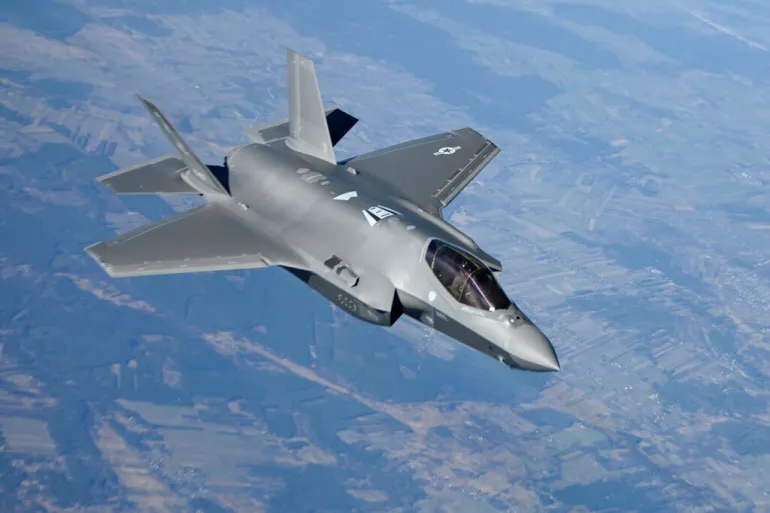
- 1 x F-35A Lightning II: damaged by Iranian ground fire on March 19, marking the first known combat damage sustained by a US fifth-generation stealth fighter.
- 1 x A-10 Thunderbolt II: destroyed after enemy fire on April 3.
- 7 x KC-135 Stratotankers: damaged or destroyed through a combination of operational mishaps and Iranian missile-drone strikes against bases in Saudi Arabia.
- 1 x E-3 Sentry AWACS: heavily damaged on the ground during strikes on Prince Sultan Air Base.
- 2 x MC-130J Commando II aircraft: deliberately destroyed by US forces inside Iranian territory during a rescue mission to prevent capture.
- 1 x HH-60W Jolly Green II helicopter: damaged by small-arms fire.
- 24 x MQ-9 Reaper drones: lost in various incidents; and
- 1 x MQ-4C Triton: representing the heaviest attrition within the unmanned fleet.
The CRS itself cautions that the tally is almost certainly incomplete. Portions of the battle damage assessment remain classified, while intermittent strikes reportedly continued even after the April ceasefire.
Still, even the publicly available figures are striking.
The sheer scale of tanker and drone losses particularly stands out. Modern American air warfare depends not merely on advanced fighters but on a vast ecosystem of enabling platforms, including airborne refuelling aircraft, surveillance systems, drones, electronic warfare assets, and logistics networks. Operation Epic Fury demonstrated that these enablers are often more vulnerable than the stealth fighters they support.
How Iran Turned US Assets into Sitting Ducks
One of the most consequential lessons from the CRS report was Iran’s apparent ability to systematically create vulnerabilities within the US-led air campaign.
According to assessments based on satellite imagery, Pentagon disclosures, and open-source intelligence, Iranian forces focused early in the conflict on degrading radar coverage, surveillance systems, and early warning capabilities linked to US and allied operations in the Gulf. This was followed by coordinated missile and drone strikes on regional air bases hosting high-value American assets.
The attacks on Prince Sultan Air Base in Saudi Arabia reportedly damaged or destroyed multiple KC-135 Stratotankers (fuel tanker aircraft) and at least one E-3 Sentry AWACS aircraft while they were parked on the ground.
These were not conventional dogfights involving advanced fighters, but examples of a different operational approach: first weakening detection and warning systems, then overwhelming exposed bases with low-cost drones and missiles.
The incident underscored a critical reality of modern warfare reality. Even the world’s most advanced air forces remain vulnerable if air tankers, AWACS aircraft, and logistics hubs are left exposed after defensive networks are degraded or saturated.
For militaries worldwide, including India, the lesson is clear: technological superiority alone is insufficient without hardened airbases, resilient surveillance networks, aircraft dispersal capability, and protection against mass drone attacks.
The F-35 Incident and the Limits of Stealth
One of the most closely watched aspects of the report is the confirmed damage sustained by an F-35A Lightning II on or around March 19.
The aircraft was not shot down, and the pilot safely returned to base. But the incident nevertheless carries symbolic and doctrinal significance.
Stealth technology was never designed to make aircraft invisible in all domains. It primarily reduces radar cross-section, making radar detection and targeting more difficult. Infrared signatures, however, remain a challenge.
Reports suggest the F-35 may have been hit by an infrared-guided system, possibly a MANPADS-type missile exploiting engine heat signatures during manoeuvring or lower-altitude operations. While the exact details remain classified, the broader lesson is already clear: stealth significantly reduces risk, but it does not eliminate it.
Modern air combat is not determined by a single platform alone. It is shaped by networks, electronic warfare, sensors, logistics, pilot training, operational doctrine, survivability, and increasingly, attrition tolerance.
American Reactions: Polarisation Rather Than Humiliation
Contrary to some online narratives portraying the losses as a catastrophic humiliation for Washington, American reactions have been far more divided and nuanced. Mainstream US media outlets such as Business Insider, CBS News, Stars and Stripes, and The Aviationist have largely framed the CRS findings as a serious but expected wartime accounting exercise. Coverage has focused on readiness concerns, tanker vulnerability, drone attrition, and Pentagon transparency rather than national embarrassment.
The dominant framing within defence circles has been that the losses represented the cost of doing business in contested airspace against a determined adversary.
Criticism has come primarily through partisan channels.
Democratic critics and anti-war voices have questioned the Trump administration’s strategic planning, arguing that the campaign demonstrated excessive optimism regarding costs and risks. Senator Chris Murphy and others described the war as strategically incoherent and unnecessarily expensive.
Republicans and administration supporters, however, have defended the operation as a successful campaign that achieved its core military objectives while sustaining relatively low American fatalities, reportedly around 15 personnel killed.
Polling data suggests that while many Americans disapproved of the handling and costs of the war, there is no broad domestic consensus treating the campaign as a strategic defeat. The prevailing divide is political rather than civilisational.
In Washington’s eyes, the campaign achieved its strategic goals despite friction and losses. The CRS report therefore functions less as an indictment of failure and more as a reminder that modern warfare imposes costs even on dominant powers.
The Drone War and the Economics of Attrition
If there is one overarching lesson from Operation Epic Fury, it is that the economics of warfare are changing faster than many traditional military doctrines.
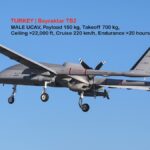
The loss of 24 x MQ-9 Reaper drones underscores the growing centrality of attritable systems in contested warfare. Drones are increasingly expected to absorb risks that would once have fallen on manned aircraft.
This is not necessarily a sign of weakness. In many respects, it reflects doctrinal adaptation.
A destroyed drone, while costly, is still more politically and operationally manageable than the loss of a fighter pilot or an advanced crewed aircraft. The campaign reinforced the idea that future wars may involve large-scale consumption of relatively expendable unmanned systems operating alongside a smaller number of exquisite platforms.
At the same time, the report also highlights the vulnerability of expensive enablers. Tankers, AWACS aircraft, and logistics nodes remain critical weak points in modern expeditionary warfare.
Operation Epic Fury thus becomes a study in contrasts: stealth fighters penetrated defended airspace, but support infrastructure remained highly exposed.
Lessons for India and the IAF
For India, the CRS report arrives at a strategically relevant moment.
New Delhi is simultaneously pursuing fifth-generation ambitions through the Advanced Medium Combat Aircraft (AMCA) programme, expanding drone capabilities, modernising its Rafale and Su-30MKI fleets, and attempting to strengthen indigenous defence manufacturing under the Atmanirbhar Bharat framework.
The American experience in Iran reinforces several realities that Indian planners already understand intellectually but may now view with greater urgency.
First, stealth matters, but stealth alone is insufficient. The F-35 incident demonstrates that even fifth-generation aircraft remain vulnerable within layered threat environments involving infrared systems, drones, electronic warfare, and dense missile networks. For India, this validates the need to pair future stealth platforms with robust electronic warfare suites, stand-off munitions, suppression-of-enemy-air-defence capabilities, and networked operations.
Second, quantity and resilience matter alongside sophistication. The heavy drone attrition seen during the campaign strengthens the case for India’s investments in MQ-9B systems, swarm drones, and indigenous UAV ecosystems capable of sustaining losses in prolonged conflicts.
Third, basing vulnerability has become a frontline issue. The tanker and AWACS strikes in Saudi Arabia underline the importance of hardened shelters, dispersed basing, runway repair capability, deception tactics, and resilient logistics networks. In any future conflict involving China or Pakistan, Indian air bases themselves would likely become immediate targets.
Fourth, sustainability matters as much as battlefield brilliance. The United States possesses the world’s largest military-industrial base, yet even Washington now faces questions regarding replenishment timelines for drones, tankers, munitions, and airborne surveillance assets. For India, whose defence industrial ecosystem remains under development, the implications are even sharper.
The campaign ultimately reinforces a truth increasingly evident from Ukraine to West Asia: modern wars are rarely short, clean, or frictionless. They are attritional contests of endurance, industrial depth, logistics, adaptation, and operational resilience.
Victory, But at a Cost
Operation Epic Fury did not end in American defeat. By most conventional military measures, the United States and Israel succeeded in severely degrading Iranian capabilities and imposing a ceasefire on favourable terms.
Yet the CRS report strips away any illusion that such victories are cost-free or technologically effortless.
Iran, despite lacking a world-class air force or fully integrated peer-level air defence architecture, still managed to impose meaningful costs through layered defences, drone warfare, missile strikes, and persistence.
That reality carries implications far beyond the Gulf.
For India, facing two nuclear-armed adversaries, increasingly contested airspace, and finite defence budgets, the deeper lesson is not that advanced technology has failed. Rather, it is that technology alone never guarantees immunity from attrition.
The future battlefield belongs not merely to the side with the best platforms, but to the side capable of sustaining losses, adapting quickly, protecting enablers, replenishing inventories, and fighting effectively over time.
As one Indian defence analyst privately observed after the CRS findings emerged: The Americans won the war, but Iran still made them bleed in the air. In our neighbourhood, those margins matter.
Also Read:
Operation Epic Fury Mishaps: Are “Non-Enemy Causes” Behind US Losses?