Ultimate Yogyakarta Travel Guide 2026: Part 3 – Prambanan Temple
History, Visitor Experience, Ramayana Ballet & Practical Tips
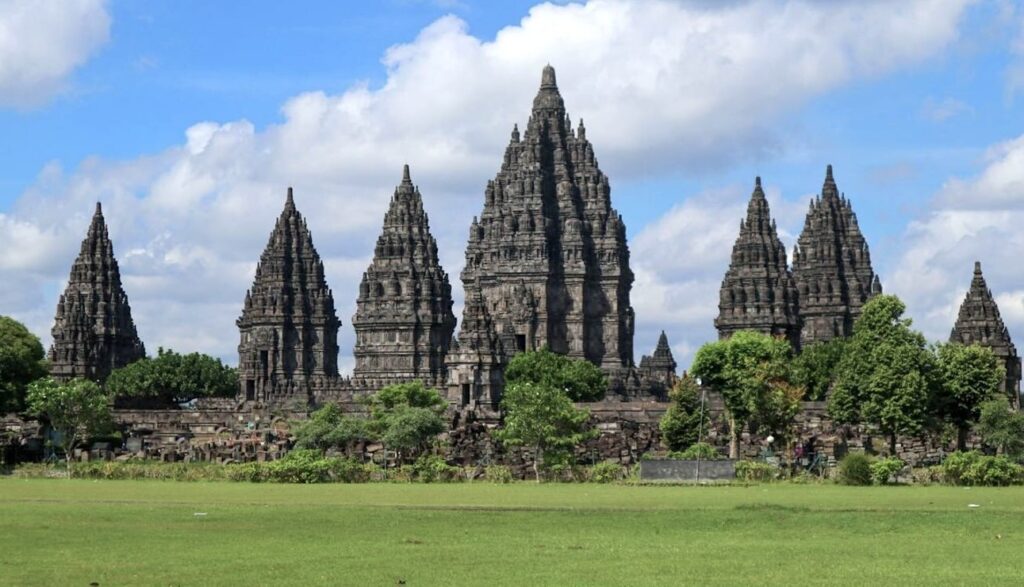
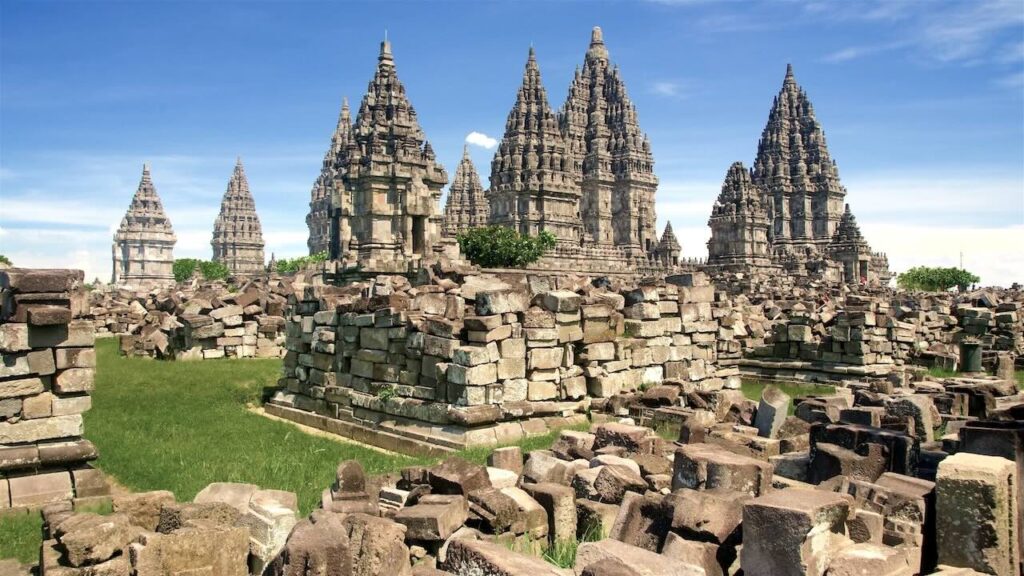
Prambanan Temple rises as Indonesia’s largest and most majestic Hindu temple complex — a breathtaking 9th-century masterpiece dedicated to the Trimurti (Brahma the creator, Vishnu the preserver, and Shiva the destroyer). Located just 17 km northeast of Yogyakarta (Jogja) city centre, its soaring spires and intricate carvings stand in powerful harmony with the Buddhist wonder of Borobudur we covered in Part 2. Framed by palm groves and the ever-present silhouette of Mount Merapi, Prambanan feels like a sacred bridge connecting ancient India’s spiritual heritage with Java’s rich cultural tapestry.
Whether you’re a devout Hindu traveler from India seeking darshan-like moments, a history lover, or someone simply chasing architectural awe, Prambanan delivers a deeply moving experience that stays with you long after the sun sets behind its towering Shiva temple.
This is Part 3 of the Ultimate Yogyakarta Travel Guide 2026 series. While Part 1 gave you the complete planning blueprint for Jogja and Part 2 explored the sunrise magic and profound Buddhist legacy of Borobudur (including the debated reasons for its abandonment linked to capital shifts, volcanic activity, and later Islamic conversion), here we dive deep into Prambanan — its towering Trimurti temples, epic Ramayana carvings, the magical evening ballet, rich history, and practical 2026 travel tips with a personal visitor touch.
First Impressions & Visitor Experience
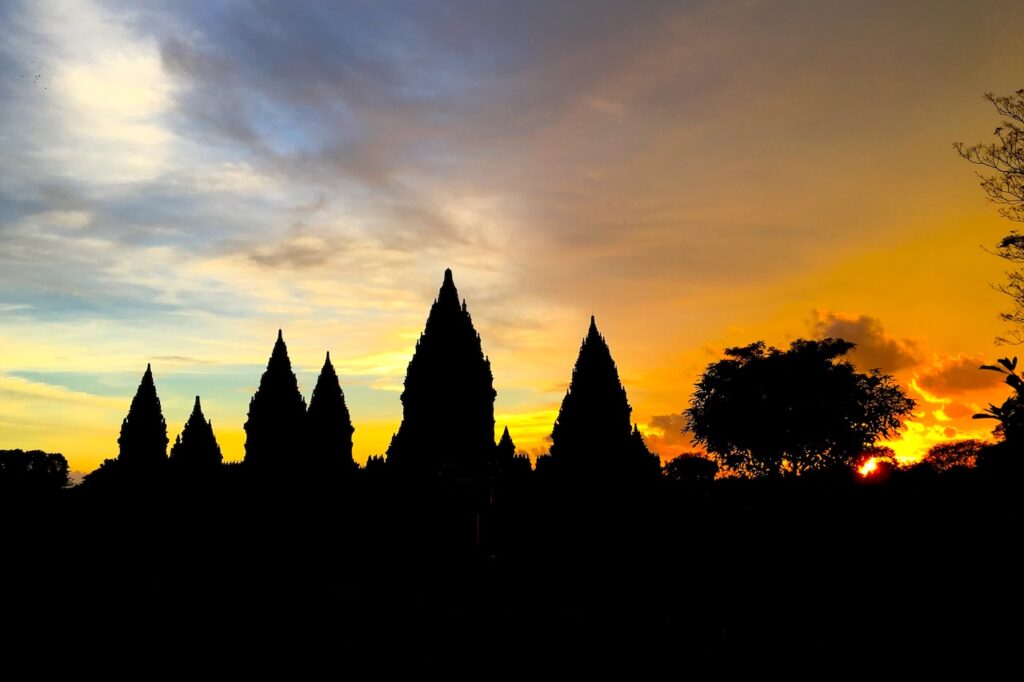
The first time you stand before Prambanan, especially as the golden light of sunset bathes the main temples, the sheer grandeur hits you. The 47-metre-tall Shiva temple dominates the skyline like a mountain of carved stone, flanked elegantly by the Brahma and Vishnu temples. The air carries a quiet reverence — you can almost feel the centuries of devotion echoing through the courtyards.
Even though it is no longer a daily active place of worship like many temples back home, the spiritual energy remains strong. Walking among the restored temples and evocative ruins, many Indian visitors experience a beautiful sense of cultural continuity — the same gods, the same Ramayana stories, now immortalised in Javanese stone under tropical skies. I still remember my own visit: as the evening shadows lengthened and the Ramayana Ballet began with the illuminated Shiva temple as its dramatic backdrop, it felt like the epic had come alive across oceans and time.
Size & Scale of Prambanan Temple Complex
The temple spreads across 39.8 hectares (98.3 acres) and is divided into three courtyards:
- Outer courtyard: Mostly in ruins today, once enclosed by stone walls.
- Middle courtyard: Originally featured 224 small Pervara temples in four concentric rows (68 + 60 + 52 + 44). Only six have been restored so far — the rest stand as poetic ruins that let you imagine the original splendour.
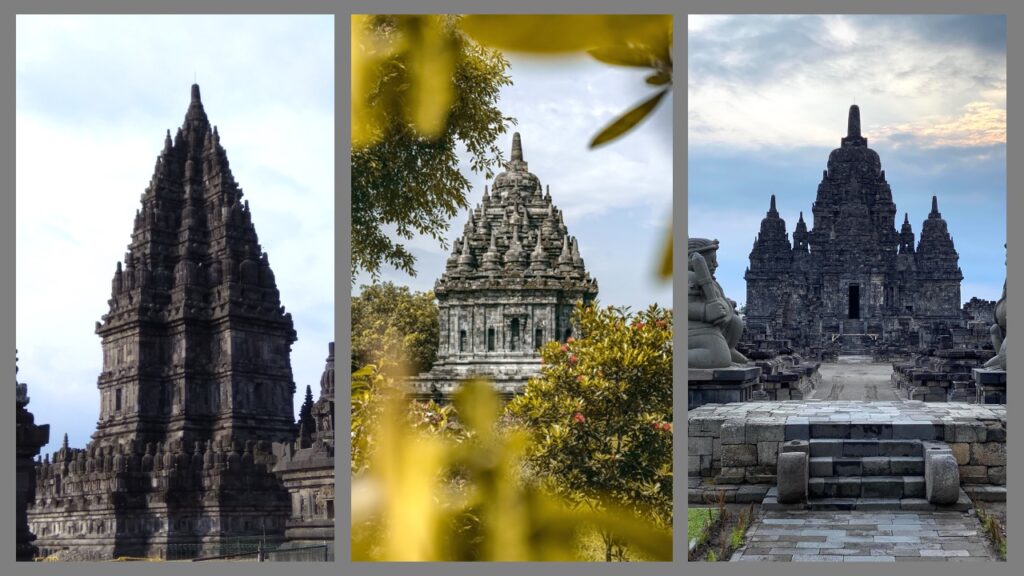
- Inner (central) courtyard: Fully restored with 16 temples, including the three majestic Trimurti temples, their Vahana mounts (Nandi, Garuda, Hamsa), two Apit shrines, and smaller Patok and Kelir temples at corners and gates.
Highlight temples to explore:
- Shiva Temple (47 m) — the largest and most ornate, with chambers for Shiva, Durga, Agastya, and Ganesha.
- Brahma Temple (33 m) — housing the four-faced Brahma statue representing the four Vedas.
- Vishnu Temple (33 m) — magnificent Vishnu in the central chamber.
- Nandi, Garuda & Hamsa Temples — symbolic and photogenic (Garuda is Indonesia’s national emblem).
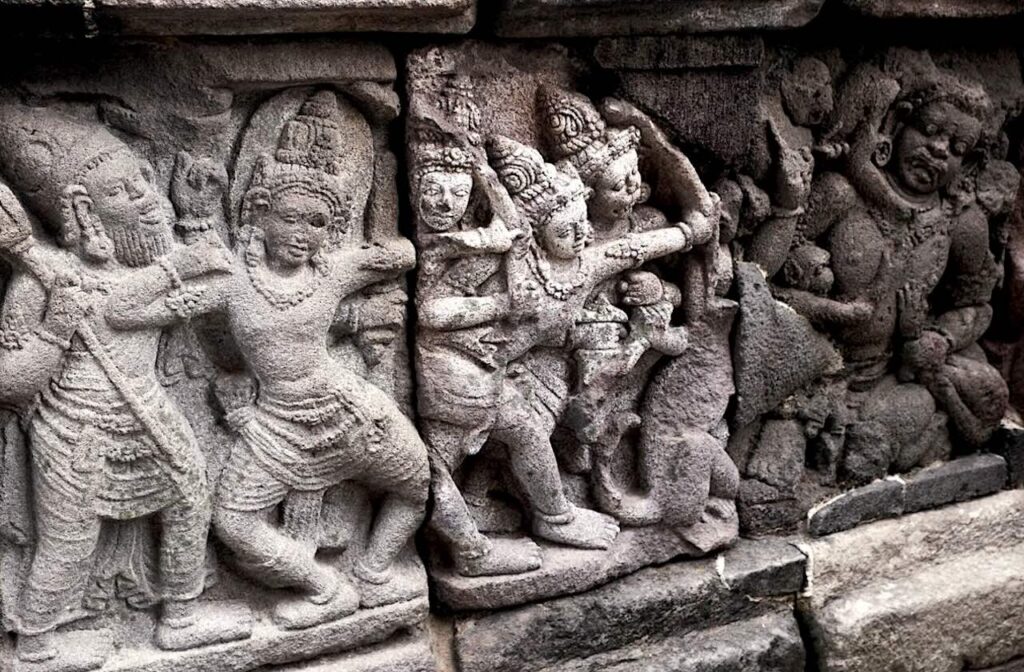
- Bas-reliefs — detailed Ramayana panels starting at the Shiva Temple and continuing counterclockwise. Don’t miss Rama’s exile, Hanuman’s leap to Lanka, and the epic battle with Ravana.
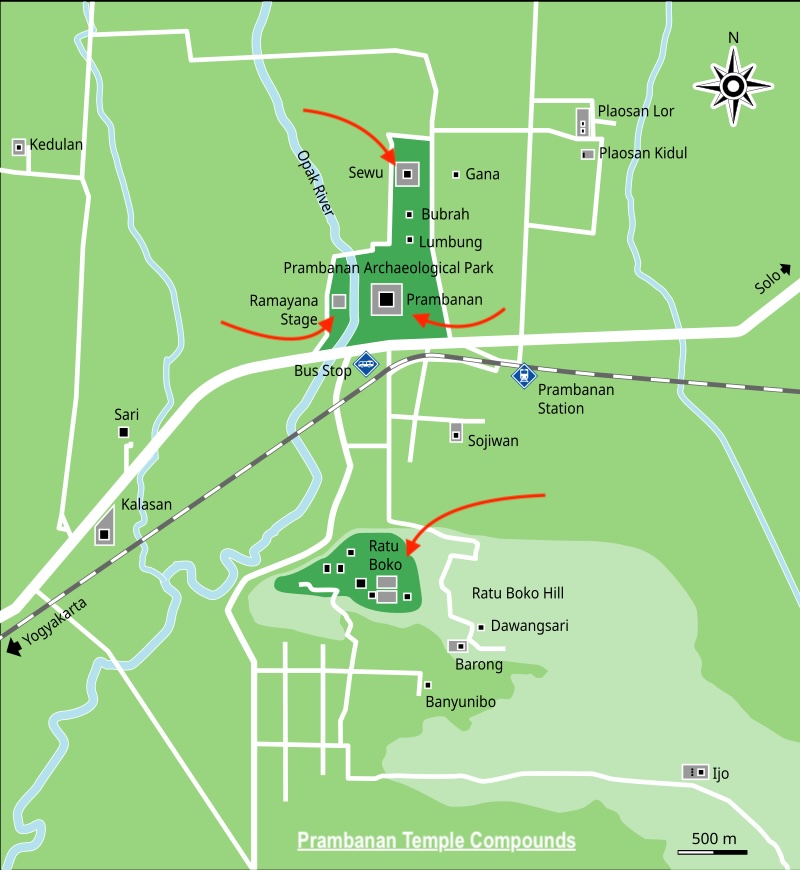
Nearby gems (included in your ticket and easy to combine): Sewu Temple (800 m north — impressive Buddhist complex), Bubrah & Lumbung Temples, Plaosan Temple (Hindu-Buddhist fusion), and Ratu Boko Palace (hilltop sunset views).
History of Prambanan
Prambanan was constructed around 850–856 CE during the Medang-Mataram Kingdom under the Sanjaya Dynasty (Hindu), at a time when Hinduism and Mahayana Buddhism coexisted peacefully in Central Java. Built by Rakai Pikatan as a grand Hindu counterpart to the Sailendra Dynasty’s Borobudur, it symbolised the Sanjaya dynasty’s assertion of power.
The complex was likely abandoned in the mid-10th century (around the 930s), after being in active use for less than 100 years. The Javanese court shifted from Central Java to East Java under King Mpu Sindok, who established the Isyana Dynasty. The exact reason remains debated among historians — possible causes include political power struggles, the devastating eruption of Mount Merapi (located just 25 km north), or earlier volcanic activity and floods that depopulated the region. Some sources date a major Merapi eruption to 1006 CE, which accelerated the decline.
Like Borobudur (as detailed in Part 2), the timing of Prambanan’s final abandonment is also debated. While the primary decline began with the 10th-century capital shift, some scholars link the complete desertion and loss of significance to the later spread of Islam across Java. Islam first reached the northern coasts in the 14th–15th centuries, with widespread conversion in inland Central Java occurring mainly in the 15th and early 16th centuries. Prominent Indonesian archaeologist Raden Soekmono (who extensively studied both sites) suggested that many Hindu-Buddhist temples, including Prambanan, were largely abandoned only after the local population converted to Islam.
Most of the structures further collapsed during a major earthquake in the 16th century. The ruins remained visible but largely forgotten by locals, who wove myths and legends around them (including the famous Rara Jonggrang tale of giants and a cursed princess). Rediscovered in 1733 by Dutch surveyor Cornelis Antonie Lons, serious restoration began in 1918 under colonial rule and continued after Indonesian independence. By 1993 the main temples stood tall again. Today, Prambanan stands as a UNESCO World Heritage Site and a powerful reminder of Java’s Hindu-Buddhist golden age.
Practical Travel Tips
How to Reach
- Grab/Gojek: IDR 50,000–80,000 one way (30–40 min).
- Private driver: Best for combining with Borobudur or Ratu Boko.
- Trans Jogja bus or train to Brambanan station + short walk.
Opening Hours & Tickets (2026)
- Tuesday–Sunday: 6:30 AM – 6:00 PM (last entry 4:30 PM).
- Monday: Inner courtyard closed for maintenance.
- Foreign Adult: IDR 400,000 | Child: IDR 250,000
- Book via: https://ticket.borobudurpark.com/en/prambanan-temple/
Best Time to Visit
Sunrise for peaceful photography and relief details; sunset for dramatic silhouettes followed by the Ramayana Ballet. Dry season (April–May or September–October) is ideal.
Ramayana Ballet
A must-do! Held Tuesday, Thursday & Saturday evenings (7:30–9:30 PM). The open-air theatre (dry season) with the illuminated Shiva Temple as backdrop is unforgettable. Tickets: IDR 150,000–450,000 — book ahead.
Pro Tips
- Hire a local guide for deeper insights into the carvings.
- Wear comfortable shoes, modest clothing (shoulders & knees covered), hat, and sunscreen.
- Combine Borobudur sunrise + Prambanan afternoon/evening for the perfect day.
- Don’t skip the small museum or a short walk to Sewu Temple.
Time Required (Health-Conscious Travellers)
- Short circuit (Main temples): 30–60 min
- Moderate (+Sewu): 1.5–2 hours
- Intense (+Plaosan): 3–4 hours
- Full day to Ratu Boko: 5–6 hours
FAQ – Prambanan Temple
Q: Can I visit on Monday?
A: Outer areas and museum yes; main inner temples closed.
Q: Is dress code enforced?
A: Shoulders and knees should be covered — respectful attire is appreciated.
Q: Best for photography?
A: Sunrise for details, sunset for magic.
A: Sunrise for details, sunset for magic.
Final Thoughts
Prambanan is more than magnificent architecture — it is a powerful reminder of the shared Hindu-Buddhist heritage that once flourished across Southeast Asia and the enduring connect between India and Indonesia. The towering spires, living Ramayana stories, and the magical ballet under the stars create moments of pure wonder and cultural pride.
If Borobudur moved you with its Buddhist serenity (and its own layered story of abandonment tied to political shifts and later Islamic conversion), Prambanan will touch your heart with its vibrant Hindu energy. Together, they form the sacred heart of any Yogyakarta journey.
Complete Series Navigation
- Part 1: Overall Planning & Itinerary → Read Here
- Part 2: Borobudur Temple → Read Here
- Part 3: Prambanan Temple (You are here)
- Part 4: Mount Merapi Jeep Safari & Adventure
Useful Official Links
- Prambanan Tickets: https://ticket.borobudurpark.com/en/prambanan-temple/
- Ramayana Ballet & Updates: Same portal or Traveloka
Have you visited Prambanan? Share your favourite moment — the sunset view, the Ramayana Ballet, or a particular bas-relief that moved you — in the comments below. We’d love to hear your stories!