Iran Suspends US Talks Amid Lebanon Tensions
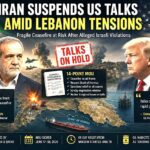
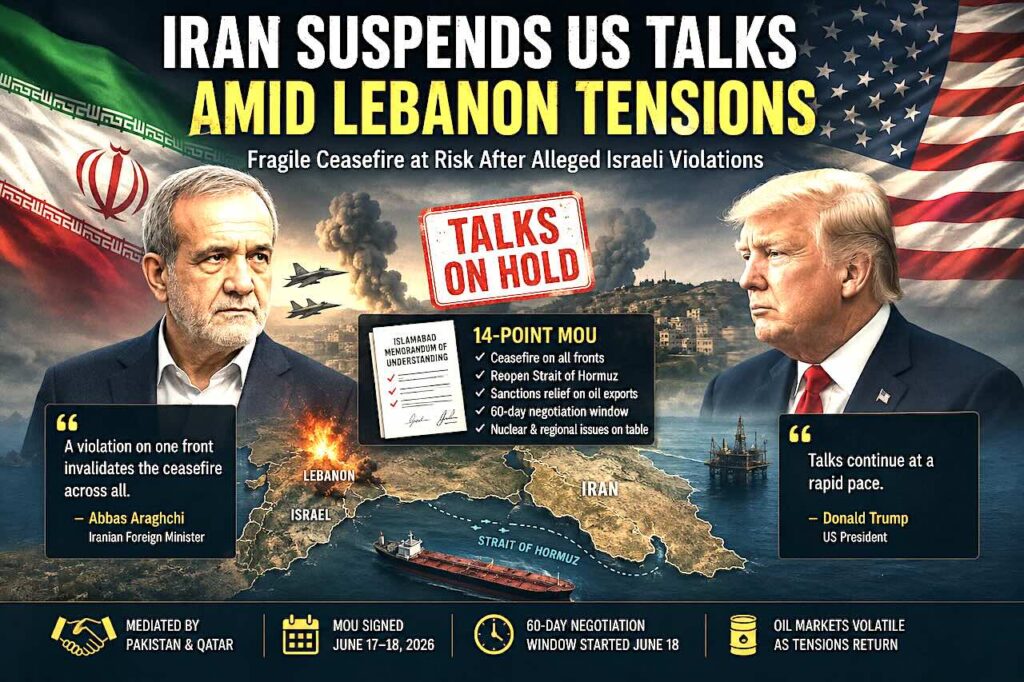
19 June 2026, Tehran has suspended its negotiating team’s preparations for follow-up talks with the United States in Switzerland, just a couple of days after the electronic signing of a landmark 14-point Memorandum of Understanding (MOU). The move, reported by Iranian state-aligned media including Fars, Tasnim, and Hezbollah-affiliated Al-Mayadeen, stems from accusations that Israeli military operations in southern Lebanon constitute a flagrant violation of the agreement’s core ceasefire clause.
The MOU, mediated by Pakistan and Qatar and named the “Islamabad Memorandum of Understanding between the United States of America and the Islamic Republic of Iran,” was signed on or around June 17-18, 2026, by US President Donald Trump (in Switzerland) and Iranian President Masoud Pezeshkian (in Tehran). It aimed to extend a fragile ceasefire, reopen the Strait of Hormuz for toll-free international shipping, ease select US sanctions on Iranian oil exports, and initiate a 60-day negotiation window on broader issues including Iran’s nuclear program and regional proxies.
As detailed in Tattvam News’ coverage of the “US-Iran Islamabad Memorandum: A Fragile Ceasefire or Pathway to Lasting Peace?” (published June 18), the deal represented a tactical de-escalation following months of direct and proxy conflicts. However, our earlier analysis in “Beyond the Switzerland MoU: A Forensic Analysis of US-Iran MoU Structural Risks” (June 15) highlighted inherent vulnerabilities, particularly around enforcement mechanisms for multi-front ceasefires involving Israel, Hezbollah, and other actors.
Iranian sources emphasise that the MOU’s first clause explicitly requires an immediate halt to military operations “on all fronts, including Lebanon,” with respect for Lebanese sovereignty. Continued Israeli presence and reported strikes deeper into southern Lebanon amid an ongoing occupation and buffer zone disputes are seen as are seen as a direct violation of the agreement. Foreign Minister Abbas Araghchi reportedly stated that a violation on one front invalidates the ceasefire across all.
US officials, including President Trump, have pushed back, claiming talks continue “at a rapid pace” and that discussions with Israel and Hezbollah representatives are easing tensions. Switzerland confirmed that initial implementation talks at the Bürgenstock resort were still notionally planned, though Iranian participation is now on hold.
Broader Context from Tattvam News Reporting
This development aligns with Tattvam News’ ongoing coverage of the 2026 Iran-related conflicts. In “US-Iran Peace Agreement: A Fragile Pause in a High-Stakes Confrontation” (June 15), we noted the MOU’s potential to reopen Hormuz and stabilize oil markets but warned of proxy flashpoints like Lebanon undermining gains. Markets initially reacted positively to the deal with oil prices dipping below $80 per barrel but renewed uncertainties have introduced volatility.
Our insights series, including pieces on the Strait of Hormuz crisis and lessons from the wider 2026 Iran war for Indian strategy, underscores the geopolitical stakes for energy security, particularly for importers like India. The suspension risks prolonging regional instability and complicating sanctions relief.
Latest Developments (19 June 2026)
US Vice President JD Vance confirmed that the 60-day negotiation clock officially started on Thursday, 18 June 2026, describing early implementation as positive. Vance stated Iran is honouring its commitments so far, noting record 12.5 million barrels of oil passed through the Strait of Hormuz the previous night, the highest since the conflict began with no Iranian attacks on shipping. He emphasised that the final deal must end uranium enrichment, destroy existing stockpiles, and cap Iranian missile ranges, stressing no money without compliance and that any sanctions relief or foreign investment requires full Iranian behavioural change and US sign-off.
Despite these upbeat signals from Washington, Iranian sources reported the suspension of the negotiating delegation’s trip to Switzerland over continued Israeli operations in southern Lebanon, which Tehran views as a violation of the MOU’s first clause on ceasefire across all fronts. Mediators from Pakistan and Qatar are reportedly working to bridge the gap, while Vance indicated his own travel plans for talks remain uncertain.
What’s Next?
The situation remains highly fluid. No full collapse of the MOU has been confirmed, but mutual accusations threaten the 60-day negotiation window. Hezbollah activity and Israeli operations continue, while mediators from Pakistan and Qatar work behind the scenes. Tattvam News will continue monitoring for updates on enforcement, potential Swiss talks resumption, and implications for global energy routes.