Updated on May 09, 2026
Framing India: Western Gaze, Narrative Control, and the Politics of Portrayal Series – Part 2
Between Applause and Unease
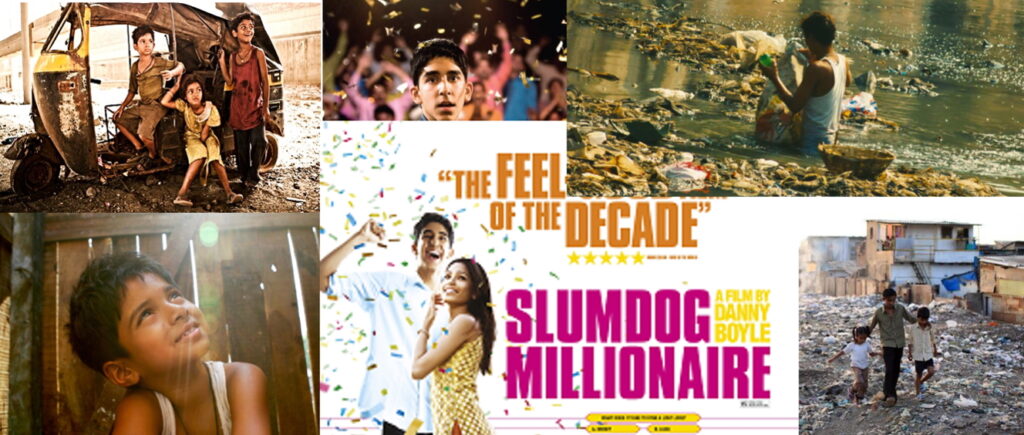
When Slumdog Millionaire swept the 2009 Academy Awards — winning eight Oscars, including Best Picture and Best Director — I was in Malaysia, watching the film with friends from different parts of the world. Yes, we all enjoyed the fast-paced energy and the underdog story. But as an Indian, I couldn’t shake off a lingering unease.
One image kept returning: a young boy diving headfirst into a pit of human excreta just to get a film star’s autograph.
I couldn’t help but wonder — Is this how the world now sees us? What impression would my friends carry about India after this?
This is Part 2 of the Framing India series.
Connecting the Dots: From Varanasi Streets to Global Cinema
In Part 1, we saw how Western documentary filmmakers in the 1960s and 70s staged poverty in Varanasi — throwing biscuits at hungry children to manufacture dramatic images. That personal memory exposed a deep pattern: the Western gaze does not merely document India, it often actively shapes the story it wants to tell.
Decades later, that same gaze moved from grainy documentaries to big-budget, Oscar-winning cinema. The tools had changed, but the politics of portrayal remained strikingly consistent. This part examines how that pattern continued — and became even more powerful.
The Scene That Crossed the Line
The now-notorious scene shows a young boy jumping into a pit filled with human faeces simply to obtain a film star’s autograph. While the film is loosely based on Vikas Swarup’s novel Q & A — which does explore hard-hitting themes of poverty, crime, and child exploitation — this particular scene does not exist in the original book. It was added specifically for the film by British screenwriter Simon Beaufoy and director Danny Boyle.
Defenders argue that the scene symbolises innocence, obsession, or determination. But the visceral image of a brown child, gleefully covered in filth and presented with stylish cinematic flourish, was not art. For many Indians, it felt like a symbolic violation of human dignity.
Would a Western child ever be shown in such a demeaning situation in a major studio production? The answer, conspicuously, is no.
Poverty as Spectacle, Not Reality
The critique of Slumdog Millionaire is not that it depicted poverty — poverty exists and deserves honest representation. The real issue lies in how it was depicted: without nuance, without agency, and without the context of resilience, community spirit, and quiet dignity that actually define life in Mumbai’s slums.
The film reduced the complexities of working-class neighbourhoods to a parade of grotesque visual clichés — child exploitation, violence, mutilation, and excreta — all wrapped in fast-paced editing and rousing music designed to make suffering palatable for foreign audiences.
As many Indian critics rightly observed, this was poverty porn — a sensationalised package crafted not to inform the world, but to evoke pity, to titillate, and, most insidiously, to reinforce Western preconceptions of the “Third World” — the Global South.
That, ultimately, is how it won the Oscars.
Narrative Colonialism: The Hidden Agenda
This is not a new phenomenon. From colonial-era ethnography to 1960s–80s BBC documentaries and now Oscar-winning films, there runs a consistent thread: portray India as dirty, chaotic, and tragically exotic — always in need of rescue, always a subject to be observed, never the narrator of its own story.
Danny Boyle, a British filmmaker, directed the movie. Although based on an Indian novel, the creative control and cinematic gaze remained firmly Western. The timing also invites scrutiny. As India was emerging as a global economic force in the late 2000s, this film conveniently reminded the world of India’s “real” face — its dirt, its depravity, and its desperation.
This is narrative colonialism in its modern cinematic form.
Where Are Their Slums?
Slums and extreme poverty exist in London, New York, Paris, and Los Angeles. Yet these are never depicted with the same theatrical misery and aestheticised revulsion reserved for Indian slums. Western poverty is usually given narratives of struggle, redemption, or systemic critique. Indian poverty, by contrast, becomes a canvas for shock, pity, and moral superiority.
What the West Rewards, and What It Ignores
Slumdog Millionaire was celebrated at nearly every major Western award ceremony while sparking protests in Mumbai. Western institutions reward stories that affirm their worldview: the developing world as tragic, backward, yet occasionally inspiring in its suffering.
As writer Arundhati Roy once observed, the poor in India are not merely allowed to suffer — they are made to suffer spectacularly in these narratives, so that others may applaud their perseverance.
Cinema as Cultural Weaponry
The international success of Slumdog Millionaire was not a cinematic accident. It was a strategic confirmation of old narrative expectations. A British director, Hollywood Oscars, and the most degrading scenes becoming the most iconic — none of this was coincidence.
It reinforced India’s place in the global imagination not as a rising power or civilisational equal, but as a colourful backdrop for someone else’s moral and artistic validation.
As we continue to challenge these imposed media constructions, Slumdog Millionaire must be recognised not as an isolated case, but as part of a deeper, continuing pattern.
It’s time to reclaim the lens.
Jai Hind.
Framing India: Western Gaze, Narrative Control, and the Politics of Portrayal Series Navigation:
Read Part 1 here → The BBC and the Origin of Exploitative Documentary Making
You are reading Part 2 here on this page → Slumdog Millionaire Poverty Porn
Continue to Part 3 here → India’s Daughter Nirbhaya & Media Double Standards
Continue to Part 4 here → BBC’s Fraught Relationship with India – Bans, Documentaries, and the Politics of Portrayal