Unpacking the Buzz: Fact, Fiction, and the Firestorm Around India’s Alleged Foreign Airbase Moves
In the high-voltage theatre of South Asian geopolitics, nothing spreads faster than rumours about airbases, alliances, and covert deals. This month’s online obsession? Bagram Airbase — Afghanistan’s infamous military fortress — and viral claims that India is about to take it over or already taken over as on October 30, 2025 from the Taliban in a “strategic swap” for its lost foothold at Ayni Airbase in Tajikistan.
From X threads to YouTube Conspiracies, the chatter paints a blockbuster plot: India swooping into Bagram, Pakistan rattled, China alarmed, and the U.S. fuming. But does any of it hold water? Or is this just another geopolitical ghost story spun for clicks?
Let’s cut through the noise and separate the real from the ridiculous.
Bagram Airbase: The Ghost of Empires Past
To understand the frenzy, we need to revisit Bagram’s turbulent history.
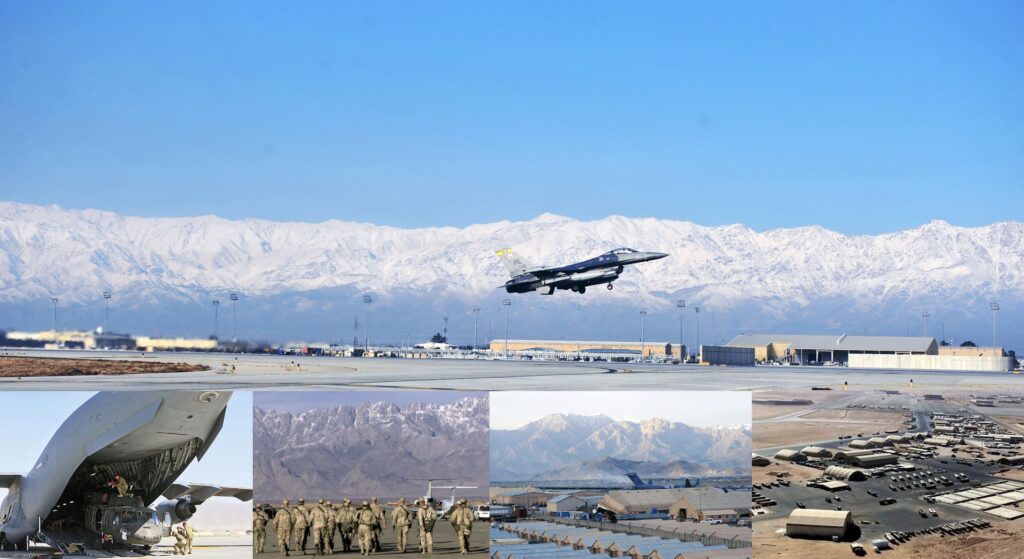
Built by the Soviets in the 1950s, Bagram became the beating heart of the U.S. military machine after 2001. It hosted nearly 50,000 troops, drone squadrons, and intelligence units during America’s 20-year war in Afghanistan. When the U.S. made its chaotic exit in 2021, the Taliban seized the base intact — complete with abandoned Humvees, aircraft, and the aura of a symbolic victory.
Fast-forward to 2025, and the name “Bagram” has re-emerged from the shadows — this time thanks to Donald Trump. In September, the U.S. President publicly declared that Washington was trying to “get Bagram back,” citing its proximity to China’s nuclear sites — “barely an hour away by air.” Days later, he upped the ante on Truth Social, warning, “If Afghanistan doesn’t give Bagram back… BAD THINGS ARE GOING TO HAPPEN!!!”
The Taliban’s response was swift and defiant: “Not even one meter” of Afghan soil would be ceded. Soon after, a Moscow-led summit brought India, Russia, China, Iran, and Pakistan to the same table — all opposing any foreign base re-entry in Afghanistan. The message was clear: Bagram stays Afghan.
And yet, the whispers of an “Indian Bagram comeback” refused to die, especially after Afghanistan’s Foreign Minister’s India visit early October 2025.
The Ayni Airbase Exit: Ending an Era, Not a Partnership
While Bagram headlines made noise, Ayni Airbase in Tajikistan became the quieter subplot fuelling speculation.
Just 15 kilometres west of Dushanbe, Ayni was India’s first overseas airbase — a Cold War relic revived in the early 2000s with a $70–100 million facelift. India extended the runway to 3,200 meters, added hangars, and deployed Mi-17 helicopters and Su-30MKIs for limited stints. The base gave India a strategic window into Afghanistan’s Wakhan Corridor and Pakistan’s northwest flank — Peshawar was within reach.
But by 2022, India’s 20-year lease quietly expired. The Ministry of External Affairs (MEA) later confirmed:
“After the conclusion of the agreement, we handed over the facility to Tajikistan. This happened in 2022.”
No drama, no eviction. Just a routine closure — though online anti-India commentators painted it as a “humiliation” or “Turkish-backed expulsion.”
In reality, India’s Central Asian engagement continues through the Farkhor base and Chabahar Port, reflecting a pragmatic pivot from military footprints to economic and diplomatic corridors.
Social Media Meltdown: When Tweets Become ‘Truths’
Enter the digital arena — where hashtags drive headlines.
In October, #BagramAirbase trended across X (formerly Twitter), amassing over half a million mentions. Defense enthusiasts, journalists, and nationalist influencers all weighed in.
- Pro-India accounts hailed Bagram as a “masterstroke” to flank Pakistan and China.
- Pakistani handles cried foul, alleging India’s “secret takeover” of the Taliban’s base.
- Afghan users chimed in with hopeful takes about “India bringing stability.”
Then came the wild claims: a “Bagram-for-Ayni swap,” “Indian C-17s landing secretly,” and “Taliban-IAF negotiations.” None had evidence — not a single satellite image, flight log, or official word.
YouTube’s Clickbait Carousel: Where Fiction Takes Flight
Search “India Bagram Airbase 2025” on YouTube and prepare for a deluge of dramatic thumbnails — fighter jets, red arrows, and all-caps headlines screaming “GAME CHANGER!”
Videos like “India Gets Bagram Airbase! Pakistan Trapped, China Just 1 Hour Away“ or “भारत का बगराम ऑपरेशन | America Shocked“ rake in hundreds of thousands of views.
The pattern? High engagement, low verification.
These creators splice old war footage with speculative commentary, packaging imagination as intelligence.
Meanwhile, established outlets such as The Print and Bhaskar English have repeatedly debunked these claims — but calm fact-checks rarely go viral in a sea of sensationalism.
The Reality Check: What’s Really Happening
Here’s what’s verifiable:
- Bagram remains under Taliban control. No handover to India or any foreign power.
- India’s withdrawal from Ayni happened in 2022 when its lease expired — not due to Turkish/Pakistani or Chinese pressure.
- No credible source — not Kabul, not New Delhi, not Washington — supports the “Bagram-for-Ayni” narrative.
- Trump’s remarks reignited attention but led to no official negotiations or deployments.
Fact-checkers from Economic Times, Central Chronicle, and News24 have all dismissed the rumor as baseless.
So, why the viral wildfire? Because India vs. Pakistan narratives sell. They trigger emotions, clicks, and comment wars — the oxygen that fuels social algorithms.
Beyond the Buzz: India’s Real Game
Strip away the noise, and India’s approach is pragmatic, not provocative.
New Delhi’s engagement with the Taliban is rooted in security and stability, not ideology — from countering Pakistan-backed terror groups like the TTP to ensuring access for humanitarian aid via Chabahar Port.
The loss of Ayni isn’t a setback but a strategic recalibration. India is deepening economic, diplomatic, and technological linkages with Central Asia, and moving away from overt military footprints.
As one geopolitical observer on X aptly put it:
“India joins Russia, China, and Taliban to oppose foreign bases — not to occupy one.”
In short, India isn’t taking over Bagram — it’s taking charge of its narrative in a region defined by shifting loyalties and digital disinformation.
Final Word: The Real Air War Is Online
Bagram’s ghosts, Ayni’s memories, Trump’s bluster — they all make perfect clickbait. But behind the viral fog lies a simpler truth: geopolitics has gone algorithmic.
For every real policy move, ten stories get spun. And in that cacophony, the difference between strategy and speculation blurs fast.
India’s next move in Afghanistan won’t be announced on X or YouTube. It’ll happen — quietly — in backchannel diplomacy, trade corridors, and security dialogues.
Until then, beware of the buzz… !
“`Explore Related Articles
- Bagram and Beyond: Part 3 – Trump’s “China Nuke Containment” Smoke Screen and the Rare Earth Reality | dated October 18, 2025 | 05:00 PM
- Bagram and Beyond: Part 2 – India + Afghanistan’s New Game | dated October 18, 2025 | 04:00 PM
- Bagram and Beyond: Part 1 – Regional Power Realignments | dated October 17, 2025 | 08:33 PM
- India–Taliban Diplomatic Relations: A New Geopolitical Chapter in South Asia | dated October 10, 2025 | 01:44 PM
- Early Moves on Bagram Air Base: US–Taliban Handover Reports and Strategic Analysis from April 2025 | dated September 19, 2025 | 02:27 PM
- Trump Seeks to Reclaim Bagram Air Base from Taliban: Full Coverage and Reactions | dated September 19, 2025 | 12:37 PM
- US Revokes Sanctions Exemption on Iran’s Chabahar Port, Impacting India’s Strategic Gateway | dated September 18, 2025 | 11:05 PM
- Afghanistan, China, Pakistan Hold 6th FMs Meeting in Kabul on Regional Ties, India Watchful | dated August 21, 2025 | 09:04 PM