Trump Tariffs and India: Challenges Confronted, Realities Embraced, Opportunities Forged
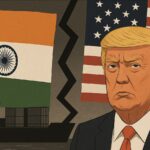
The trade tariffs introduced by the United States under President Donald Trump represented a seismic shift in global commerce, with India — a crucial trading partner — caught in the crossfire. Targeted largely at labour-intensive Indian exports, these tariffs sent ripples of uncertainty through India’s economy. Now, as the initial shock wanes, it is vital to distinguish fact from conjecture, assess the true impact on the Indian economy and businesses, and acknowledge the strategic adaptations turning adversity into opportunity.
Tariff Turbulence: The Immediate Fallout
In 2024, India’s exports to the US stood at about $87 billion, roughly 2.5% of the nation’s GDP, dominated by sectors such as textiles, apparel, gems and jewellery, seafood, and leather goods. To cut the US trade deficit with India — which hit $45.7 billion in 2024 — the Trump administration imposed tariffs up to 50% on many Indian goods. Additionally, India’s continued purchase of discounted Russian oil provoked Washington further, intensifying tariff actions. The ramifications were stark:
- Sharp declines in US-bound shipments disrupted millions of jobs reliant on labour-intensive exports.
- Projections warned of GDP growth slowing by up to 1% by 2026 due to curtailed exports.
- MSMEs, pivotal to export supply chains, found themselves at a disadvantage compared to Asian competitors like Vietnam and Bangladesh benefiting from lower tariffs.
- The rupee slid under pressure, raising fears of imported inflation and costlier foreign debt.
- Certain manufacturing sectors, notably shrimp farming and textiles, witnessed contract cancellations and layoffs.
Notably, pharmaceutical, semiconductor, electronics, and IT sectors mostly escaped tariff impositions, cushioning the blow to India’s overall export portfolio.
India’s Strategic Response: Diversification and Domestic Revival
Rejecting the tariffs as unjust trade barriers and defending its sovereign economic choices, India quickly launched a comprehensive counter-strategy:
- Aggressively expanding export horizons beyond the US, focusing on the EU, Middle East, Africa, Latin America, and Southeast Asia.
- Strengthening homegrown manufacturing through flagship programs such as “Aatmanirbhar Bharat,” “Swadeshi,” and “Vocal for Local.”
- Considering fiscal relief via GST cuts and improving ease of doing business.
- Keeping retaliatory tariffs as a diplomatic option.
Market Realignment: Evidence of Export Diversification
Recent data underscores a sustained shift predating the tariffs:
- Gems and jewellery exports to the US fell over 20% in Q1 2025, while surging 76% to the UAE.
- Rice shipments to the US declined by 4.8% even as exports flourished in Bangladesh, Kenya, and Togo.
- Tractor exports to the US dropped 22% in early FY26, offset by gainful increases in Italy and Belgium.
The Commerce Ministry regards short-term disruptions as manageable, confident of sustained growth given India’s robust domestic market, which drives more than half the GDP. New sectors such as renewables, electric vehicles, healthcare, and fintech promise a more diversified and resilient economic future beyond traditional exports.
Beyond Tariffs: Catalysing Indigenous Technology and Defence
Heightened tensions with the US and concerns over sanctions have sparked an intensified drive toward technological and strategic independence. India is prioritizing the development of its own IT infrastructure, semiconductor manufacturing, and defence capabilities—areas historically dependent on US corporations:
- Efforts are underway to build domestic alternatives to American platforms and services like Google, Microsoft, Facebook, WhatsApp, Instagram, X (Twitter), and more.
- The defence sector is accelerating indigenous design and production to reduce reliance on foreign imports and enhance strategic autonomy.
This push goes beyond reacting to current challenges; it embodies a vision for India’s sovereign control over critical technologies essential to its future economic security and global standing.
Turning the Tide: Challenges as Catalysts for Growth
Though some sectors have been disrupted, the overall impact on India’s economy is contained. The affected export segment of $60.2 billion accounts for about 13% of total merchandise exports—a setback but not a crisis. India’s vast domestic consumption offers a robust cushion against external shocks, while emerging industries and government support measures foster innovation and export diversification. Embracing technology and strengthening manufacturing capabilities are central to India’s long-term resilience and global competitiveness.
Conclusion: From Trade Turbulence to Economic Triumph
The Trump-era tariffs may have been intended as leverage but have instead sharpened India’s focus on economic self-reliance and diversification. India’s determined pivot to new markets, deepen local manufacturing, and aggressively develop indigenous technology and defence sectors reflects a confident nation ready to transform external challenges into sustainable growth. While India-US trade relations may enter a more complex phase, India’s inherent strengths and strategic initiatives ensure a dynamic and resilient economic future—one that not only weathers global trade shifts but builds upon them to become a stronger, more independent powerhouse on the world stage.