Persian Gulf Crisis: Winners Behind the War?
Competing Narratives in the Persian Energy Crisis
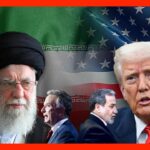
The Persian Gulf crisis has triggered not only a military and economic shock but also a parallel information war. Mainstream Western narratives continue to frame the campaign against Iran as a calibrated strategic success, emphasising the suppression of its nuclear ambitions and the degradation of its missile programme, even as questions persist over the extent and durability of that impact.
However, an alternative layer of analysis—ranging from independent observers to speculative online discourse—questions whether the unfolding energy disruption is producing unintended beneficiaries or even serving deeper strategic interests.
It is important to clarify that the perspectives discussed in this section reflect circulating debates, online narratives, and analytical speculation. They do not represent the editorial position of Tattvam News Today. However, given their growing traction across digital platforms, they warrant examination within the broader context of the crisis.
Mainstream Framing: Strategic Success and Controlled Outcomes
Western political and defence establishments have framed the conflict within a clear strategic template. Official briefings emphasise that the campaign has significantly degraded Iran’s nuclear breakout timeline, weakened the Islamic Revolutionary Guard Corps (IRGC) command structure, and reinforced the security architecture of Gulf allies.
At the same time, officials underline that these objectives have been achieved without the deployment of large-scale ground forces. This “no boots on ground” positioning is presented as evidence of operational efficiency and restraint. The broader long-term goal, according to this narrative, remains the restoration of deterrence and the stabilisation of energy flows through the Gulf.
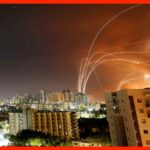
The tone of this framing suggests that the mission is largely accomplished, albeit with ongoing “mopping-up” operations required to sustain pressure. However, this perspective sits uneasily alongside the continuing escalation in both missile activity and energy infrastructure strikes.
Alternative Narratives: Economic Winners in the Persian Energy Crisis
Beyond official accounts, a range of alternative interpretations has emerged. These theories vary in credibility and evidence, yet they converge on a central question: who stands to gain economically from the Persian energy crisis?
Oil Price Spike and Windfall Revenues
One widely discussed argument centres on the dramatic rise in oil prices following the outbreak of hostilities. Brent crude surged from approximately US$67 before the conflict to levels exceeding $100, with projections reaching as high as $130–150 under sustained disruption.
In this context, some analysts argue that US shale producers and major oil companies have emerged as clear beneficiaries. As a net energy exporter, the United States is positioned to capitalise on elevated global prices. Higher margins translate directly into increased revenues, particularly for firms operating in the Permian Basin and other shale regions.
More speculative versions of this argument extend into allegations of insider positioning. Certain discussions on platforms such as X and alternative media channels claim that individuals with political or financial influence may have taken positions in energy markets prior to the escalation. These claims remain unverified and lack substantiated evidence. Nevertheless, their circulation reflects broader public scepticism about the intersection of geopolitics and financial gain.
The Venezuela Blending Strategy
Another strand of analysis, including earlier reporting by Tattvam News, points to a potential restructuring of global supply chains through Venezuela. According to this view, Iranian light condensate could increasingly be routed to Venezuela, where it is blended with the country’s heavy crude.
This blending process produces a grade of oil more suitable for refining, particularly in facilities configured for medium blends. The implication is that such arrangements could reduce reliance on traditional refining hubs in Asia, including India and China, which specialise in processing heavier crude streams.
From a strategic perspective, this scenario suggests a dual advantage. It enables the monetisation of otherwise constrained Iranian output while simultaneously integrating Venezuelan resources into a US-influenced supply framework. Whether this represents deliberate design or opportunistic adaptation remains a matter of debate.
Russia’s Expanding Energy Leverage
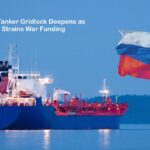
Among all potential beneficiaries, Russia is frequently identified as the most direct economic winner of the Persian energy crisis. As one of the world’s largest oil exporters, Moscow stands to gain significantly from sustained high prices.
Elevated crude prices translate into substantial increases in export revenues. Estimates suggest that each incremental rise in oil prices generates billions of dollars in additional monthly income for the Russian economy. Furthermore, the diversion of Western strategic focus towards the Gulf may dilute the intensity of sanctions enforcement linked to the Ukraine conflict.
In parallel, Russia’s energy relationship with China has gained renewed importance. As global supply chains fragment, both countries can leverage redirected flows and pricing advantages. Reports indicate that Russian Urals crude has been trading at stronger margins relative to earlier discounted benchmarks, reflecting tighter global supply conditions.
Petrodollar Dynamics and China Factor
A broader geopolitical interpretation frames the Persian energy crisis as part of an ongoing contest over the currency of global energy trade. Iran and China have actively explored mechanisms to settle oil transactions in yuan, challenging the long-standing dominance of the US dollar.
Disruption of Iranian exports and instability in Gulf supply chains could, in theory, push energy trade back towards dollar-denominated channels. This would reinforce the petrodollar system and sustain US financial influence over global markets.
At the same time, higher energy prices disproportionately affect import-dependent economies such as China and several European nations. This creates an additional layer of economic pressure, which some analysts interpret as a strategic lever rather than a mere side effect of conflict.
Collusion and Strategic Manipulation Theories
At the more speculative end of the spectrum are theories suggesting coordinated or semi-coordinated actions among major regional and global players. Some narratives propose that actors such as Saudi Arabia or Israel may have influenced escalation dynamics to drive oil prices upward, thereby increasing revenue streams or achieving strategic objectives.
Others draw historical parallels with past oil shocks, arguing that global financial centres have historically benefited from engineered disruptions in energy markets. These claims remain largely conjectural and are not supported by verifiable evidence. However, their persistence highlights a recurring pattern of distrust in official explanations during periods of economic upheaval.
Why These Narratives Gain Traction
The traction of these theories is not entirely surprising. The timing of events raises questions. The conflict began on 28 February 2026, followed by an immediate surge in oil prices. Despite official assurances of control, prices have remained elevated, and attacks on energy infrastructure have expanded.
These apparent contradictions create space for alternative interpretations. At the same time, there is no conclusive evidence to support claims of deliberate price manipulation or premeditated profiteering. Most established analyses attribute the price surge to supply disruptions, particularly the near-blockade of the Strait of Hormuz and the targeting of key facilities.
Nevertheless, the gap between official messaging and observable outcomes continues to fuel speculation.
Net Assessment: Strategy, Miscalculation, or Both?
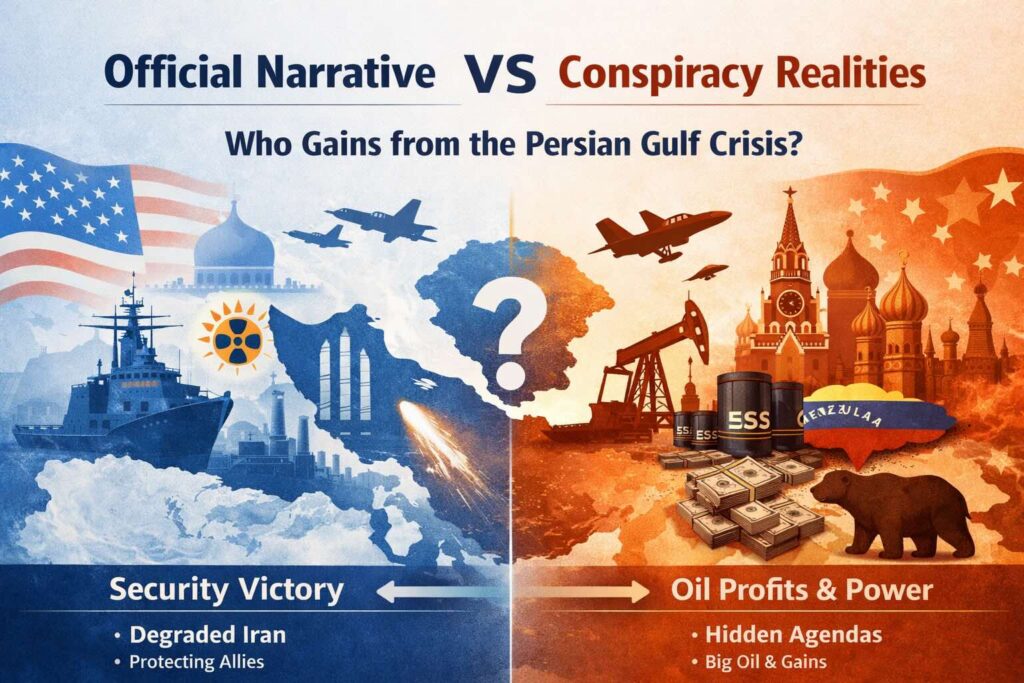
The Persian energy crisis presents two competing realities. The official narrative emphasises security gains, deterrence, and controlled escalation. In contrast, the emerging economic picture suggests a significant redistribution of energy power and financial advantage.
The United States appears positioned to benefit from higher energy exports and potential supply chain restructuring. Russia gains from elevated prices and shifting geopolitical focus. Meanwhile, global consumers face rising costs, inflationary pressures, and reduced energy security.
Whether this outcome reflects deliberate strategy or unintended escalation remains unresolved. What is clear, however, is that the burden of the crisis falls disproportionately on ordinary citizens and on the world’s finite energy resources.