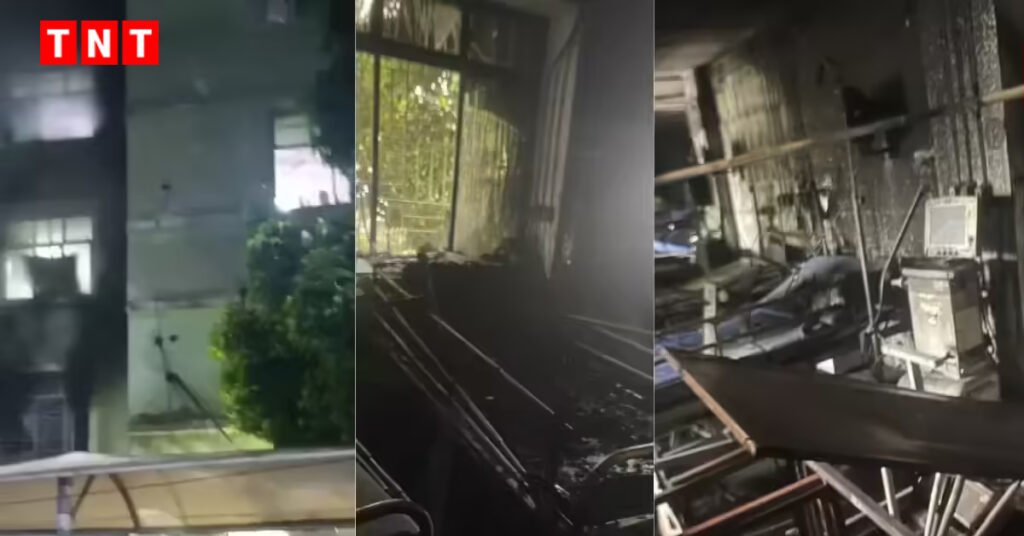
Fire at SCB Medical College Cuttack Kills 10 Patients
A devastating fire at SCB Medical College and Hospital has resulted in the tragic loss of ten patients, sending shockwaves across the healthcare community and raising urgent questions about hospital safety standards. The incident occurred in the early hours when flames reportedly spread through a section of the hospital, creating chaos among patients, medical staff, and attendants.
Located in Cuttack, one of the major cities in Odisha, SCB Medical College and Hospital is one of the region’s largest and most important healthcare institutions. The hospital serves thousands of patients every day, making the impact of this tragedy particularly significant for the local community.
Authorities have launched investigations into the cause of the fire, while emergency teams and medical personnel worked tirelessly to evacuate patients and contain the situation.
Also Read: LPG Shortage Halts Hot Meals at Delhi HC Canteen
A Night of Panic Inside the Hospital
According to initial reports, the fire broke out in a ward where several patients were undergoing treatment. Smoke quickly filled the area, creating confusion and panic among patients and hospital staff.
Witnesses described chaotic scenes as medical teams rushed to move patients to safer locations. Doctors, nurses, and attendants worked together to evacuate individuals who were unable to move on their own, including elderly and critically ill patients.
Hospitals are complex environments where evacuation can be particularly challenging. Many patients depend on medical equipment such as oxygen support, monitors, and IV systems. Disconnecting and relocating them safely requires coordination and time—two things that are often in short supply during emergencies.
Unfortunately, despite rescue efforts, ten patients lost their lives in the incident.
Emergency Response and Rescue Efforts
As soon as the fire was detected, hospital staff alerted emergency services. Firefighters arrived at the scene and began efforts to control the flames while medical teams focused on patient evacuation.
Emergency responders reportedly used fire extinguishers, hoses, and ventilation systems to prevent the fire from spreading to other parts of the hospital building. Meanwhile, doctors and nurses moved patients to other wards and nearby medical facilities.
Ambulances were mobilized to transport critically ill patients to safer locations where they could continue receiving treatment.
The rapid response helped prevent the situation from escalating further, but the loss of lives has left the community grieving.
Also Read: Delhi Excise Policy Case Verdict Sends Strong Message
Possible Causes Under Investigation
Authorities have not yet confirmed the exact cause of the fire, but preliminary investigations suggest that electrical issues may have played a role.
Hospitals rely heavily on electrical systems to power life-saving equipment, lighting, air conditioning, and medical devices. Overloaded circuits, faulty wiring, or malfunctioning equipment can sometimes trigger fires if safety systems fail.
Investigators are examining the affected area to determine how the fire started and whether existing safety protocols were followed.
The findings of the investigation will be critical in determining responsibility and ensuring that similar incidents can be prevented in the future.
The Challenge of Fire Safety in Hospitals
Hospital fires present unique risks compared to fires in other buildings. Medical facilities often contain oxygen cylinders, electrical equipment, chemicals, and complex infrastructure that can accelerate fire spread.
In addition, many patients in hospitals cannot evacuate quickly because of illness, injury, or mobility limitations. This makes effective fire safety systems absolutely essential.
Key fire safety measures in hospitals typically include:
- Fire detection and alarm systems
- Automatic sprinklers
- Emergency evacuation plans
- Fire-resistant building materials
- Regular safety inspections and training
When these systems fail or are not properly maintained, the consequences can be catastrophic.
The Importance of Preparedness and Training
Emergency preparedness is a critical part of hospital management. Medical staff must be trained not only to treat patients but also to respond quickly during crises such as fires, earthquakes, or power failures.
Regular safety drills and training programs can help hospital personnel react effectively when emergencies occur.
Evacuation plans should clearly define responsibilities for doctors, nurses, security staff, and administrators. Proper coordination can save valuable time and reduce confusion during critical moments.
The tragic incident in Cuttack highlights the importance of maintaining strict safety protocols in large medical institutions.
Impact on Patients and Families
For families who lost loved ones in the fire, the tragedy is deeply personal. Many patients admitted to hospitals are already in vulnerable conditions, and their families place immense trust in medical institutions to provide safe care.
The loss of lives in a healthcare facility—where people seek treatment and recovery—creates emotional distress and raises serious concerns about safety.
Authorities have expressed condolences to the families affected by the incident and promised thorough investigations.
Community members and healthcare workers have also expressed grief, with many calling for stronger safety measures in hospitals across the country.
Hospital Infrastructure and Growing Demand
Large government hospitals like SCB Medical College and Hospital play a crucial role in India’s healthcare system. They serve huge populations and often operate at high capacity.
This constant demand puts pressure on infrastructure, equipment, and administrative systems.
Maintaining safety in such large facilities requires continuous upgrades, maintenance, and monitoring. Aging buildings, outdated electrical systems, or overcrowded wards can increase risks if not properly managed.
Ensuring that hospitals remain safe environments for patients and staff must remain a top priority for health authorities.
Also Read: India-Brazil Partnership Boosts Trade and Mineral Ties
Government Response and Future Measures
Following the incident, government officials have ordered a detailed inquiry into the fire. The investigation will examine whether fire safety protocols were properly implemented and whether negligence played any role.
Authorities are also likely to review safety standards in hospitals across the region to prevent similar tragedies.
Possible measures may include:
- Safety audits of hospital infrastructure
- Upgrading fire detection systems
- Strengthening emergency response protocols
- Increasing training for hospital staff
Public health infrastructure must evolve continuously to meet modern safety requirements.
A Wake-Up Call for Healthcare Safety
Incidents like the fire at SCB Medical College and Hospital serve as a stark reminder that safety must remain a constant priority in healthcare environments.
Hospitals are places where lives are saved every day, but they must also be equipped to handle emergencies effectively.
From proper electrical maintenance to fire prevention systems and evacuation planning, every aspect of hospital management plays a role in protecting patients and staff.
The tragedy in Cuttack is not only a moment of grief but also an opportunity to reassess safety practices across healthcare institutions.
Conclusion
The deadly fire at SCB Medical College and Hospital in Cuttack has left the nation mourning the loss of ten patients while raising serious questions about hospital safety and emergency preparedness.
While investigations continue, the incident underscores the urgent need for stronger safety systems, better infrastructure, and improved emergency response planning in medical facilities.
Ensuring that hospitals remain safe environments is not just a regulatory responsibility—it is a moral obligation toward the patients who depend on them for care and recovery.
As authorities work to uncover the cause of the fire, the hope is that lessons from this tragedy will lead to meaningful improvements in healthcare safety across the country.
Also Read: Trump Tariffs Struck Down: Implications for India-US Trade
FAQs about Cuttack Hospital Fire Kills 10, Sparks Safety Concerns
1. Where did the hospital fire occur?
The fire occurred at SCB Medical College and Hospital in Cuttack, Odisha.
2. How many people died in the incident?
Ten patients reportedly lost their lives in the tragic hospital fire.
3. What caused the fire?
The exact cause is still under investigation, though early reports suggest a possible electrical issue.
4. What actions were taken after the fire broke out?
Emergency services responded quickly, firefighters controlled the flames, and hospital staff evacuated patients to safer areas.
5. Why are hospital fires particularly dangerous?
Hospitals house vulnerable patients, oxygen equipment, and electrical systems, which make evacuation difficult and increase the risk during fires.