Tarique Rahman Receives PM Modi’s Invitation to India Amidst Evolving Bilateral Ties
New Delhi, February 17, 2026 – The recent diplomatic outreach, centred on the
PM Modi invitation to Bangladesh Prime Minister Tarique Rahman, marks a
major step in reshaping India – Bangladesh relations. This gesture reflects New Delhi’s intention to engage
constructively with the new BNP-led government after a prolonged period of political uncertainty.
It began with Tarique Rahman’s invitation to Prime Minister Modi to attend the
oath-taking ceremony. However, PM Modi could not travel due to prior commitments, including the French President’s
visit. In his place, Lok Sabha Speaker Om Birla represented India.
The PM Modi invitation was delivered
personally by Lok Sabha Speaker Om Birla in Dhaka. The letter congratulated Rahman on his electoral victory and
invited him and his family to visit India. Analysts see this move as a signal of India’s readiness to reset
bilateral ties and rebuild trust.
PM Modi Invitation and High-Level Diplomatic Outreach
Delivery of the Prime Minister’s Letter in Dhaka
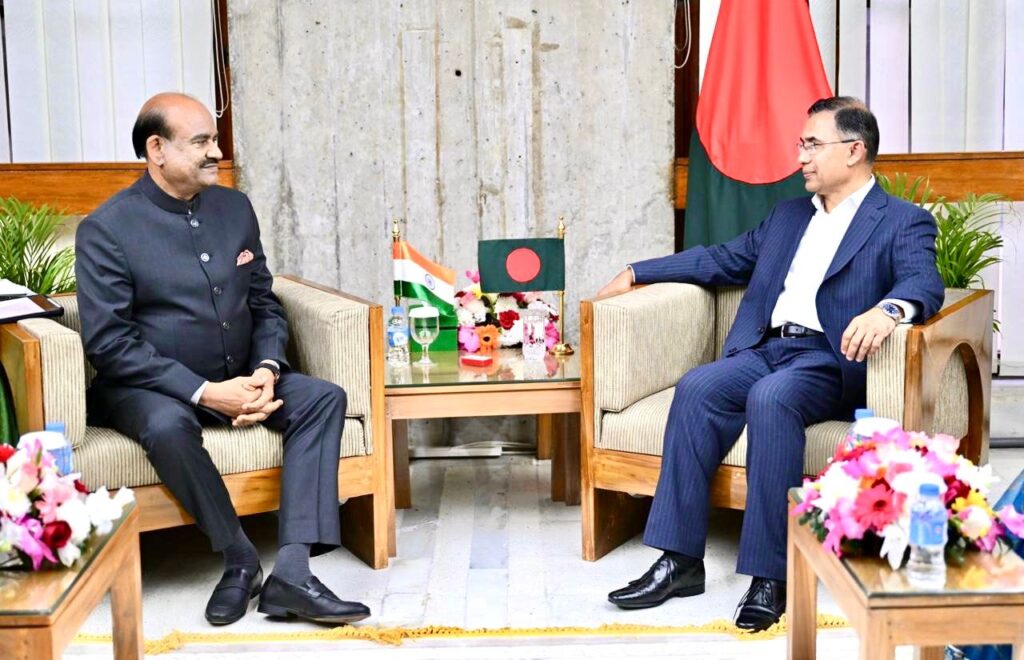
Indian Lok Sabha Speaker Om Birla met Prime Minister Tarique Rahman shortly after his
oath-taking ceremony at the Jatiya Sangsad. During the meeting, Birla handed over a personal letter from Prime
Minister Narendra Modi.
The letter congratulated Rahman on the Bangladesh Nationalist Party’s landslide victory
in the February 12 elections. It also invited Rahman, his wife Dr. Zubaida Rahman, and daughter Zaima Rahman to
visit India at a mutually convenient time.
This was the first major diplomatic outreach from New Delhi to the new government. It
reflects India’s intent to engage early and positively with the BNP leadership.
Message of Cooperation and Mutual Prosperity
In his letter, Prime Minister Modi stressed the importance of regional cooperation. He
highlighted shared history, cultural ties, and economic interdependence between the two nations.
Modi stated that India and Bangladesh could work together for security and prosperity.
This message aligns with India’s broader neighbourhood policy, which prioritises stability and partnership in South
Asia.
The PM Modi invitation therefore carries
both symbolic and strategic importance. It aims to open a new chapter in bilateral relations.
Political Transition in Bangladesh and Rahman’s Rise
End of Prolonged Political Turbulence
Rahman’s ascent follows a turbulent political phase in Bangladesh. Former Prime Minister
Sheikh Hasina was removed in August 2024 after mass protests.
An interim government led by Nobel laureate Muhammad Yunus managed the transition. It
supervised elections amid social unrest and economic challenges.
The February 2026 polls marked a turning point. The BNP secured 212 seats in the
350-member parliament. Smaller parties shared the remaining seats. The Awami League was barred from
contesting.
Return from Exile and Policy Commitments
Tarique Rahman returned from 17 years of exile in London in December 2025. Soon after,
he assumed office as Prime Minister.
He became Bangladesh’s first male prime minister in 35 years. His leadership ended
decades of political dominance by Khaleda Zia and Sheikh Hasina.
Rahman has promised democratic reforms, political stability, and institutional
strengthening. He has also announced a “Bangladesh First” foreign policy.
This policy seeks balanced engagement with India, China, and Pakistan.
India’s Strategic Expectations After the PM Modi Invitation
Cautious Optimism in New Delhi
India has welcomed the political transition with cautious optimism. Under Sheikh Hasina,
bilateral relations were closely aligned.
The BNP’s return introduces uncertainty. However, the PM Modi
invitation suggests that New Delhi prefers engagement over confrontation.
Indian policymakers hope to expand cooperation in trade, infrastructure, energy, and
connectivity.
Persistent Bilateral Concerns
Despite positive signals, several issues remain unresolved. These include:
- Border management
- Illegal migration
- Trade imbalances
- Water-sharing disputes
- Protection of religious
minorities
These matters continue to influence India’s diplomatic approach. Progress on them will
determine the long-term success of bilateral relations.
Prospects of a Rahman – Hasina Meeting in India
Hasina’s Exile and Legal Status
Sheikh Hasina has lived in New Delhi since August 2024. She fled Bangladesh after
widespread protests.
In November 2025, Bangladesh’s International Crimes Tribunal convicted her in absentia.
The charges related to the 2024 crackdown.
If extradited, she faces a possible death sentence.
Bangladesh has repeatedly requested her return under the extradition treaty. India has
declined, citing the political nature of the charges.
Low Probability of a Direct Encounter
A meeting between Rahman and Hasina during any India visit is highly unlikely.
Both leaders represent rival political traditions. Any interaction could destabilise
domestic politics in Bangladesh.
Rahman has maintained a firm stance on accountability. He has shown no intention of
softening his position.
Therefore, a direct meeting remains politically unviable.
Possible Diplomatic Scenarios on the Hasina Issue
Extradition as a Negotiation Tool
Rahman may raise the extradition issue in talks with India. He could link it to border
or security cooperation.
However, India’s consistent reluctance makes this path difficult. Extradition would
require legal and political assurances.
Such concessions may weaken Rahman’s domestic credibility.
Continuation of the Status Quo
India may prefer to maintain Hasina’s asylum quietly. At the same time, it may deepen
engagement with Dhaka.
This approach avoids confrontation. It allows both sides to focus on economic and
strategic cooperation.
However, continued pressure from Bangladesh could complicate this strategy.
Negotiated Political Settlement
In a low-probability scenario, Rahman may explore limited amnesty or supervised
return.
This could promote reconciliation. Yet, BNP hardliners and protest groups strongly
oppose such moves.
Public resistance makes this option politically risky.
External Mediation by Regional Powers
Rahman’s balanced foreign policy could invite mediation by China or Pakistan.
Such involvement may pressure India. However, it risks escalating regional
competition.
This option remains uncertain and strategically sensitive.
Overall Outlook: Diplomacy After the PM Modi Invitation
The most likely outcome is pragmatic engagement. Both countries appear willing to
prioritise economic and security cooperation.
The PM Modi invitation reflects India’s
readiness to work with Bangladesh’s new leadership. It also signals respect for democratic transition.
If Rahman visits India, it could strengthen political trust and institutional
dialogue.
However, sensitive issues like extradition, border management, and minority protection
will continue to test relations.
India and Bangladesh are likely to pursue gradual confidence-building measures rather
than dramatic policy shifts.
The success of this diplomatic reset will depend on sustained dialogue, mutual respect,
and realistic expectations.