Why US-India Relations May Not Improve Under Trump’s Second Term
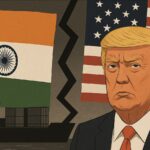
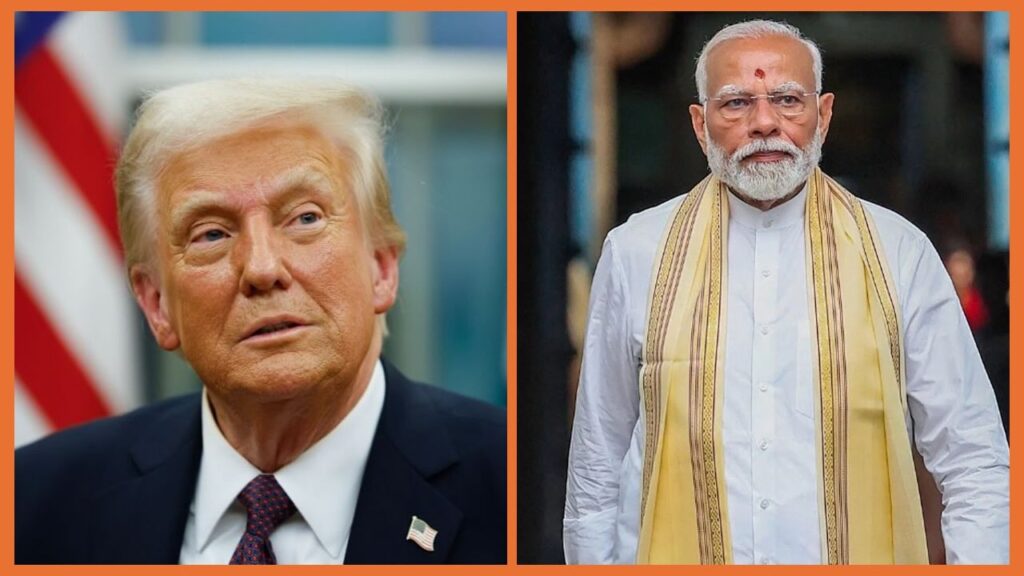
January 20, 2026 | New Delhi As the United States and India enter 2026 amid renewed diplomatic engagement, expectations of a meaningful reset in bilateral ties remain subdued. A growing consensus among strategic observers suggests that US-India relations under Trump are unlikely to improve in any substantive way during his second term, which runs until 2028. This pessimism is not driven by transient disputes or personality clashes alone, but by three deep structural factors that now anchor the relationship in friction rather than convergence. These factors are India’s domestic political red lines (that covers every national aspect and public sentiments), the clash between BRICS-linked digital trade and Trump’s economic worldview, and the strategic discomfort in Washington over India’s RELOS defence pact with Russia. Together, they reinforce the article’s central thesis: without major concessions from either side, improvement under Trump looks structurally improbable.
Domestic Politics and National Interest: India’s Non-Negotiable Constraint
Why Domestic Politics Now Overrides Diplomatic Flexibility
The most decisive constraint shaping US-India relations under Trump lies within India itself. As a parliamentary democracy, India’s foreign policy operates within clearly defined domestic political limits. Sectors such as agriculture, dairy, and fisheries are not merely economic domains; they are mass-employment pillars that directly affect tens of millions of livelihoods. Any trade agreement perceived as opening these sectors to American access would carry immediate political consequences. Once public opinion crystallises on such issues, no Indian government, regardless of its diplomatic intent, can reverse course without incurring severe political cost.
Trump’s Behaviour and the Pakistan Factor
This domestic constraint has been aggravated by President Trump’s public conduct. Remarks branding India a “tariff king,” repeated claims that he personally stopped an India-Pakistan war, and overt warmth towards Pakistan’s military leadership have resonated negatively within Indian public discourse. These statements are not viewed as mere rhetorical excesses; they are interpreted as disrespect towards Indian sovereignty and democratic institutions. The revival of US-Pakistan engagement, including Trump’s visible rapport with Pakistan’s Army Chief and continued military assistance, has further hardened Indian public sentiment. In such an environment, even tactical compromises become politically toxic. Domestic politics, therefore, does not merely limit engagement with Trump; it actively pushes compromise away.
BRICS Digital Currency Trade and Trump’s Dollar Anxiety
Why BRICS Digital Trade Is a Strategic Flashpoint
The second major fault line lies in India’s growing advocacy for BRICS-linked digital settlement systems for trade and travel. These mechanisms are designed to reduce dependence on the US dollar, bypass traditional financial chokepoints, and enhance monetary sovereignty for participating states. For Washington, this represents a direct challenge to dollar primacy and the financial leverage that underpins US global influence. Under a conventional administration, this would already be a serious concern. Under Trump, it becomes far more personal.
Personal Stakes and Policy Resistance
Trump and Trump-affiliated entities have invested heavily in cryptocurrency ecosystems that thrive on dollar-linked liquidity and speculative flows. BRICS digital trade frameworks, which prioritise state-backed settlement rails over decentralised private tokens, undermine both dollar dominance and speculative crypto valuations. As a result, Trump’s resistance to BRICS digital trade is driven by a convergence of national economic doctrine and personal financial interest. This dual motivation sharply reduces the likelihood of compromise. For Trump, accommodation on BRICS-linked currency mechanisms carries political, ideological, and personal costs. This explains why US pressure on India regarding BRICS has intensified despite limited immediate economic impact. It is not merely about trade volumes; it is about preserving a financial order Trump is deeply invested in defending.
RELOS and the Persistent Strategic Irritant in the Indo-Pacific
The RELOS Pact and Strategic Autonomy
The third structural obstacle is India’s Reciprocal Exchange of Logistics Support (RELOS) agreement with Russia. Signed in February 2025 and ratified later that year, the pact enables mutual access to military bases for refuelling, maintenance, and limited deployments. For India, RELOS enhances operational reach in the Arctic and Indo-Pacific while reinforcing strategic autonomy. For Russia, it offers logistical flexibility in the Indian Ocean Region.
Why RELOS Alarms Washington
From a US perspective, RELOS complicates operational assumptions in the Indo-Pacific. While the agreement does not dramatically alter the regional balance of power, it introduces persistent uncertainty around naval logistics, submarine support, and surveillance dynamics near key US assets such as Diego Garcia. Even limited Russian presence facilitated through Indian ports creates planning friction for US forces. Unlike energy trade or diplomatic hedging, military logistics agreements cannot be easily ignored. RELOS therefore remains a permanent strategic irritant, one that is unlikely to disappear regardless of changes in tone or leadership.
Trade Retaliation and India’s Emerging Leverage
The Yellow Pulses Tariff Shock
India’s recent decision to impose a 30 percent tariff on American yellow pulses marks a significant shift in posture. Approximately 30 to 35 percent of US yellow pulse exports were destined for India, making this move a direct hit on American agricultural producers, a politically sensitive constituency for Trump. Unlike symbolic trade measures, this retaliation imposes tangible domestic pressure within the United States. It signals that India is prepared to respond proportionately and strategically, rather than absorb unilateral economic coercion.
Buffers That Strengthen India’s Hand
India’s ability to absorb pressure is reinforced by strong macroeconomic buffers. With growth hovering around seven percent, diversified export markets across Europe, the Gulf, and East Asia, and substantial foreign exchange reserves, New Delhi is not negotiating from a position of vulnerability. Energy security through discounted Russian oil, despite US objections, further insulates India from external leverage. These factors collectively reduce Washington’s capacity to force concessions through economic threats alone.
February 2026 Talks: Mini-Dealing Without Structural Reset
As bilateral talks resume in February 2026, expectations should remain realistic. A comprehensive reset in US-India relations under Trump appears unlikely without significant concessions, which neither side is structurally positioned to make. However, tactical mini-deals remain possible if Trump faces mounting domestic pressure from affected agricultural lobbies or trade constituencies. Such outcomes would likely focus on narrow tariff adjustments or sector-specific accommodations rather than any fundamental realignment.
Strategic Distance, Managed Engagement
The trajectory of US-India relations under Trump is best described as one of managed distance rather than partnership. Domestic political constraints in India, Trump’s resistance to BRICS digital trade, and enduring US discomfort with RELOS collectively ensure that friction remains the default condition. Yet, India’s strategic patience, economic resilience, and willingness to retaliate selectively provide it with meaningful leverage. Improvement may be unlikely, but stability on India’s terms remains achievable. Whether Washington adapts to this reality or continues to push against structural limits will determine the tone, if not the substance, of the relationship through 2028.