India’s Fighter Jet Journey: From Import Dependence to Strategic Self-Reliance
India’s fighter jet development mirrors the country’s broader pursuit of strategic autonomy in defence. For decades after independence, the Indian Air Force relied heavily on foreign aircraft, particularly from the Soviet Union and later Russia. Over time, however, India has steadily pivoted towards indigenous capability-building, a shift that gained institutional momentum under the Atmanirbhar Bharat framework. This transition, shaped by operational necessity rather than ideology, reflects lessons drawn from sanctions, wars, and supply vulnerabilities.
The urgency remains acute. As of January 2026, the IAF operates roughly 29 fighter squadrons against a sanctioned strength of 42. Generally, each squadron consist of 18 – 20 fighter jets. The shortfall underscores why self-reliance is no longer aspirational but operationally critical. Programmes such as the Su-30MKI, Tejas Light Combat Aircraft (LCA), and the forthcoming Advanced Medium Combat Aircraft (AMCA) capture both the achievements and structural challenges of India’s aerospace journey.
Historical Building from Imports
India’s fighter aviation journey began with heavy reliance on imported platforms. In the 1960s, the MiG-21 entered Indian Air Force service and went on to form its backbone for several decades. Its affordability, rugged design, and mass availability suited India’s Cold War operational needs and budgetary constraints. However, this dependence on external suppliers also constrained technological sovereignty and limited domestic capability development.
Legacy Fleet Phase-Out and the Squadron Crunch
The Indian Air Force’s modernisation push is now driven as much by necessity as by strategy. The complete retirement of the MiG-21 fleet in September 2025, after more than six decades of service and participation in multiple conflicts, marked the end of an era. It also exacerbated the squadron shortfall. The next wave of retirements will involve the SEPECAT Jaguar, which currently performs deep-strike roles across six squadrons, and the Dassault Mirage 2000, which equips roughly three multirole squadrons. Their phased drawdown is expected to begin in the late 2020s and conclude by the early 2030s. The MiG-29UPG fleet, comprising three squadrons, is likely to follow between 2030 and 2035. As a result, the timely induction of Tejas Mk1A and Tejas Mk2 aircraft, along with potential Multi-Role Fighter Aircraft additions such as the Rafale, has become critical to arresting force depletion and restoring numerical strength while advancing self-reliance.
A decisive shift occurred in the 1990s with the Indo-Russian collaboration on the Su-30MKI. Unlike earlier straight-purchase acquisitions, this programme prioritised customisation and licensed production. Hindustan Aeronautics Limited (HAL) commenced assembly at its Nashik facility in 2000, initially relying on imported kits before progressively localising manufacturing. By 2017, indigenous content had crossed 80 per cent, signalling a qualitative leap in industrial depth and systems integration capability.
Running parallel to this effort was the Light Combat Aircraft programme, initiated in 1983 under the Aeronautical Development Agency. Conceived to replace ageing MiG fleets, the LCA encountered sustained technical and geopolitical challenges. Although formally sanctioned in 1993, the programme suffered major disruption following the 1998 nuclear tests, which curtailed access to critical technologies. The aircraft first flew in 2001, but induction into the IAF occurred only in 2016 after prolonged design refinement and testing. Despite these delays, the programme proved foundational, nurturing domestic expertise in composites, avionics, flight control systems, and programme management that now underpins India’s broader fighter development ecosystem.
The Su-30MKI: A Pillar of Strength and Indigenisation
The Su-30MKI stands as the most successful example of India’s fighter indigenisation strategy. With over 260 aircraft inducted or produced, it forms the IAF’s largest and most capable fleet. Assembly at HAL’s Nashik facility has matured into a sophisticated production ecosystem, supported by public and private suppliers.
In December 2024, India approved an additional order for 12 Su-30MKIs worth ₹13,500 crore. These aircraft feature 62.6 per cent indigenous content, reflecting steady progress in localisation. The AL-31FP engines, produced under licence, currently have over 54 per cent local content, with targets set at 63 per cent.
Operationally, the Su-30MKI functions as a multirole workhorse. Its thrust-vectoring engines, long range, and heavy payload capacity allow it to act as a “missile truck,” carrying up to 12 air-to-air weapons. The aircraft has demonstrated capability during international exercises and combat operations, including the 2019 Balakot strikes.
Upgrades under the “Super Sukhoi” programme aim to push indigenisation to 78 per cent. Planned enhancements include the Uttam AESA radar, indigenous avionics, and integration of weapons such as the Astra missile. These upgrades are expected to extend the fleet’s service life beyond 2055, reducing dependence on imports while preserving deterrence.
The Tejas Programme: Indigenous Triumph Amid Delays
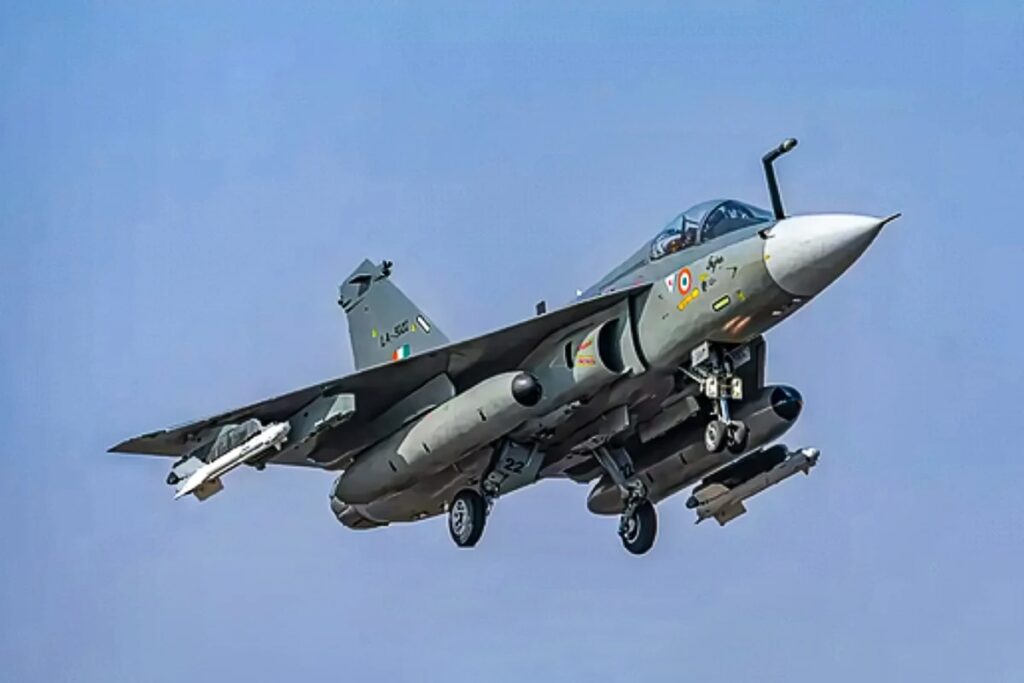
The Tejas Light Combat Aircraft embodies India’s most ambitious indigenous effort. After more than three decades of development, the Mk1 variant achieved Initial Operational Clearance in 2011 and Final Operational Clearance in 2019. By 2026, approximately 36 Tejas fighters and trainers operate in two IAF squadrons, gradually replacing MiG-21 aircraft.
Technologically, Tejas introduced several firsts for India. Over 45 per cent of its airframe uses composite materials. Its fly-by-wire system and multimode radar represent critical design milestones. More than 1,000 test sorties validated its supersonic performance and handling.
The Mk1A variant, contracted in 2021 for 83 aircraft and expanded by another 97 in 2025, introduces AESA radar, enhanced electronic warfare systems, and improved maintainability. Although the first Mk1A flew in 2023, deliveries slipped due to engine supply delays from GE Aerospace. As of January 2026, engine deliveries have resumed, enabling initial handovers by the end of the financial year.
HAL aims to ramp up production to 24–30 aircraft annually once the supply chain stabilises. Full Mk1A deliveries are expected by 2029–30. Meanwhile, the Tejas Mk2, a medium-weight evolution with higher thrust and canards, is nearing prototype rollout in mid-2026. Production is targeted from 2029, with a projected fleet of 120–200 aircraft.
AMCA: Steering Toward Fifth-Generation Ambitions
The Advanced Medium Combat Aircraft marks India’s entry into fifth-generation fighter development. Approved in 2024 with an initial outlay of ₹15,000 crore, the AMCA is designed as a twin-engine stealth platform with internal weapon bays, supercruise capability, and advanced sensor fusion.
Private-sector participation has expanded significantly. Consortium bids led by HAL–Tata and BEL–L&T are under evaluation, reflecting a shift away from exclusive public-sector execution. Prototype rollout is targeted for late 2026 or early 2027, with a maiden flight planned around 2028–29.
A critical component is propulsion. Engine co-development with France’s Safran, valued at around ₹30,000 crore, is nearing Cabinet approval. The partnership promises full technology transfer and shared intellectual property for a 110–140 kN engine. Interim prototypes will use GE F414 engines. Certification is planned by 2032, with induction from 2034–35.
Bottlenecks and Persistent Challenges
Despite progress, structural bottlenecks persist. The Tejas programme’s 33-year timeline illustrates the cumulative impact of sanctions, engine dependency, and iterative testing. Propulsion remains the weakest link. Delays in GE engine deliveries stalled Mk1A induction, while AMCA’s long-term success depends on effective technology transfer.
Funding constraints, bureaucratic complexity, and geopolitical dependencies continue to affect timelines. Supply chain disruptions, particularly after COVID-19, exposed vulnerabilities in engine and component availability. While indigenous content targets are ambitious, scaling quality production across the private sector remains a work in progress.
Current Status and Programme Trajectory
As of January 2026, the Indian Air Force operates Tejas Mk1 aircraft across two squadrons, with approximately 36 fighters and trainers in service. Tejas Mk1A has entered the production and induction phase. The first production-standard Mk1A completed its maiden flight in October 2025, and engine deliveries from GE Aerospace began in March 2025. With additional engines scheduled by March 2026, initial Mk1A inductions of five to seven aircraft are expected during 2026, followed by production ramp-up once engine supplies stabilise.
The Tejas Mk2 programme has progressed beyond design and into advanced structural assembly. Major airframe sections, including wings and forward fuselage, are largely complete. Prototype rollout is expected in late 2025 or early 2026, with the first flight projected for mid-2026. Series production is planned from 2029 onward, with an anticipated requirement of 120–200 aircraft to replace Mirage 2000, Jaguar, and MiG-29 fleets during the early 2030s.
The AMCA programme has transitioned from conceptual and design phases into full-scale engineering development. Government approval for prototype development was granted in April 2024. Structural work on prototypes commenced in 2025, with private-sector participation under evaluation. Engine co-development with France’s Safran has reached the final approval stage as of early 2026, with programme launch expected within the year. Prototype rollout is targeted for late 2026 or early 2027, maiden flight around 2028–29, certification by 2032, and induction from 2034–35.
In parallel, the Su-30MKI fleet continues to serve as the IAF’s primary combat backbone. Upgrade programmes are underway to integrate indigenous avionics, sensors, and weapons, with localisation levels targeted at approximately 78 per cent. These upgrades are intended to sustain operational effectiveness and numerical strength until newer indigenous platforms achieve full operational maturity.
To manage the ongoing squadron shortfall, India plans interim acquisitions alongside indigenous programmes. The Multi-Role Fighter Aircraft tender for 114 fighters is expected to move forward in 2026, most likely centred on the Rafale platform. These inductions are intended to bridge capability gaps during the transition period as Tejas Mk2 and AMCA progress toward full-scale induction.