This column reflects strategic interpretation of global financial trends and does not represent official policy positions
Implications for the United States and the Dollar’s Strategic Security
India’s 21% reduction in US Treasury holdings to USD 190.7 billion in 2025, alongside its expansion of gold reserves to nearly 880 tonnes, is not an isolated portfolio decision. Instead, it reflects a deeper and accelerating shift in global reserve behaviour. This shift is reinforced by BRICS-led efforts to reduce reliance on the US dollar in trade and settlement systems. Over the past 15 years, foreign ownership of US Treasuries has steadily declined. As a result, global dependence on the dollar as a reserve asset has weakened. For the United States, this trend directly challenges what economists have long described as the dollar’s “exorbitant privilege.” This privilege allows Washington to borrow cheaply, finance persistent fiscal deficits, and sustain high consumption and military spending without immediate balance-of-payments pressure. By late 2025, total US federal debt had crossed USD 36 trillion. At the same time, declining demand for Treasuries has begun to place upward pressure on yields. The 10-year Treasury note hovered near 4.17% in early 2026 amid growing market unease over fiscal discipline and concerns surrounding Federal Reserve independence. Higher yields translate directly into higher interest costs. Annual US interest payments are projected to approach USD 1.2 trillion by 2026, placing significant strain on federal finances and increasing inflationary risks if deficit financing expands.
Economic and Geopolitical Consequences of De-Dollarisation
From an economic security perspective, the dollar’s weakening position carries tangible risks. In 2025, the US Dollar Index fell by 9.4%, its worst annual performance since 2017. Although the dollar still accounts for roughly 58% of global reserves, this share has been steadily eroding. If current trends persist, several projections suggest it could fall below 50% by the end of the decade. Higher borrowing costs would constrain fiscal flexibility. In addition, a sustained depreciation of the dollar would raise import costs, placing pressure on consumers and increasing expenses for critical sectors, including defence procurement and energy. The implications extend well beyond economics. Dollar dominance underpins US geopolitical power. It enables swift financial sanctions, as demonstrated by the freezing of over USD 300 billion in Russian assets in 2022. It also supports a defence budget exceeding USD 900 billion for FY2026, largely financed through low-cost borrowing. De-dollarisation threatens this architecture. As alternative settlement mechanisms emerge, including BRICS-led non-dollar payment pilots, the effectiveness of sanctions may diminish. Intra-BRICS trade conducted in local currencies reportedly rose sharply by mid-2025, reducing exposure to US-controlled financial channels such as SWIFT. Over time, this fragmentation could weaken deterrence against sanctioned states and complicate US crisis-response capabilities.
How Washington Is Likely to Respond
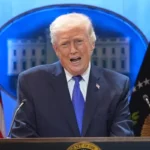
The United States has not issued a direct public response to India’s specific Treasury reduction. However, broader de-dollarisation trends have triggered increasingly assertive rhetoric and policy signals under the Trump administration in early 2026. President Trump has framed BRICS-led financial initiatives as a strategic challenge to US dominance. Legislative measures, including the Guiding and Enhancing Global Governance Act, have been positioned as tools to counter parallel financial institutions and payment systems that bypass the dollar. Trade pressure remains a central lever. Trump has publicly threatened punitive tariffs of up to 500% on BRICS nations should they pursue a unified currency or aggressively expand non-dollar trade. India already faces cumulative tariff exposure exceeding 50% on certain categories, raising the risk of retaliatory trade cycles. Diplomatic and financial measures are also likely. These include pressuring allies to retain dollar-based settlement systems, discouraging energy transactions in alternative currencies, and adjusting Federal Reserve policy to sustain dollar attractiveness. At the same time, Washington has accelerated work on a digital dollar through central bank digital currency pilots, aimed at modernising dollar infrastructure and preserving global relevance. However, experts caution that inconsistent or coercive policies may prove counterproductive. Erratic tariff regimes, politicisation of monetary policy, and overuse of sanctions risk eroding trust further. Rather than halting de-dollarisation, such actions may accelerate the transition toward a fragmented, multipolar financial system.
Strategic Assessment
In the near term, the dollar remains dominant. Its liquidity, depth, and institutional backing are unmatched. Yet India’s reserve realignment, combined with BRICS momentum, suggests that the erosion is structural rather than cyclical. The United States may retain monetary primacy, but increasingly in a contested environment where financial power must be defended rather than assumed.