US Declines to Renew Sanctions Waiver for Indian Purchases of Russian Crude Oil: A Temporary Bridge Burned Amid Geopolitical Crosscurrents
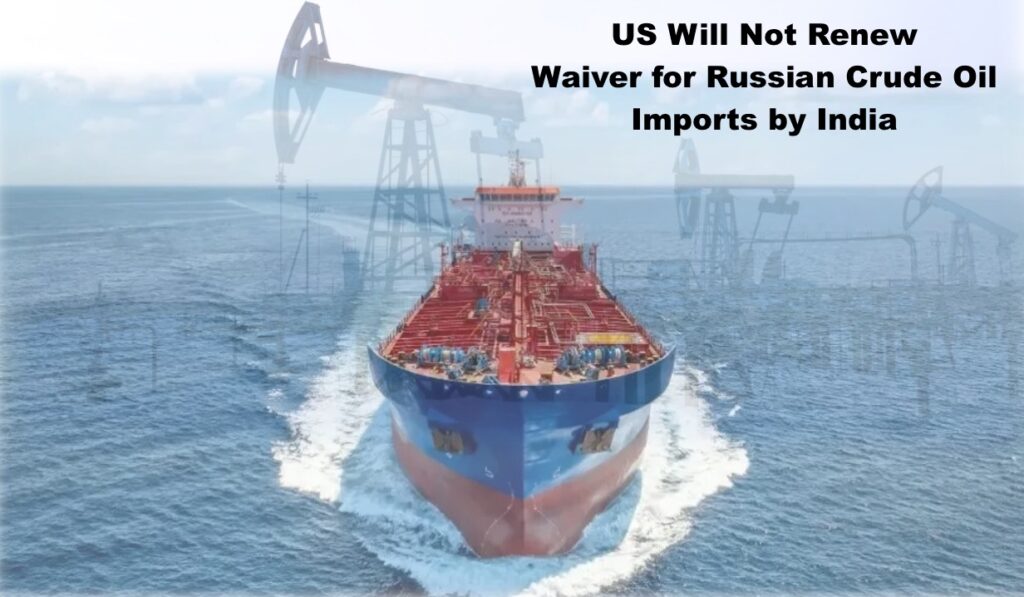
In a significant policy shift announced on April 15, 2026, US Treasury Secretary Scott Bessent confirmed that Washington will not extend the temporary 30-day general license allowing Indian refiners to import Russian crude oil. The waiver, issued in early March amid disruptions from the US-Iran conflict, covered only pre-loaded cargoes stranded at sea before March 11. “We will not be renewing the general license on Russian oil and we will not be renewing the general license on Iranian oil. That was oil that was on the water prior to March 11. So all that has been used,” Bessent stated.
The decision, reported by Reuters, closes a short-term loophole that enabled India to secure roughly 30 million barrels of discounted Russian crude oil. It comes just days after the Russian oil waiver expired on April 11 (with the Iranian one set to lapse on April 19), despite lobbying from Asian buyers including India to keep supplies flowing and ease global price pressures.
Background: From Sanctions Pressure to Emergency Relief
The waiver emerged against a backdrop of escalating US-Iran hostilities that disrupted shipments through the Strait of Hormuz, a chokepoint for nearly half of India’s crude imports. Oil prices spiked above $100 per barrel in late February-early March 2026. India, which had scaled back Russian purchases earlier in the year under US pressure (including a reported bilateral understanding tied to trade talks), quickly ramped up orders once the waiver cleared secondary sanctions risks for those specific cargoes.
Indian refiners, including state-owned firms and private players like Reliance, had previously reduced intake of Russian crude oil from entities such as Rosneft and Lukoil due to sanctions compliance. The March relief acted as a pragmatic stopgap, with the US framing it as limited and non-beneficial to Russia’s war chest. White House officials at the time praised India as a “very good actor” for prior restraint and emphasised it would not significantly aid Moscow.
However, domestic US critics—particularly Democrats—pushed back hard. Senators including Richard Blumenthal and Chuck Schumer argued the move handed Russia billions in revenue, undermined sanctions on its Ukraine campaign, and ignored intelligence linking Moscow to Iranian targeting of US forces. They accused the Trump administration of violating notification requirements under the Countering America’s Adversaries Through Sanctions Act (CAATSA).
India’s Imports Surge—Then What?
Data underscores Russia’s renewed centrality for New Delhi. In March 2026, Indian imports of Russian crude oil was more than tripled in value to €5.3 billion (part of €5.8 billion in total Russian hydrocarbons), with volumes hitting nearly 2 million barrels per day (bpd)—the highest since mid-2023. April figures have dipped slightly due to refinery maintenance but are expected to rebound. Russia has consistently ranked as India’s top or second-largest supplier in recent months, filling gaps left by Middle East volatility.
Government sources had signalled expectations for an extension as recently as April 8, citing the need to stabilise global prices. India has consistently maintained that its energy purchases are driven by national interest and do not require external approval. A senior official earlier stated: “India has never depended on permission from any country to purchase Russian oil.” Refiners have indicated they plan to sustain volumes where possible, leveraging established payment mechanisms (rupee-rouble trade) and shipping workarounds.
Also Read: India’s Russian Oil Policy After US Tariff Ruling
Economic, Strategic, and Diplomatic Ripples
Energy Security and Economy
India imports ~90% of its crude. Russian barrels have historically offered steep discounts (though margins narrowed as global prices rose), saving billions and shielding consumers from inflation. Non-renewal introduces uncertainty: refiners face renewed compliance risks, potential higher costs from alternative suppliers (US, Latin America, or remaining Middle East volumes), and upward pressure on domestic fuel prices. With the Hormuz situation unresolved, this could strain the current account deficit and complicate monetary policy. However, India’s diversified sourcing and strategic reserves provide buffers—analysts note Russian crude oil is unlikely to vanish overnight.
Geopolitical Balancing Act
This episode highlights India’s multi-alignment doctrine in action. Strong ties with the US (via QUAD, technology pacts, and trade ambitions) coexist with deep energy and defense links to Russia. The waiver’s non-renewal tests that equilibrium but does not appear to signal rupture—recent high-level talks in Washington (including Foreign Secretary Vikram Misri’s April visit) focused on broader cooperation. Moscow, for its part, has positioned itself as a reliable partner “in times of need,” reinforcing long-standing strategic convergence.
US-India Relations and Domestic US Politics
The Trump administration balanced sanctions enforcement with market stability, but congressional pressure (especially from Democrats) prevailed once the immediate crisis eased. It underscores partisan divides in Washington over Russia policy. For New Delhi, it serves as a reminder of the limits of US waivers while affirming India’s leverage as a major buyer and strategic partner. No immediate retaliatory measures from the US are signalled, but sustained large-scale Russian crude oil purchases could invite future scrutiny under existing sanctions frameworks.
Broader Global Implications
The move may tighten near-term oil supply dynamics, though markets have partially adjusted. Russia retains Asian outlets (China remains its largest buyer). For energy markets, it reinforces the shift toward non-OPEC+ suppliers and highlights vulnerabilities in chokepoints like Hormuz. In sum, the waiver’s expiry marks the end of an emergency workaround rather than a seismic break. India is expected to navigate continued Russian imports through sovereign channels, prioritizing affordable energy amid volatility. The episode reaffirms New Delhi’s pragmatic foreign policy: energy security first, alliances managed carefully. Watch for refiners’ April-May data and any quiet US-India diplomatic follow-ups for the next chapter. As global energy realigns under overlapping conflicts, India’s role as both buyer and balancer remains pivotal.