Saffron-Robed Christian Monks on Southern Roads: Cultural Dialogue or Clever Conversion Strategy?
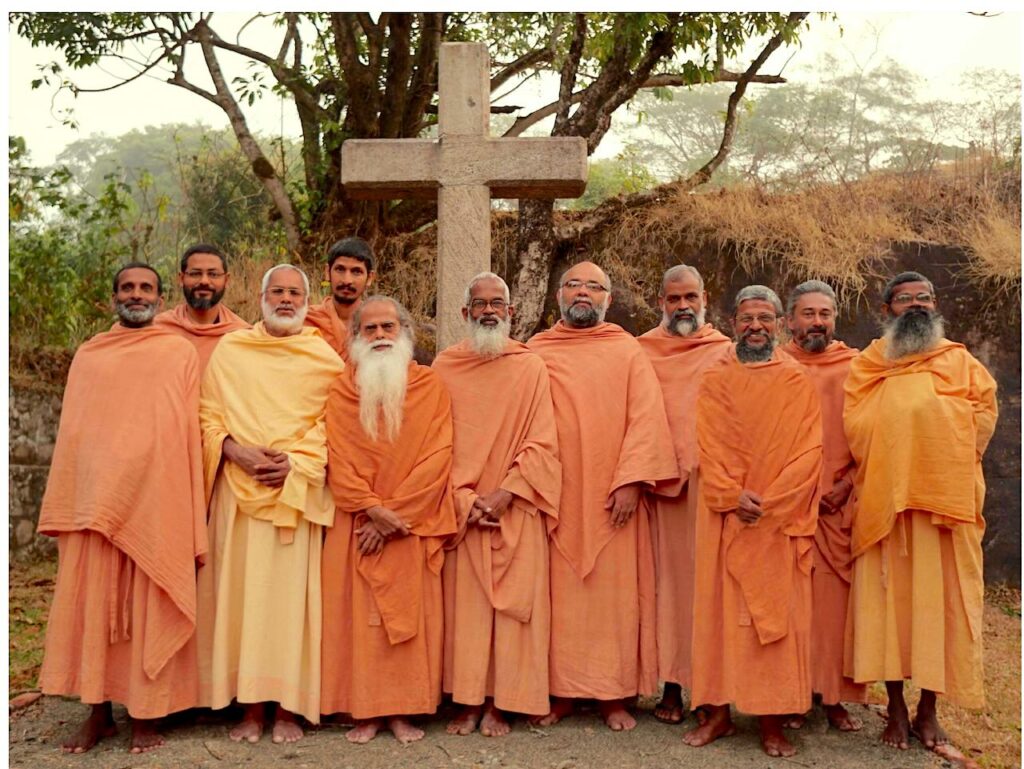
If you have travelled through the hills of Kerala, Palakkad, Thrissur, or parts of Tamil Nadu, you may have spotted groups of men in bright gerua or kesariya (saffron-orange) robes – Saffron-Robed Christian Monks, walking barefoot with long wooden sticks, chanting softly or carrying crosses. To anyone from North India — whether Hindu, Muslim or urban Christian — the sight is startling. Saffron is the sacred colour of Hindu sadhus, yogis and sannyasis. What are these men doing in attire that looks straight out of a North Indian ashram?
What You Are Actually Seeing
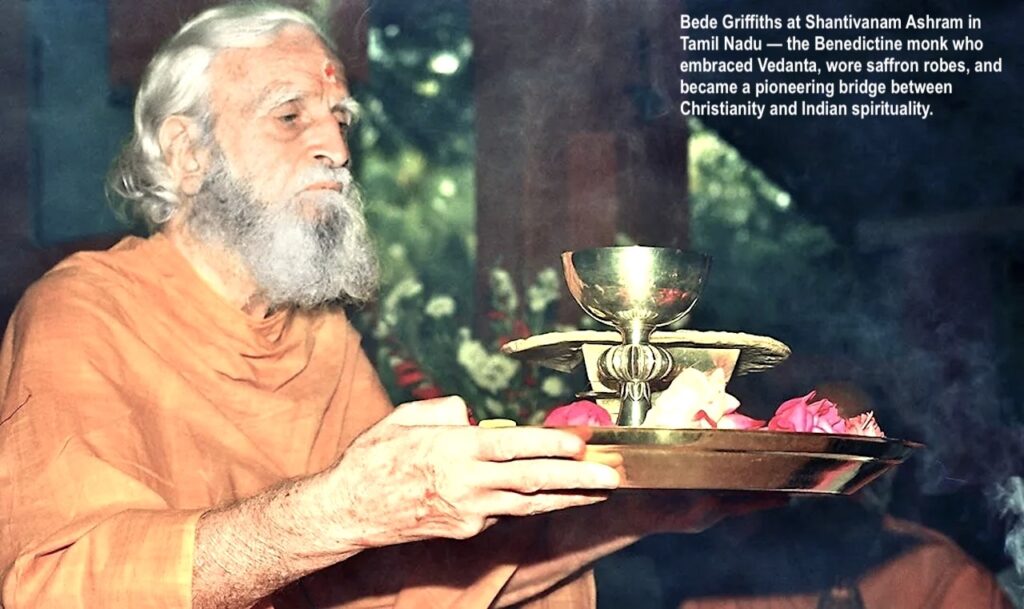
These are not ordinary parish Christians. They are monks or highly devout pilgrims belonging to Christian ashrams. The most prominent is Kurisumala Ashram in Vagamon, Kerala (established 1957–58). Monks here wear saffron kavi robes, sleep on the floor, eat vegetarian food with their hands, observe silence, and follow a unique blend of Trappist monastic discipline with Hindu sannyasa ideals. Similar communities exist in Tamil Nadu, notably Shantivanam Ashram.
During Lent, and especially on Good Friday, larger processions are common — monks and devotees walk long distances barefoot, carrying wooden crosses and staffs, re-enacting Jesus’ Way of the Cross. The saffron robes and sticks were consciously chosen to mirror the Hindu tradition of renunciation.
Roots: From 17th Century to Vatican II
The practice traces back to Italian Jesuit Roberto de Nobili (1577–1656) in Madurai. He dressed as a Brahmin sannyasi, mastered Sanskrit and Tamil, wore the sacred thread (reinterpreted as the Trinity), and lived like a Hindu ascetic — all with Vatican approval — to reach upper-caste Hindus for conversion.
The modern movement gained momentum in the 1950s through pioneers like Fr. Francis Acharya (Belgian Trappist) and Bede Griffiths (English Benedictine). Inspired by Vatican II’s emphasis on cultural adaptation, they created ashrams that fused Christian liturgy with Indian symbols: saffron robes, bhajans, Sanskrit chants, and ashram life.
The Christian Perspective
Church supporters describe this as respectful inculturation — making Christianity “at home” in India by shedding Western colonial baggage. Monks lead austere lives of prayer, manual labour and hospitality. Ashrams like Kurisumala welcome people of all faiths for retreats. They argue it is genuine dialogue that enriches Christianity with Indian spirituality.
The Hindu Critique & The Practical Truth
Many Hindus strongly disagree. Veteran scholar Sita Ram Goel famously called such ashrams “Catholic Ashrams: Sannyasins or Swindlers?” He and thinkers like Aravindan Neelakandan view it as calculated mimicry — “religious prostitution” designed to lower Hindu defences. The saffron robes, ashrams, and sadhu-like appearance create confusion, making gradual conversion easier.
The practical reality is straightforward: Churches do aim to convert. This is not a conspiracy theory — it is core Christian doctrine (“Go and make disciples of all nations”). Inculturation is simply the patient, intelligent, long-term strategy for achieving that goal in a Hindu-majority country. It is a documented, officially approved Church policy.
Critics also highlight the one-way traffic: Hinduism does not send saffron-clad missionaries to Christian countries dressed as priests to blend in and convert locals.
Why Saffron-Robed Christian Monks Feels Normal in the South, Shocking in the North
Kerala and Tamil Nadu have ancient Christian communities (Syrian Christians dating back to the 1st–4th century) and centuries of coexistence. High literacy and inter-community contact have normalised these experiments. In North India, where saffron is strongly identified with Hindu identity, most people have never seen this phenomenon — until they travel south or come across images online.
The Broader Question
Whether one sees this as beautiful cultural dialogue or clever missionary appropriation ultimately depends on one’s perspective. For Hindus who regard saffron and sannyasa as sacred expressions of dharma, its adoption by another faith feels like appropriation. For the practitioners, it is sincere inculturation.
The next time you see a saffron-robed group with sticks walking a Kerala road, you will know: it is not a Hindu procession that took a wrong turn. It is a living example of how South India’s religious landscape quietly blends — and sometimes contests — ancient symbols in modern times.