Bangladeshs Democratic Reset: BNPs Mandate and the Road Ahead
Bangladeshs general election of February 12, 2026, represents a decisive turning point
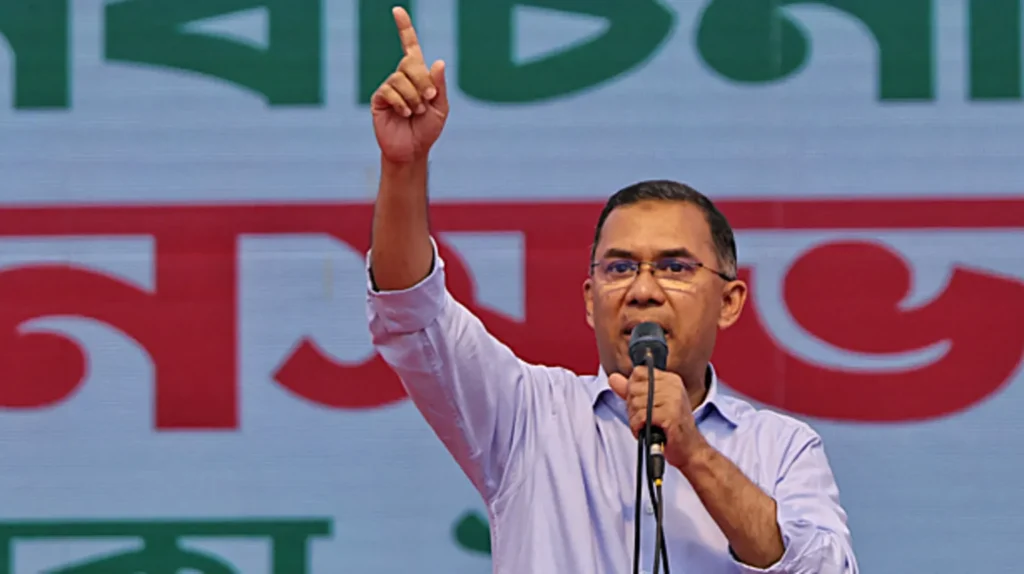
in the countrys turbulent political journey. The Bangladesh Nationalist Party (BNP), led by Tarique Rahman, secured a commanding majority with over 200 seats in the 300-member Jatiya
Sangsad.
This victory marks the first genuinely competitive election since 2008. It follows the
collapse of Sheikh Hasinas long rule during the 2024 “Monsoon Revolution”. The transition from
interim governance to an elected government now places Bangladesh at a critical crossroads.
In my view, the BNPs mandate offers cautious hope for political stability. However, it
also carries risks that could undermine the fragile democratic revival.
>From Rivalry to Revolution: The Roots of Political Turmoil
Since independence in 1971, Bangladeshs politics have revolved around the rivalry
between two dominant families. On one side stood Sheikh Hasina, daughter of Sheikh Mujibur Rahman. On the other was Khaleda Zia, widow of
military ruler Ziaur Rahman.
Hasinas Awami League promoted secularism and close ties with India. Khaleda Zias BNP
pursued centre-right nationalism and occasionally aligned with Islamist forces. Over time, this rivalry hardened
into authoritarian governance.
Between 2009 and 2024, Hasinas administration faced accusations of election
manipulation, enforced disappearances, and crony capitalism. Public frustration peaked in July 2024, when student
protests escalated into a nationwide uprising.
More than 1,000 people reportedly died. Hasina fled the country, and power shifted to an
interim administration under Muhammad Yunus.
>Interim Rule and the Mixed Legacy of Reforms
Yunuss 18-month stewardship aimed to
stabilise the country and prepare for elections. His administration introduced the “July Charter”, which promised
term limits, judicial reforms, and enhanced representation.
A referendum endorsed these reforms with strong public backing. Nevertheless, governance
during this period remained uneven.
The lifting of restrictions on Jamaat-e-Islami, the release of convicted leaders, and the handling of minority violence raised serious
concerns. Law and order weakened, while inflation and unemployment persisted.
Consequently, many citizens grew disillusioned with unelected rule and demanded a return
to political normalcy.
>The 2026 Election and a Mandate for Moderation
The 2026 election became a contest between the BNP-led alliance and Jamaats bloc. The
Awami League remained sidelined and boycotted the process.
Voter turnout ranged between 60 and 70 per cent. This reflected both enthusiasm for
change and lingering security fears.
The BNP campaigned on economic revival, employment generation, and selective
implementation of the July Charter. Rahman projected himself as a pragmatic nationalist, distancing the party from
earlier Islamist associations.
Jamaats performance surprised observers, with nearly 70 seats. However, the BNPs
two-thirds majority ensured political dominance.
In my assessment, the electorate chose stability over ideological extremism. Youth
voters who drove the 2024 uprising now prioritised governance and security.
>Domestic Governance: Opportunities and Constraints
The BNP government now faces high public expectations. Restoring law and order remains
the immediate priority. Effective policing and judicial reforms could rebuild public confidence.
Economic revival is equally critical. Strengthening the garment sector, encouraging
foreign investment, and expanding digital employment could reduce social discontent.
Minority protection will test the governments commitment to inclusivity. Any failure in
this area could revive international criticism and domestic unrest.
At the same time, past corruption allegations against BNP leaders continue to cast a
shadow. Without transparent governance, public trust may erode rapidly.
Therefore, institutional discipline will determine the durability of this
mandate.
>Geopolitical Rebalancing After the Polls
The election outcome reshapes Bangladeshs external relations. India reacted positively,
with Narendra Modi promptly congratulating Rahman. This signals
prospects for improved bilateral ties after recent strains.
Relations with Pakistan are likely to cool
from their earlier warmth under the interim administration. However, pragmatic engagement will continue.
China and the United States remain
influential economic partners. The BNP appears committed to strategic balancing rather than rigid alignment.
This approach avoids both Hasinas strong pro-India orientation and a potential Islamist
tilt towards Ankara or Islamabad.
>The Risk of Complacency and Institutional Drift
Despite its mandate, the BNP faces structural vulnerabilities. Parliamentary dominance
may encourage overreach. Weak opposition can reduce accountability.
Jamaats presence in parliament may also exert ideological pressure, particularly on
social policy and education.
Moreover, the revolutionary energy of 2024 remains partially unfulfilled. Youth
activists expect genuine anti-corruption measures and political renewal.
If these expectations are ignored, public frustration could resurface.
Therefore, complacency remains the greatest danger.
>A Fragile Transition in South Asia
Bangladeshs political transition remains incomplete. Democratic institutions are still
consolidating. Judicial independence and media freedom require sustained protection.
The countrys experience reflects a broader South Asian pattern, where revolutions often
struggle to institutionalise reforms.
If the BNP integrates youth aspirations with administrative competence, Bangladesh could
emerge as a model of post-crisis recovery.
Failure, however, may revive cycles of personal rivalry and political fragility.
>Between Hope and History
The Bangladesh Election 2026 has created a rare opening for democratic renewal. It
offers a chance to move beyond personalised rule and ideological polarisation.
Tarique Rahman now carries the burden of translating electoral legitimacy into durable
governance. His success will depend on restraint, transparency, and inclusive policymaking.
For now, Bangladesh stands between hope and history. The next five years will reveal
whether this mandate strengthens unity—or merely postpones another crisis.