US President Trump Urges Iran to Move Beyond Words in Nuclear Talks
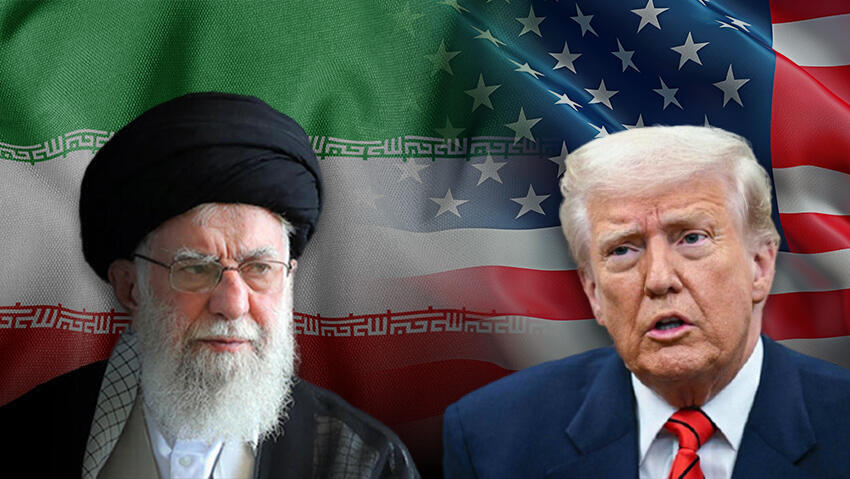
In the ongoing US Iran nuclear talks,
President Donald Trump has criticised Tehran for excessive rhetoric and limited progress towards a renewed nuclear
agreement. Speaking to reporters on February 13, Trump described Tehran’s approach as “a lot of talking and no
action.” As a result, Washington’s impatience with prolonged negotiations has become increasingly visible.
The remarks followed the first round of indirect talks held in Oman on February 6. Omani officials facilitated the discussions. The US delegation included
Special Envoy Steve Witkoff and senior adviser Jared
Kushner. On the Iranian side, Foreign Minister Abbas Araghchi led the team.
Both sides initially described the atmosphere as constructive. They also agreed to
explore further meetings, possibly in Geneva. However, Trump
emphasised that rhetoric without measurable commitments would not suffice.
“If they give us the right deal, we won’t do that,” Trump said, referring to military
options. He cited the deployment of a “big armada” in late January and previous strikes on Iranian targets. He
warned that future responses could be “far worse.” When questioned on how Iran could avoid conflict, he replied
firmly, “Give us the deal that they should have given us the first time.”
A Tense Backdrop of Diplomacy and Deterrence
The present negotiations represent a fragile attempt to revive efforts to restrain
Iran’s nuclear programme. These efforts weakened after the collapse of the 2015 nuclear framework during Trump’s
first term. Since then, Iran has expanded its enrichment capacity.
Western intelligence agencies and the International Atomic Energy
Agency have expressed serious concerns. They report that uranium enrichment
levels are approaching weapons-grade thresholds. Such developments have intensified global anxiety.
IAEA Director General Rafael Grossi
recently stated that enhanced inspection arrangements might be within reach. However, he also described the overall
dialogue as “imperfect, complicated, and extremely difficult.” Therefore, technical progress remains
uncertain.
Meanwhile, diplomatic support has emerged from Russia and China. Both countries have quietly
backed mediation initiatives. Their representatives have encouraged indirect engagement through regional partners.
As a result, limited diplomatic space continues to exist despite tensions.
Iranian officials have resisted what they perceive as excessive American pressure.
Ambassador Kazem Jalali has argued that any agreement must respect Tehran’s sovereignty. He has also insisted on
meaningful sanctions relief. Araghchi has reinforced this stance. He has called for negotiations to remain focused
on nuclear matters and to proceed without threats or hostility.
Military Posture Underscores the Stakes
Trump’s statements coincide with a visible expansion of US military presence in the
Middle East. A second aircraft carrier strike group has begun moving towards the region. It has joined forces
already deployed for contingency operations.
The President has also floated broader demands. These include restrictions on Iran’s
ballistic missile programme and limits on its regional influence. At times, he has suggested that political change
in Tehran could benefit the Iranian people after decades of clerical rule.
Nevertheless, Iran continues to reject key American conditions. In particular, it
opposes demands for zero uranium enrichment. Trump has reiterated this requirement publicly. Consequently, the gap
between the two sides remains wide.
Sources close to the talks indicate that only a narrow window for compromise exists.
Regional mediators, especially Oman and Gulf partners, remain central to sustaining dialogue. Without their
involvement, negotiations could easily collapse.
Regional and Global Implications of US Iran Nuclear Talks
The outcome of current negotiations carries implications far beyond bilateral relations.
A successful agreement could reduce tensions across the Gulf. It could also stabilise energy markets and limit the
risk of regional conflict.
Conversely, failure may trigger escalation. Trump has warned that unresolved disputes
could lead to consequences extending well beyond diplomatic forums. Therefore, the coming weeks are critical for all
stakeholders.
Upcoming discussions may again involve Witkoff, Kushner, and Iranian representatives in
Geneva. Observers hope that technical progress will accompany political engagement. However, expectations remain
guarded.
This evolving situation reflects a familiar Trump strategy. It combines maximum pressure
with the promise of historic breakthroughs. Whether Iran responds with tangible commitments will shape regional
security in the months ahead. For policymakers and citizens alike, the trajectory of US Iran nuclear talks remains a
defining geopolitical issue.