Data retention clarification (Rule 3(1)(g) & (h)): Adds the phrase “without prejudice to any requirement relating to the preservation or retention of information applicable to intermediaries under the Act or any other law for the time being in force.”
Translation: The standard 180-day user data retention rule does not override longer mandates under other laws (e.g., criminal probes, tax cases, national security). Platforms cannot hide behind the 180-day limit anymore.
This is a clarification to avoid any confusion with longer retention under laws like CrPC, tax laws, or national security requirements.
New Rule 3(4) – The “Comply or Lose Safe Harbour” Hammer:
This is the headline change. Intermediaries (X, Meta, Google, YouTube, etc.) must “comply with and give effect to” any clarification, advisory, order, direction, SOP, code of practice, or guideline issued by MeitY in writing.
Conditions: It must cite the legal basis, specify scope/applicability, and stay consistent with the IT Act and Rules.
Crucial line: “Compliance… shall form part of the due diligence obligations of the intermediary under Section 79 of the IT Act.”
Simply, ignore MeitY’s directions in writing → lose the legal shield that protects platforms from liability for user content. This turns earlier “advisories” into enforceable orders.
Part III – Digital Media Ethics Code (Rule 8 & Rule 14)
Rule 8(1) Proviso (now expanded): The entire Code of Ethics and grievance mechanism (Rules 14, 15, 16) now explicitly applies to:
(a) Intermediaries themselves, and
(b) “news and current affairs content hosted, displayed, uploaded, modified, published, transmitted, stored, updated or shared… by users who are not publishers.” “News and current affairs” remains the broad 2021 definition: newly received or noteworthy content, including analysis, about recent socio-political, economic, or cultural events. This catches influencers, podcasters, YouTubers, X users, and even viral reel-makers commenting on elections, policy, or current events.
Rule 14 (Inter-Departmental Committee – IDC): The IDC (multi-ministry body chaired by an authorised officer) can now examine any matter referred by the Ministry, not just public complaints. It can recommend takedowns, blocks (including emergency under Rule 16), modifications, or other actions. The Ministry of Information & Broadcasting (MIB) gets the final say on enforcement.
India is the world’s largest democracy and the biggest open internet market. Traditional media is regulated under clear laws. But since the 2021 IT Rules, the massive explosion of user-generated “news” on social media has created a dangerous regulatory vacuum.
Today, anyone with a smartphone can broadcast analysis, rumours, deepfakes, or hate speech to millions — often with little to no accountability.
MeitY Secretary S. Krishnan has rightly pointed out that “today with citizen journalism, this is a grey area” and that news and current affairs content is no longer the exclusive domain of registered publishers. Ordinary users, influencers, and creators have effectively become de-facto broadcasters.
Without a common regulatory framework, platforms often dragged their feet on government advisories. This allowed fake news, election interference, communal tension, and foreign-funded narratives to spread unchecked.
The proposed amendments bring legal certainty and enforceability. They make MeitY directions binding on platforms, so that safe harbour protection under Section 79 is retained only if platforms comply — a standard practice in many mature democracies. The government has repeatedly described these changes as “clarificatory and procedural” aimed at modernisation, not overreach.
India has witnessed enough damage from coordinated disinformation campaigns, deepfake videos targeting national leaders, and viral falsehoods that threaten social harmony and national security. The old “trust us, we’re platforms” model no longer works in 2026.
Why BBC and Western Media Are Suddenly “Concerned” About “Freedom of Press”
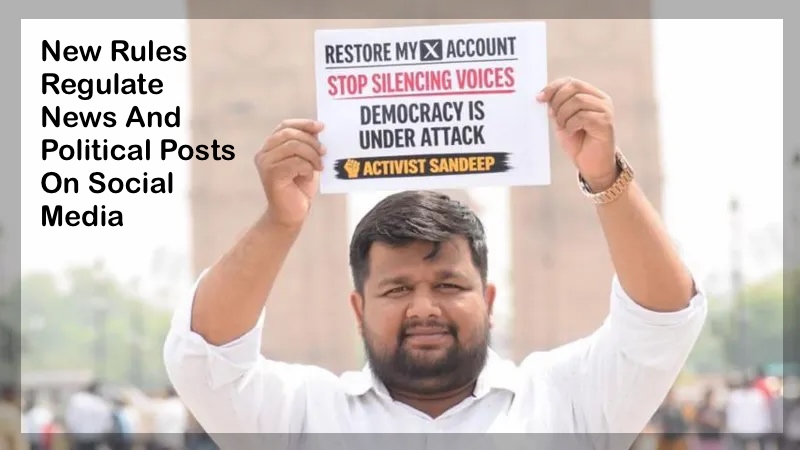
The BBC’s April 10 story (published 11 days after the draft) and similar Western coverage frame this as a sinister crackdown on “citizen speech,” “satire,” and “press freedom.” They cite fears of over-censorship, safe-harbour pressure leading to proactive takedowns, and the broad definition of “news and current affairs.”
Let’s be blunt: This is the same playbook we’ve seen for years.
Western outlets love lecturing India on free speech while their own governments tighten rules (EU’s Digital Services Act forces mass content moderation; US platforms face Section 230 reforms and antitrust heat). They ignore that India’s rules are narrower — they target only news and current affairs content, not all speech.
The real trigger? Recent government actions against anti-India, anti-Modi accounts and narratives on X and elsewhere. When platforms finally complied with takedown orders on parody accounts spreading venom or foreign-backed propaganda, the “freedom of press” alarm bells rang in London and Washington.
BBC and Co. aren’t neutral watchdogs here. They are stakeholders in the old narrative game — where Western media sets the global agenda on “democracy in India.” Any Indian assertion of sovereignty over its digital public square is painted as authoritarianism. It’s classic agenda-based journalism designed to pressure New Delhi and mobilise international opinion.
Why India Must Not Give a Damn — And Use the Iron Fist
India is a sovereign republic. We do not need lectures from former colonial powers or their media proxies on how to run our digital ecosystem.
National interest first: Misinformation kills. It has fuelled riots, election meddling, and threats to unity. Regulating it is a constitutional duty under Article 19(2) — reasonable restrictions for sovereignty, public order, and decency.
No foreign veto: Platforms are global but operate in India under Indian law. If they want 1.4 billion users, they comply. Period. Losing safe harbour is not “censorship” — it is accountability. Courts remain the ultimate check.
Hypocrisy exposed: Western nations ban TikTok, fine platforms billions, and run their own “fact-check” armies. Yet when India does the same — tailored to our realities — it becomes a “free speech crisis.”
To those trying to set their own agenda-based narratives — whether foreign media, funded NGOs, or opposition handles peddling selective outrage — India’s message must be loud and clear: We will not bend.
The government should finalise these rules swiftly (with stakeholder inputs), enforce them firmly, and call out the hypocrisy. Digital sovereignty is not optional in 2026. India’s internet belongs to Indians — not to Silicon Valley boardrooms or BBC newsrooms.
Public comments close soon (April 14, 2026 — possible extension under discussion). Patriotic voices must submit strong support for these changes while suggesting practical safeguards if needed.
The era of unregulated digital chaos is ending. Bharat is asserting control — and that is exactly as it should be.
What do you think?
Drop your views in the comments ‘MeitY draft IT Rules 2026″ below or email your feedback to itrules.consultation@meity.gov.in before the deadline.
Sovereign India First.