The UAE’s Strategic Gambit: Hedging in a Fractured Gulf Amid Multipolar Winds
In late January 2026, when much of the global media remained preoccupied with the other
developments concerning DAVOS, Trump’s Board of Peace, Ukraine-US-Russia Tri party Peace Talks, EU-India FTA, US
Military mobilisations to the Arabian Sea, a quieter yet consequential diplomatic event unfolded in Moscow. On
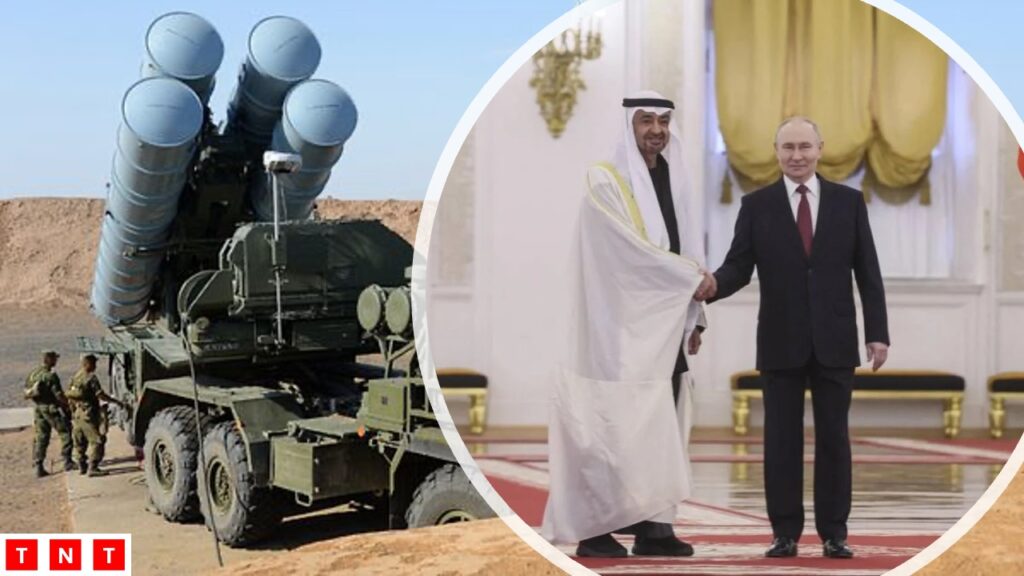
29 January 2026, UAE President Sheikh Mohamed bin Zayed Al Nahyan (MBZ)
met Russian President Vladimir Putin inside the Kremlin. The meeting that happened 5 days ago, received limited
global attention. However, it stands as one of the most revealing indicators of the UAE Russia strategic partnership
and Abu Dhabi’s evolving foreign policy in a fractured Gulf order.
At a time marked by US-Iran tensions, NATO’s Mediterranean posture, Israel’s regional
recalibration, and growing India-UAE cooperation, MBZ’s Kremlin visit represented more than routine diplomacy. It
reflected the UAE’s deliberate effort to hedge its strategic bets in a rapidly multipolar world.
MBZ’s Kremlin Visit and the Deepening UAE-Russia Axis
The January 2026 meeting built directly on the momentum created during MBZ’s August 2025
visit to Moscow. During the Kremlin talks, both leaders reaffirmed their commitment to expanding bilateral trade,
which crossed USD 12 billion in 2025. Putin publicly described the UAE as Russia’s leading Arab trade
partner.
In addition, both sides highlighted cooperation in energy, artificial intelligence,
logistics, space research, and nuclear technology. Rosatom’s involvement in potential civilian nuclear projects in
the UAE featured prominently in discussions. Russia also acknowledged Abu Dhabi’s role in facilitating limited
humanitarian and diplomatic channels related to the Ukraine conflict.
Furthermore, joint investment platforms and sovereign wealth fund collaborations have
expanded since 2023. The Russia-Emirates Business Forum in Dubai, held in late 2025, signalled growing
private-sector engagement. As a result, the UAE Russia strategic partnership has moved beyond symbolism into
institutional depth.
Historical Evolution of UAE-Russia Relations
Diplomatic relations between Moscow and Abu Dhabi date back to the early 1970s. For
decades, cooperation remained limited. However, after 2022, geopolitical pressures accelerated engagement.
Between 2022 and 2024, bilateral trade nearly tripled. The UAE also emerged as a key
commercial hub for Russian companies following Western sanctions. Simultaneously, Abu Dhabi maintained formal
neutrality on Ukraine while supporting humanitarian initiatives.
In addition, the UAE’s participation in BRICS and its engagement with the Shanghai Cooperation Organisation (SCO) reflected a broader shift towards non-Western platforms. By 2025, financial technology
cooperation and digital governance projects had become regular features of bilateral dialogue.
Therefore, MBZ’s 2026 visit represented the culmination of a gradual yet consistent
diplomatic reorientation.
Saudi Arabia, Washington, and Emerging Gulf Divergences
While the UAE deepens ties with Moscow, Saudi Arabia has continued to prioritise
Washington. During Crown Prince Mohammed bin Salman’s November 2025 visit to the United States, President Donald
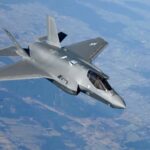
Trump approved the potential sale of up to 48 F-35 fighter jets to
Riyadh.
The deal forms part of a broader U.S.-Saudi Strategic Defence Framework. It reportedly
includes safeguards to preserve Israel’s qualitative military edge. Congressional oversight remains ongoing.
However, as of January 2026, no major legislative blocks have emerged.
In contrast, persistent reports suggest that Abu Dhabi has explored Russian
S-400 air defence systems, although no formal contract has been announced.
This divergence highlights contrasting security philosophies within the Gulf.
Saudi Arabia continues to anchor its defence posture in American systems. The UAE,
however, prefers diversification to reduce vulnerability to policy shifts in Washington.
Yemen: The Fault Line in Saudi-UAE Relations
Yemen remains the most visible manifestation of Saudi-UAE tensions. The Saudi-led
intervention launched in 2015 initially enjoyed close Emirati support. However, strategic priorities soon
diverged.
Riyadh focused on border security and preserving Yemeni unity. Abu Dhabi prioritised
southern ports, maritime security, and counter-terrorism. It also backed the Southern Transitional Council.
By late 2025, STC operations intensified. Saudi officials accused the UAE of
facilitating separatist leadership movements and maintaining covert detention facilities. In December 2025, a Saudi
airstrike on Mukalla port reportedly targeted alleged Emirati-linked supply routes.
These developments strained GCC cohesion. Consequently, Abu Dhabi’s incentive to pursue
external partnerships increased.
Pakistan, India, and Competing Gulf Alignments
Regional realignment has extended beyond West Asia. In September 2025, Saudi Arabia and
Pakistan signed a Strategic Mutual Defence Agreement. The pact covers intelligence sharing, joint exercises, and
mutual security guarantees.
The agreement effectively links Saudi financial resources with Pakistan’s
nuclear-capable military. It also reflects Riyadh’s desire to reduce dependence on American security
guarantees.
Meanwhile, the UAE has deepened engagement with India. During MBZ’s New Delhi
visit on 19 January 2026, both sides signed a letter of intent on a Strategic
Defence Partnership. The framework covers defence manufacturing, cyber security, maritime cooperation, and nuclear
safety.
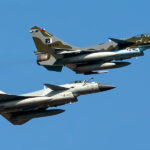
The agreement builds on existing Rafale interoperability and a USD 3 billion LNG
contract. Both countries have also set a target of USD 200 billion in bilateral trade by 2032.
As a result, the UAE has positioned India as a long-term strategic counterbalance within
its security architecture.
Multipolar Diplomacy and the Decline of Strategic Certainty
The broader context of the UAE Russia strategic partnership lies in declining faith in
Western predictability. The muted U.S. response to the 2019 Abqaiq attacks and the 2021 Afghanistan withdrawal
eroded regional confidence.
Although Trump’s May 2025 Gulf tour revived engagement, policy volatility persisted.
Sanction waivers, defence approvals, and regional commitments remain subject to domestic political shifts in
Washington.
Therefore, Gulf states have intensified hedging strategies. China’s mediation between
Saudi Arabia and Iran in 2023, Russian energy diplomacy, and Asian investment flows have created multiple centres of
influence.
Economic diversification into renewables, logistics, and AI further reinforces this
autonomy-driven approach.
Implications for Israel and Abraham Accords
The UAE’s outreach to Russia also intersects with its relationship with Israel. Since
the Abraham Accords in 2020, security and technology cooperation has expanded steadily.
However, Israel remains wary of Russian influence in Syria and Iran. Abu Dhabi’s
balancing act requires careful diplomacy to avoid undermining Israeli confidence.
So far, the UAE has managed this equilibrium by maintaining intelligence cooperation
with Tel Aviv while avoiding overt alignment with Moscow on regional conflicts.
India-UAE Relations and Strategic Synergy
For India, the UAE’s multipolar diplomacy offers strategic dividends. Energy security,
diaspora interests, and maritime routes converge in this partnership.
Joint port investments, digital payment systems, and defence industrial collaboration
have accelerated since 2023. The 2026 defence framework adds institutional depth.
Moreover, Abu Dhabi’s engagement with Moscow does not dilute its commitment to New
Delhi. Instead, it enhances the UAE’s leverage as an intermediary between major powers.
Risks, Constraints, and Strategic Calculations
Despite its advantages, the UAE’s approach carries risks. Potential CAATSA sanctions
remain a concern if major Russian defence deals materialise. Saudi sensitivities also require constant
management.
Furthermore, excessive diversification could dilute alliance credibility. Balancing
Washington, Moscow, Beijing, and New Delhi demands diplomatic discipline.
However, Abu Dhabi’s governance model and institutional capacity provide resilience. Its
sovereign wealth funds, regulatory systems, and global networks mitigate exposure.
A Calculated Middle Power in a Fragmented Order
MBZ’s Kremlin visit of January 2026 was not a diplomatic accident. It was a carefully
calibrated move within a broader strategy of autonomy, leverage, and resilience.
By maintaining US security ties, preserving Israeli cooperation, expanding Indian
partnerships, and deepening Russian engagement, the UAE has positioned itself as an agile middle power.
In an era defined by strategic uncertainty, such calibrated hedging is no longer
optional. It is essential for survival.
As the Gulf navigates US-China rivalry, regional conflicts, and economic transition, the
UAE’s model may well become the template for future regional diplomacy.