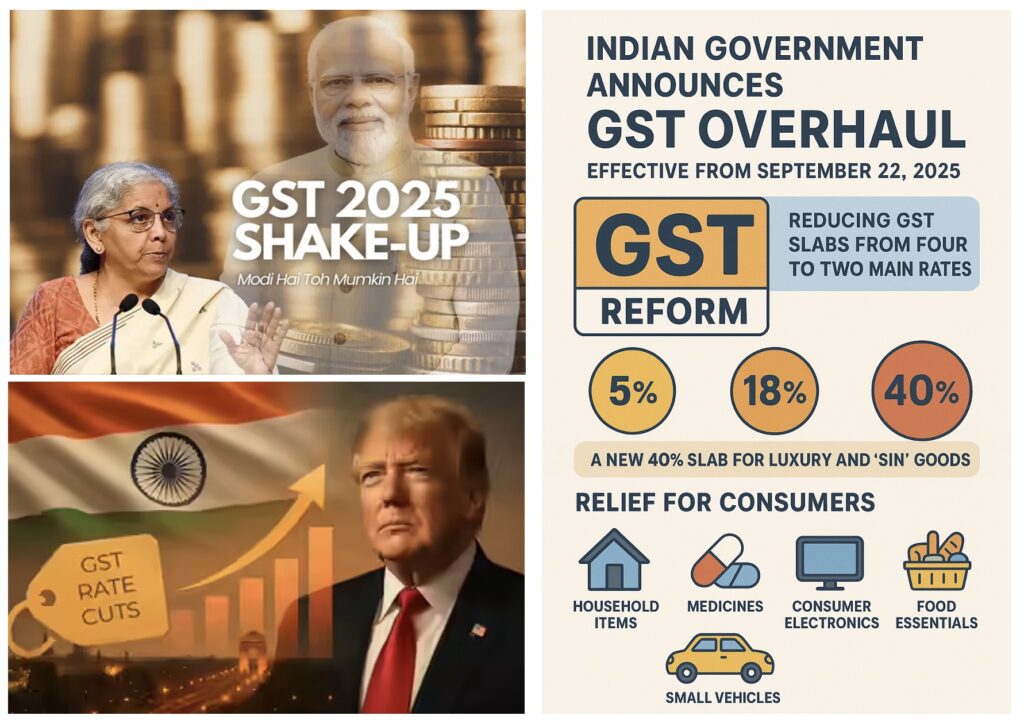
India Unveils Major GST Overhaul to Boost Economy Amid Trump’s 50% Tariff Challenge
India GST Overhaul 2025 marks one of the most significant indirect tax reforms undertaken by the government in recent years. The new GST framework, effective from September 22, 2025, simplifies the tax structure by reducing multiple tax slabs into two primary rates while introducing a higher slab for luxury and sin goods. The objective is to boost domestic consumption, strengthen economic growth, and help India navigate global trade challenges, including the 50% tariffs imposed on several Indian products by the United States.
This GST reform has a direct correlation with the tariffs imposed by the United States under the Trump administration, which introduced a 50% tariff on several Indian products. These tariffs have made Indian exports to the US more expensive and less competitive globally. By cutting GST rates, the Indian government is countering these trade challenges not by directly reducing tariffs but by boosting domestic consumption and reducing costs on goods within the country. This domestic demand boost helps offset the negative impact of US tariffs on exports by strengthening the internal market and supporting economic growth. The reforms were designed over a year and a half and are not a reactive measure but rather a strategic initiative to protect the economy from external shocks like the American tariffs. In sum, the GST cuts act as an economic cushion that supports India’s businesses and consumers while helping stabilize growth in the face of international tariff pressures. This dual approach aims to preserve the competitive edge of Indian products and maintain overall economic stability.