UAE’s Defence Diversification and India’s Strategic Rise in the Gulf
India–UAE Strategic Engagement Gains Momentum
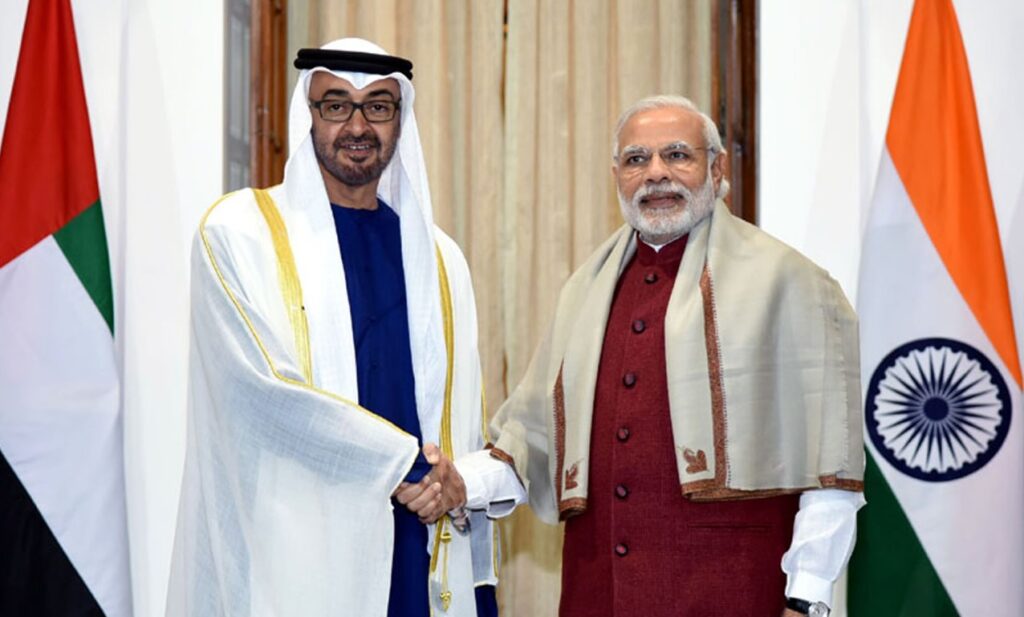
Today, On 19 January 2026, UAE President Sheikh Mohamed bin Zayed Al Nahyan arrived in India on an official visit at the invitation of Prime Minister Narendra Modi. This marked his third visit since assuming the presidency and his fifth overall in the past decade. The visit followed a series of high-level engagements, including the September 2024 visit of Abu Dhabi Crown Prince Sheikh Khaled bin Mohamed bin Zayed Al Nahyan and the April 2025 visit of Dubai Crown Prince Sheikh Hamdan bin Mohammed bin Rashid Al Maktoum, who also serves as UAE Deputy Prime Minister and Defence Minister.
These visits reflect sustained political momentum in India–UAE relations. Defence cooperation has emerged as a central pillar of the Comprehensive Strategic Partnership. The January 2026 visit provided an opportunity to advance discussions on trade, investment, energy security, regional stability amid West Asian turbulence, BRICS coordination, and India’s forthcoming AI Impact Summit. Crucially, it also reinforced defence dialogue at a time when the UAE is actively diversifying its military procurement portfolio. It includes procurement of India’s indigenous Akash Air Defence System.
Akash Air Defence System and UAE’s Operational Priorities
India’s Akash System as a Strategic Fit
The UAE’s interest in India’s Akash surface-to-air missile system reflects a calculated response to emerging threat environments. India formally offered the Akash system in April 2025 during Defence Minister Rajnath Singh’s meeting with Sheikh Hamdan in New Delhi. This was followed by a Letter of Request from the UAE in mid-2025, marking a transition from exploratory dialogue to structured negotiations.
By late 2025, Emirati defence delegations had visited India to assess system integration and operational parameters. Negotiations progressed toward a potential deal valued at over USD 600 million. The Akash system, with interception ranges of up to 25 kilometres, is optimised for low-altitude threats such as drones, helicopters, and subsonic cruise missiles.
Complementarity with Existing UAE Air Defence Architecture
The UAE already operates a layered air defence network anchored by U.S.-supplied Patriot PAC-3 and THAAD systems. However, these platforms are oriented primarily toward medium-range and ballistic missile threats. Akash fills a critical tactical gap by providing cost-effective, responsive defence against saturation attacks and unmanned systems.
This capability has gained urgency amid the growing prevalence of drone warfare across West Asia. Akash’s performance during India’s 2025 Operation Sindoor further reinforced its credibility. For Abu Dhabi, the system offers operational flexibility without the political conditionals that often accompany Western defence exports.
Interoperability with the UAE’s Advanced Air Fleet
Rafale Synergy and Networked Operations
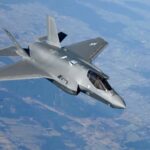
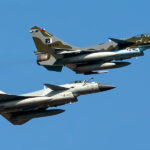
The UAE Air Force operates approximately 80 F-16E/F Block 60 “Desert Falcon” fighters and is inducting around 80 Rafale F4 multirole aircraft, with deliveries commencing in 2025. India operates the Rafale platform as well, creating natural interoperability between the two forces.
The Akash system complements this fleet structure. Integrated operations allow ground-based air defence units to share threat data with airborne platforms. Such networked defence enhances situational awareness and response times. This interoperability adds strategic value beyond the missile system itself.
Beyond Procurement: Industrial and Training Cooperation
India’s defence offer extends beyond hardware supply. It includes joint training, technology transfer, and scope for co-production. For the UAE, this supports long-term defence industrialisation goals. For India, it reinforces its emergence as a credible defence exporter.
Regional Tensions Driving UAE Defence Diversification
Iranian Island Disputes and Strait of Hormuz Vulnerabilities
A key driver of UAE defence diversification lies in its unresolved territorial dispute with Iran over Abu Musa, Greater Tunb, and Lesser Tunb islands. Iran has controlled these strategically located islands since 1971. The UAE maintains historical claims rooted in pre-independence administrative arrangements.
Tensions escalated in December 2025 after Iran’s parliamentary leadership criticised a GCC statement challenging Tehran’s control. The dispute gained further complexity when China publicly supported the UAE’s position, triggering Iranian warnings. Located near the Strait of Hormuz, these islands expose the UAE to asymmetric threats, including missile and drone attacks.
In this context, agile and politically neutral defence systems such as Akash enhance deterrence without escalating confrontation.
Saudi–UAE Frictions and Intra-Gulf Realignments
Relations between the UAE and Saudi Arabia have also experienced strain. In late 2025, disagreements over Yemen resurfaced as UAE-backed Southern Transitional Council forces advanced in border regions such as Hadhramaut and al-Mahra. Saudi Arabia responded with airstrikes on UAE-linked assets.
By January 2026, Abu Dhabi withdrew its remaining troops from Yemen. Analysts described the episode as a strategic divergence rather than a temporary disagreement. Saudi Arabia prioritises Yemeni unity and border security, while the UAE has focused on maritime influence through ports and island control, including Socotra.
These divergences underscore the fragility of Gulf alignments and reinforce the UAE’s incentive to hedge militarily through diversified procurement.
BRICS, De-Dollarisation, and Strategic Autonomy
The UAE joined BRICS in January 2024 alongside Egypt, Ethiopia, Iran, and Saudi Arabia. Membership has expanded Abu Dhabi’s diplomatic options and economic pathways. The bloc facilitates experimentation with local-currency trade, including rupee-denominated energy transactions with India and yuan-based settlements with China.
The UAE has also maintained close ties with Russia despite Western sanctions. Energy cooperation and financial linkages have continued. At the 2025 BRICS summit in Rio de Janeiro, discussions focused on alternative payment systems, although ambitions for a common currency moderated.
For the UAE, BRICS participation complements its post-oil strategy of becoming a global finance and technology hub while reducing exposure to dollar-centric systems.
BrahMos: Strategic Interest Without Immediate Closure
Longstanding Engagement with India’s Supersonic Missile
Beyond Akash, the UAE has consistently shown interest in India’s BrahMos supersonic cruise missile. Multiple reports identify Abu Dhabi as a leading prospective buyer in the Middle East. The system’s maritime and coastal strike capabilities align with Gulf security dynamics.
High-level engagement has been visible. UAE royals and senior officials have repeatedly visited BrahMos pavilions at defence exhibitions such as NAVDEX 2025 and the Dubai Airshow. These interactions signal sustained strategic dialogue.
Why Akash Has Taken Precedence
Despite this interest, no BrahMos contract has been announced or confirmed as of early 2026. Procurement focus has shifted toward air defence systems that address immediate threats. BrahMos, as an offensive strike weapon, carries different geopolitical escalation dynamics.
India’s current export priorities for BrahMos have also concentrated on Southeast Asia, with deliveries underway to the Philippines and advanced negotiations with Indonesia and Vietnam. For the UAE, BrahMos remains a long-term strategic option rather than an urgent requirement.
India’s Emergence as a Trusted Defence Partner
As U.S. military engagement in West Asia recalibrates, regional powers are adjusting. The UAE’s turn toward Indian systems reflects confidence in New Delhi’s reliability and strategic autonomy. Indian defence exports come with fewer geopolitical constraints and competitive life-cycle costs.
For India, defence cooperation with the UAE strengthens its footprint in the Gulf. For Abu Dhabi, it offers balance in a multipolar environment marked by uncertainty, rivalry, and shifting alliances.