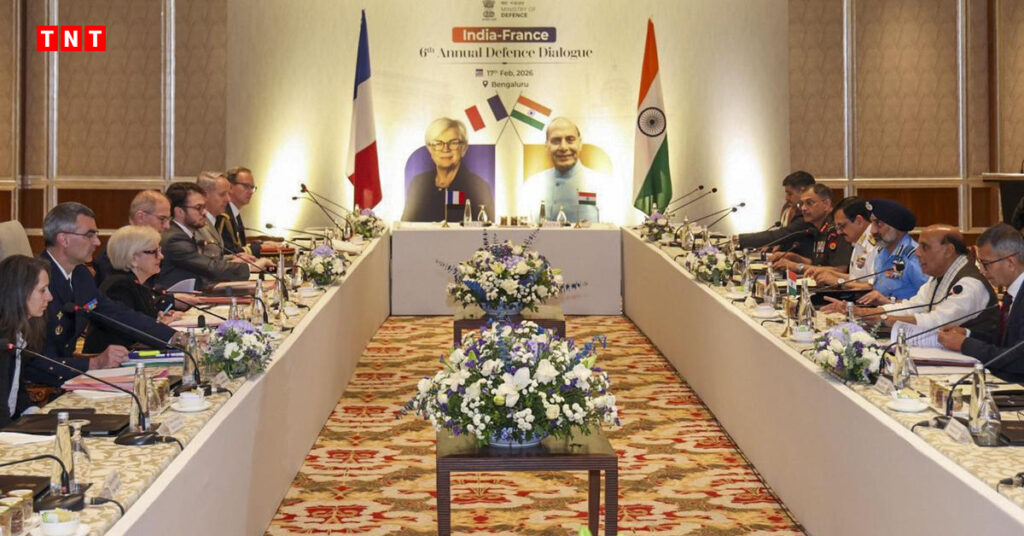
India, France Strengthen Defence Ties with 10-Year Plan
India and France have reaffirmed their long-standing strategic partnership by renewing
defence cooperation for another decade, signaling a strong commitment to deepening military collaboration in an
increasingly volatile global security environment. The decision reflects more than diplomatic routine—it underscores
shared geopolitical interests, defence industrial cooperation, and a mutual vision for stability in the Indo-Pacific
region.
Also Read:
Rahman receives PM Modi’s invitation-Bangladesh Ties Enter New Phase
As global power equations shift and security challenges evolve, the renewed roadmap
places India and France among the most closely aligned strategic partners outside traditional military
alliances.
A Partnership Built on Trust and Strategic Autonomy
India and France share a unique defence relationship rooted in mutual respect and
strategic autonomy. Unlike many global partnerships shaped by bloc politics, the India – France defence equation has
developed independently of rigid alliance structures.
Also Read: Iran US
Nuclear Talks Face Critical Test in Geneva
France has consistently supported India’s strategic independence, particularly in
sensitive areas such as nuclear policy and advanced defence technology transfers. Over the decades, this trust has
translated into concrete military cooperation across air, naval, and space domains.
By renewing defence cooperation for another ten years, both countries signal continuity
and long-term strategic planning rather than short-term transactional engagement.
Expanding Military-to-Military Engagement
The renewed agreement aims to strengthen operational coordination between the armed
forces of both nations. India and France already conduct regular joint exercises, including naval drills in the
Indian Ocean and air force exercises involving advanced fighter aircraft.
Also Read:
Russia Ukraine Peace Talks Expand in Geneva with Broader Agenda
These exercises enhance interoperability, improve tactical coordination, and build
real-time crisis response capabilities. They also send a broader geopolitical message about the two nations’ shared
interest in maintaining maritime security and freedom of navigation.
With the Indo-Pacific becoming a focal point of global strategic competition, enhanced
cooperation between the Indian Navy and the French Navy carries significant importance. France maintains overseas
territories and a permanent military presence in the region, making it a resident Indo-Pacific power rather than an
external observer.
Defence Industrial Collaboration: Beyond Buyer – Seller Dynamics
One of the most significant aspects of the renewed partnership is the focus on defence
industrial cooperation. The relationship has evolved from a traditional buyer – seller framework to a more
collaborative model emphasizing technology transfer, joint production, and co-development.
India’s push for domestic defence manufacturing aligns with France’s willingness to
share advanced technologies. The two countries are exploring expanded collaboration in aerospace, naval systems,
cyber defence, and space security.
Also Read:
China Japan Tensions Escalate as Wang Yi Issues Warning at Munich
This approach supports India’s long-term objective of strengthening indigenous defence
capabilities while offering French defence firms access to one of the world’s largest and fastest-growing military
markets.
Maritime Security and the Indo-Pacific Vision
The Indo-Pacific region has emerged as a central pillar of India – France strategic
alignment. Both countries emphasize a free, open, and rules-based maritime order.
France’s territories in the Indian Ocean, including Réunion Island, give it strategic
reach in the region. Meanwhile, India’s geographic position places it at the heart of critical sea lanes connecting
Asia, Africa, and Europe.
Joint surveillance operations, coordinated naval deployments, and information-sharing
mechanisms aim to enhance maritime domain awareness. These efforts address challenges such as piracy, illegal
fishing, trafficking, and strategic military competition.
The renewed defence cooperation agreement is expected to deepen coordination in these
areas, reinforcing regional stability.
Counterterrorism and Intelligence Sharing
India and France have consistently aligned on counterterrorism efforts. Both countries
have faced terrorist threats and recognize the importance of intelligence cooperation.
The updated defence framework likely includes enhanced intelligence-sharing mechanisms,
counter-radicalization strategies, and cybersecurity collaboration. As warfare increasingly incorporates digital and
hybrid threats, coordinated responses become essential.
By strengthening these mechanisms, India and France demonstrate a shared commitment to
combating evolving security risks beyond conventional battlefield scenarios.
Space and Cybersecurity: The Next Frontier
Modern defence cooperation extends beyond land, sea, and air. Space security and cyber
resilience have become critical components of national defence strategies.
India has rapidly advanced its space capabilities, while France maintains significant
expertise in satellite technology and space-based surveillance systems. Joint collaboration in this domain can
enhance early-warning systems, navigation resilience, and communication security.
Cybersecurity cooperation is equally crucial. Protecting defence infrastructure,
military communication networks, and strategic data from cyber threats requires constant innovation and
collaboration.
The renewed roadmap is expected to emphasize these emerging domains as central pillars
of bilateral cooperation.
Strategic Implications for Global Politics
The India – France defence partnership carries broader geopolitical implications. As
global alliances shift and multipolarity becomes more pronounced, middle and major powers increasingly form
issue-based coalitions.
France’s proactive engagement with India reflects Europe’s recognition of India’s
growing strategic importance. For India, closer ties with France diversify defence partnerships and reduce
overdependence on any single supplier.
This balanced approach strengthens India’s negotiating position globally and enhances
its ability to maintain strategic autonomy.
Economic and Technological Spillover Effects
Defence cooperation often generates technological spillovers into civilian industries.
Aerospace engineering, artificial intelligence, robotics, and advanced materials research developed through military
collaboration can stimulate broader economic growth.
Joint ventures, research partnerships, and manufacturing investments contribute to job
creation and skill development. For India, such cooperation supports its ambition to become a global defence
manufacturing hub.
For France, deeper engagement ensures long-term industrial partnerships and access to
collaborative innovation ecosystems.
Challenges and the Road Ahead
Despite strong alignment, challenges remain. Defence projects often face delays due to
regulatory complexities, budgetary constraints, and technology transfer negotiations.
Maintaining transparency, ensuring timely execution, and aligning industrial policies
will be essential for the success of the renewed 10-year framework.
Additionally, both countries must navigate broader geopolitical sensitivities while
strengthening bilateral cooperation.
However, the long history of trust between India and France suggests resilience. Their
defence partnership has consistently adapted to global changes without losing strategic depth.
Conclusion
The renewal of India and France’s defence cooperation for the next decade marks a
significant milestone in their strategic partnership. It reflects shared values of sovereignty, mutual respect, and
commitment to regional stability.
By expanding collaboration across conventional military operations, defence
manufacturing, cybersecurity, and space security, both nations are positioning themselves for a rapidly evolving
security landscape.
In a world marked by uncertainty, the India – France defence partnership stands out as a
model of long-term strategic alignment built on trust and forward-looking vision.
FAQ : India, France Strengthen Defence Ties with 10-Year Plan
Q1. Why did India and France renew their defence cooperation?
They renewed the partnership to strengthen long-term military collaboration, enhance interoperability, and address evolving global security challenges.
Q2. What areas will the renewed agreement focus on?
The cooperation will likely focus on defence manufacturing, maritime security, intelligence sharing, cybersecurity, and space collaboration.
Q3. How does this impact the Indo-Pacific region?
It strengthens maritime security and supports a free and open Indo-Pacific, enhancing regional stability.
Q4. Is the partnership limited to arms purchases?
No. The relationship now emphasizes joint development, technology transfer, and industrial collaboration rather than just procurement.
Q5. What does this mean for India’s defence strategy?
It diversifies India’s strategic partnerships, strengthens domestic defence capabilities, and supports long-term military modernization.