India Advances Strategic 32-km Road to Muling La Pass Near Tibetan Border
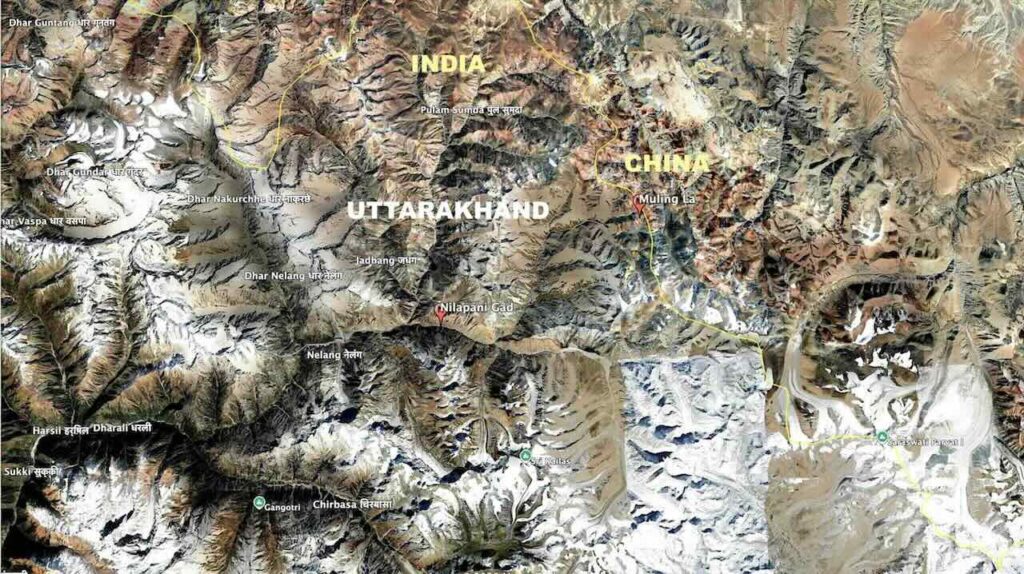
India has approved a strategically critical 32-kilometre all-weather road from Nilapani to the base of Muling La Pass in Uttarakhand, marking another decisive step in strengthening border infrastructure close to the Tibetan frontier. The Muling La road project, cleared at an estimated cost of ₹104 crore, will be executed by the Border Roads Organisation (BRO) and is designed to replace a hazardous five-day trek with reliable vehicular access.
Once completed, the road will drastically reduce deployment time for the Indian Army and the Indo-Tibetan Border Police (ITBP), cutting movement from days to a matter of hours. The project directly addresses long-standing logistical weaknesses in Uttarakhand’s high-altitude frontier, gaps that became strategically untenable after the 2020 Galwan Valley clash altered India’s approach to border infrastructure development.
Project Specifications and Terrain Challenges
The BRO has already issued tenders seeking specialised consultancy for terrain assessment, avalanche mitigation, and slope stabilisation, signalling that the Muling La road project has moved from policy clearance to active implementation. The alignment passes through some of the most challenging Himalayan terrain at an altitude of over 16,000 feet, with the pass itself standing at approximately 16,134 feet.
At present, access to Muling La remains extremely limited. Supplies and personnel rely on helicopter sorties, mule columns, or foot patrols, particularly during winter when heavy snowfall isolates the region entirely. In addition, unpredictable weather and thin oxygen levels impose severe operational constraints on both troops and logistics planners.
The new road is designed as an all-weather route, incorporating modern engineering solutions for snow clearance, drainage, and slope reinforcement. These features are essential for ensuring year-round usability in an area prone to avalanches and landslides. The project reflects BRO’s growing expertise in high-altitude construction, built through experience in Ladakh and Arunachal Pradesh.
Strategic Importance Along the Line of Actual Control
The strategic value of the Muling La road project lies in its ability to compress reaction time along the Line of Actual Control (LAC). Rapid mobility allows Indian forces to reinforce forward posts without prolonged acclimatisation halts, a decisive factor in high-altitude confrontations.
According to defence analysts, improved access to Muling La significantly strengthens India’s posture in the Lipulekh–Limpiyadhura sector, an area of overlapping strategic sensitivity involving India, China, and Nepal. Reduced mobilisation time enhances deterrence while remaining defensive in nature.
China’s extensive road, rail, and air infrastructure development in the Tibetan region has increased pressure on India to accelerate its own border connectivity projects. The Muling La road fits into this broader effort to reduce infrastructure asymmetry without altering the status quo.
Historical Context: From Strategic Hesitation to Infrastructure Push
For decades after the 1962 India–China war, India maintained limited infrastructure development near the LAC due to security concerns. This resulted in relatively weak connectivity in several Himalayan regions, including parts of Uttarakhand.
Muling La, once a historic trans-Himalayan pass used by traders and patrols, remained underdeveloped despite its strategic location. The 2020 Galwan Valley clash marked a turning point, prompting a reassessment of border infrastructure policy.
Since then, India has shifted toward viewing forward infrastructure as a strategic asset rather than a liability. The Muling La road project reflects this doctrinal change, combining connectivity with defence preparedness.
BRO’s Expanding Role in Uttarakhand
The Border Roads Organisation continues to play a central role in strengthening India’s high-altitude infrastructure network. In Uttarakhand, BRO has completed several key roads improving access to remote border regions.
These projects serve both military and civilian purposes by improving logistics for defence forces and enhancing connectivity for local communities, including access to healthcare, education, and markets.
The Muling La project extends this effort by linking Nilapani to the base of the pass, improving continuity across the Garhwal frontier and supporting broader regional integration.
Integration with India’s Border Infrastructure Strategy
India has significantly expanded its India–China Border Roads programme since 2020, focusing on improving connectivity across northern and eastern sectors. These projects aim to strengthen mobility in high-altitude regions and improve operational readiness.
Uttarakhand has seen increased investment in infrastructure development, including roads and bridges that connect previously isolated valleys. These improvements support both national security objectives and regional development goals.
The Muling La road aligns with this broader strategy while maintaining India’s stated commitment to dialogue and stability along the border.
Balancing Deterrence and Stability
Officials describe the Muling La road project as defensive in nature, aimed at improving logistical efficiency rather than altering deployment patterns. Enhanced infrastructure reduces response time and improves coordination during emergencies.
Better connectivity also reduces reliance on air transport, improving operational flexibility in other regions. In mountainous warfare environments, logistics capability is often as critical as combat strength.
The project supports both deterrence and stability by ensuring preparedness without escalation.
Regional and Local Impact
Beyond strategic considerations, the road is expected to benefit local communities in Uttarakhand’s border districts. Improved connectivity can boost economic activity, tourism, and access to government services.
Strengthening infrastructure in remote villages also helps maintain population levels in border areas, which is considered important for long-term security and regional stability.
Conclusion
The Muling La road project represents a continuation of India’s post-2020 border infrastructure strategy, focusing on rapid mobility, improved logistics, and enhanced preparedness.
By combining strategic necessity with regional development, the project underscores a broader shift toward resilient infrastructure as a foundation of national security in the Himalayan frontier.