European Leaders Rally Behind Denmark as Trump Renews Threats Over Greenland Sovereignty
Copenhagen witnessed an unusual show of European unity after leaders from seven major
European nations issued a joint declaration reaffirming Denmark’s sovereignty over Greenland, pushing back strongly
against renewed threats by U.S. President Donald Trump to annex the Arctic territory. The statement comes amid
rising unease over Washington’s increasingly assertive posture following its recent military intervention in
Venezuela.
The declaration was signed by the leaders of Denmark, France, Germany, Italy,
Poland, Spain, and the United Kingdom. It stressed that “Greenland belongs to
its people” and that
only Greenland and Denmark have the authority to decide its future. The message was widely interpreted as a direct
rebuttal to Trump’s escalating rhetoric.
Trump’s Remarks Rekindle Greenland Annexation Debate
The controversy intensified after President Trump, speaking aboard Air Force
One, claimed that the
United States needed Greenland for national security. He asserted that Denmark
was incapable of safeguarding the territory’s strategic
interests. The remarks revived a long-running but previously dormant debate over U.S. ambitions in the
Arctic.
Trump has repeatedly framed Greenland as a strategic necessity rather than a sovereign
territory. This approach has alarmed European capitals, especially given Washington’s growing willingness to employ
military force to secure geopolitical objectives.
Senior US Officials Escalate the Rhetoric
Tensions deepened after Trump’s senior aide Stephen Miller stated on CNN that
Greenland “should be part of
the US” to secure Arctic dominance and protect NATO interests. Miller
argued that the United States is the central power within NATO, a claim that unsettled European allies already
wary
of Washington’s unilateral tendencies.
Such statements have reinforced concerns that the Greenland issue is not rhetorical
posturing alone but part of a broader strategic recalibration under Trump’s leadership.
Force Not Ruled Out After Venezuela Precedent
Adding to the unease, Trump has not ruled out the use of force. His remarks echo similar
threats made during his first term regarding Venezuela. Those threats materialised last week when U.S. forces
captured Venezuelan President Nicolás Maduro in a swift military
raid.
The Venezuela operation has fundamentally altered how European governments interpret
Trump’s language. What was once dismissed as political theatre is now viewed as a credible indicator of future
action.
Denmark Warns of NATO’s Collapse
Danish Prime Minister Mette Frederiksen
issued one of the strongest warnings yet, stating that any U.S. takeover of Greenland would effectively
mark the end of NATO. She argued that such an act would violate the
alliance’s core principle of collective defence against external aggression.
Frederiksen emphasised that NATO is built on the expectation that allies protect one
another, not threaten territorial integrity from within. According to her, a U.S. move against Denmark would
dismantle the post-World War II security framework that has underpinned European stability for decades.
Greenland Rejects Comparisons With Venezuela
Greenland’s Prime Minister Jens-Frederik Nielsen called for calm and
respectful dialogue grounded in international law. He rejected
comparisons between Greenland and Venezuela, describing them as unfounded and misleading.
Nielsen stressed that Greenland’s status as a self-governing territory within the
Kingdom of Denmark is governed by established legal frameworks. He reiterated that decisions about
Greenland’s
future must rest with its people, not external powers.
Why Greenland Matters Strategically
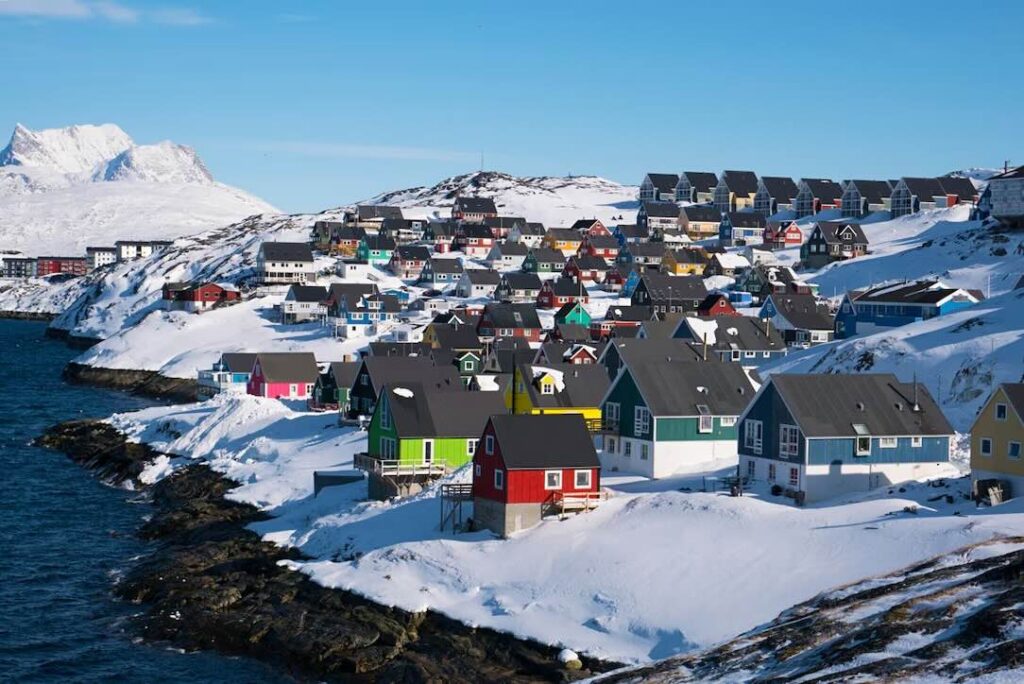
Greenland has been semi-autonomous since 1979, yet its geopolitical value has surged in
recent years. Melting Arctic ice has opened new shipping routes, intensified competition for mineral
resources, and
drawn heightened interest from Russia and China.
The United States already operates the Pituffik Space Base in Greenland under a 1951 defence
agreement. The base plays a critical role in missile
warning systems and space surveillance for NATO. However, European leaders argue that existing arrangements
already
address security concerns without infringing on sovereignty.
Greenlanders Oppose US Control
Public opinion within Greenland strongly opposes any form of U.S. control. Polls
indicate overwhelming resistance to annexation. A resident of Ilulissat, Morgan Angaju, captured the prevailing
sentiment by stating that Greenland is already
claimed by its
people. He noted that Kalaallit Nunaat literally means the
land of the Greenlandic
people.
Such views complicate Washington’s narrative that annexation would be welcomed or
beneficial.
Analysts See Broader Strategic Calculations
Analysts suggest Trump’s Greenland rhetoric serves multiple objectives. It may divert
attention from the controversial Venezuela operation. It also signals a long-term U.S. strategy
aimed at
Arctic dominance, which future administrations could pursue regardless of
political alignment.
Additionally, the messaging appears intended to warn Greenland against deepening
economic or strategic ties with Beijing or Moscow. The Arctic has emerged as a critical arena in
great-power
competition.
Europe’s Strategic Dilemma
Geopolitical experts have described the unfolding situation as Europe’s “major
geopolitical disaster.” He argued that Europe is increasingly squeezed between
expanding U.S. ambitions and Russian assertiveness, highlighting the continent’s declining influence
in an emerging
multipolar world.
The joint European statement calls for collective NATO efforts to address Arctic
security challenges without violating sovereignty. However, tensions persist. As Frederiksen urged
European leaders
to take Trump “seriously,” the
episode has exposed deep fractures within the transatlantic alliance, with lasting implications for
global norms on
territorial integrity.