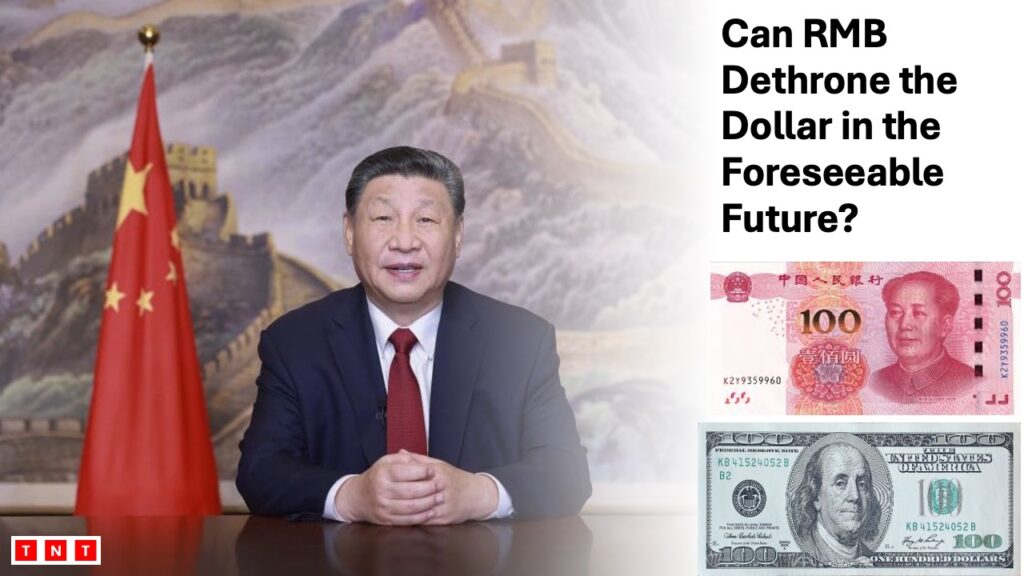
Can China’s Yuan Become a Global Reserve Currency?
Xi Jinping’s Push for Yuan Global Reserve Status
February 01, 2026 | Chinese President Xi Jinping has renewed China’s long-term ambition
to transform its currency into a global financial pillar. In excerpts published on January 31, 2026, in
Qiushi, the Communist Party’s
official theoretical journal, Xi called for building a “strong yuan” capable of supporting China’s international
role. He stressed the need to expand its use in trade, investment, and foreign exchange reserves. This renewed push
places the yuan global reserve objective at the centre of Beijing’s
economic and geopolitical strategy.
The statement comes at a time of growing geopolitical fragmentation, rising sanctions,
and increasing pressure on countries to reduce dependence on the U.S. dollar. As a result, China sees currency
influence as a key instrument of strategic autonomy.
However, ambition alone does not guarantee success in global finance. The international
monetary system remains deeply anchored to the dollar. Structural constraints continue to limit China’s
progress.
Xi Jinping’s Economic Vision and the Global Role of the Yuan
Xi Jinping’s call reflects China’s broader effort to reshape the post-war financial
architecture. Over the past decade, Beijing has promoted yuan settlements through bilateral trade agreements,
currency swap lines, and regional financial arrangements.
In addition, China has expanded the Cross-Border Interbank Payment System, which
provides an alternative to the Western-dominated SWIFT network. The system now connects more than 1,400 financial
institutions across nearly 110 countries.
China has also encouraged yuan-based trade under the Belt and Road Initiative. Several
energy exporters, including Russia and parts of the Middle East, have begun accepting yuan payments. These
developments aim to reduce exposure to dollar-based sanctions.
Nevertheless, despite these efforts, the yuan still accounts for only around 4 per cent
of global payments and about 2.3 per cent of foreign exchange reserves, according to IMF data. These figures show
steady growth, yet they remain far below the dollar’s dominance.
What Makes a Currency a Global Reserve
A reserve currency performs three essential functions in international finance. It
serves as a store of value for central banks. It acts as a medium of exchange for cross-border transactions. It also
functions as a unit of account for pricing commodities, contracts, and debt.
The U.S. dollar currently fulfils all three roles. It represents nearly 60 per cent of
global reserves. Most oil, metals, and agricultural commodities remain priced in dollars. International loans and
bonds are also predominantly denominated in dollars.
This dominance reduces transaction costs and stabilises markets. It also creates
powerful network effects. Once a currency becomes dominant, users continue to rely on it because others do the
same.
Therefore, replacing such a system requires not only economic size but also
institutional credibility and financial openness.
Why Reserve Currency Status Brings Strategic Power
Reserve currency status provides major advantages to the issuing country. It lowers
borrowing costs. It increases demand for domestic financial assets. It strengthens geopolitical influence. It also
allows greater flexibility in managing deficits.
The United States benefits from sustained foreign demand for Treasury bonds. This demand
keeps interest rates relatively low despite rising public debt. It also enables Washington to deploy financial
sanctions as a strategic tool.
For other countries, reliance on a dominant currency simplifies trade and finance.
However, it also exposes them to foreign policy decisions. U.S. Federal Reserve rate changes often affect inflation,
capital flows, and growth across developing economies.
These spillover effects have strengthened calls for diversification. China’s currency
push is part of this global reassessment.
How the Dollar Secured Its Long-Term Supremacy
The dollar’s rise reflects a unique historical trajectory. After World War I, the United
States emerged as the world’s largest industrial economy. During World War II, it accumulated most of the world’s
gold reserves.
In 1944, the Bretton Woods system linked major currencies to the dollar. Even after the
end of gold convertibility in 1971, the dollar retained its central role due to market depth and political
stability.
The growth of U.S. Treasury markets created unmatched liquidity. At present, daily
trading volumes exceed 700 billion dollars. No other bond market offers comparable scale and transparency.
In addition, energy trade in dollars strengthened global demand. Military alliances and
financial institutions further reinforced American leadership.
These combined factors created a durable monetary ecosystem that remains difficult to
replicate.
China’s Progress in Yuan Internationalisation
China has achieved measurable success in expanding the yuan’s international footprint.
The currency joined the IMF’s Special Drawing Rights basket in 2016. Since then, its use in trade settlements has
steadily increased.
Bilateral swap agreements now cover more than 40 countries. These arrangements
facilitate local currency trade without using dollars. China has also promoted offshore yuan hubs in Hong Kong,
Singapore, and London.
In Asia, Africa, and parts of Latin America, Chinese financing increasingly involves
yuan-denominated loans. Some commodity exporters have begun holding yuan reserves to support trade with
China.
These developments reflect gradual acceptance. However, progress remains concentrated in
politically aligned or trade-dependent regions.
Structural Barriers Limiting Yuan Global Reserve Status
Despite policy support, fundamental obstacles continue to restrict the yuan’s
international role.
Capital controls remain the most significant constraint. China regulates cross-border
financial flows to prevent instability. Foreign investors face restrictions on asset repatriation. Domestic
investors cannot freely move funds abroad. Such controls undermine confidence in long-term convertibility.
Financial market depth also remains limited. U.S. markets offer continuous liquidity
under transparent regulations. China’s bond markets are growing, yet state influence remains strong. Policy
interventions often distort pricing.
Institutional credibility presents another challenge. Reserve currencies depend on
predictable legal systems and independent regulators. In China, political priorities frequently override market
considerations. Sudden regulatory changes weaken investor trust.
Finally, policy control conflicts with openness. Full liberalisation would reduce state
authority over capital flows. For Beijing, this risk appears unacceptable under current governance
priorities.
These constraints reflect structural choices rather than temporary weaknesses.
Can the Yuan Replace the Dollar in the Near Future?
Most international analysts agree that the yuan is unlikely to displace the
dollar in the foreseeable future. IMF and Atlantic Council studies indicate that
China would need decades of institutional reform to meet reserve currency standards.
Even if China liberalises partially, network effects favour the incumbent. Global trade
contracts, commodity pricing, and debt instruments remain heavily dollar-based. Transitioning these systems would
require coordinated global action.
However, the yuan may continue expanding as a regional and sectoral currency. In Asia,
parts of Africa, and energy markets linked to China, its role will likely grow.
Rather than replacement, gradual diversification appears more realistic.
Toward a Multipolar Currency System
Xi Jinping’s emphasis on a strong yuan signals long-term strategic intent. It reflects
China’s desire to reduce vulnerability to external pressure and strengthen monetary sovereignty.
At the same time, structural realities limit rapid transformation. Financial openness,
legal predictability, and institutional trust cannot be created overnight.
The global system is therefore moving slowly towards multipolarity. The dollar will
remain dominant. The euro will retain regional influence. The yuan will expand selectively. Other currencies,
including the Indian rupee, may gain niche roles.
This diversified structure could reduce systemic risks while preserving efficiency.
However, it will require sustained reforms and international cooperation.
For now, the dollar’s grip remains firm. China’s campaign represents a strategic
challenge, not an imminent transformation. The future of global finance will depend less on declarations and more on
institutional credibility, transparency, and trust.