Updated on May 06, 2026
Historic Voting in North Bengal: Phase 2 Decides Fate Tomorrow
Kolkata, April 28, 2026: The first phase of the West Bengal Polls 2026 concluded on April 23 with an unprecedented voter turnout of approximately 92.7% to 93.19% — the highest in the state since Independence — across 152 constituencies. According to the Election Commission of India (ECI), around 3.6 crore voters participated peacefully in this phase, which covered the entire North Bengal region (including Cooch Behar, Alipurduar, Jalpaiguri, and Darjeeling) along with parts of Jangalmahal and other districts such as Malda, Murshidabad, and Birbhum.
West Bengal Polls Phase – 1 was held in Assembly segments AC 1–76, 203–258, and 275–294, with districts like Cooch Behar, Dakshin Dinajpur, and Malda recording some of the highest figures. The ECI has confirmed no major disruptions or repolls were required, describing the process as largely smooth despite the special intensive revision (SIR) of electoral rolls earlier.
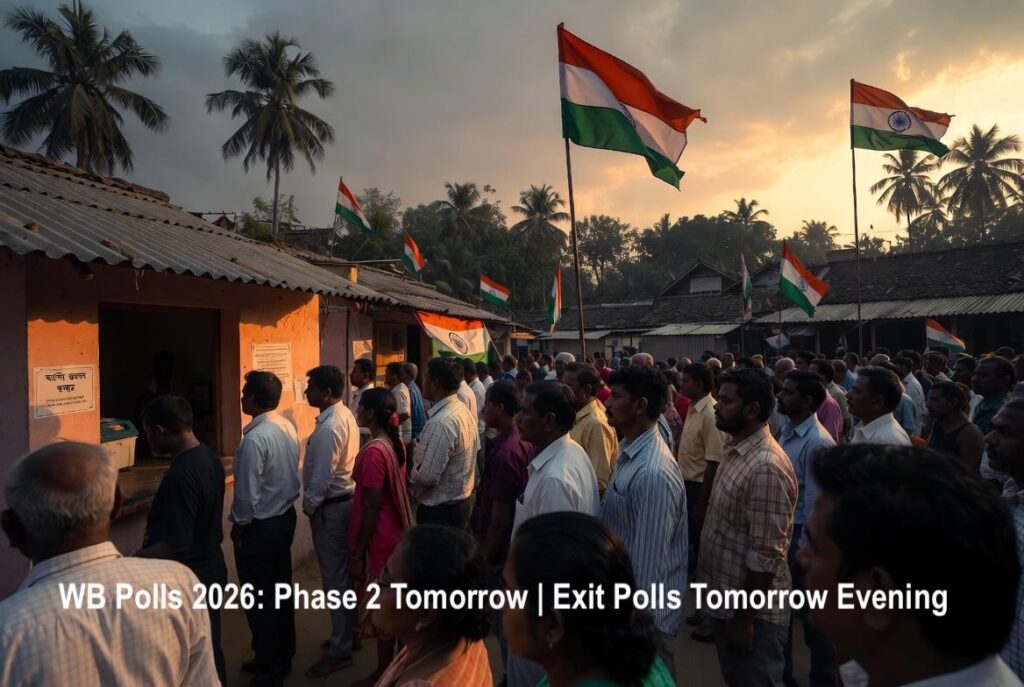
With West Bengal Polls Phase 1 now complete, all eyes turn to Phase 2, scheduled for tomorrow (April 29). This phase will decide the fate of the remaining 142 seats (AC 77–202 and 259–274), primarily in South Bengal and urban/semi-urban areas including Kolkata, North and South 24 Parganas, Howrah, Hooghly, and Nadia. These regions are traditionally seen as strongholds for the ruling Trinamool Congress (TMC). The final counting of votes for all 294 seats is set for May 4.
Claims from Both Sides After Phase 1
Both the Bharatiya Janata Party (BJP) and the All India Trinamool Congress (TMC) have interpreted the record turnout as a strong endorsement of their respective positions, leading to contrasting narratives.
Union Home Minister Amit Shah and other senior BJP leaders, including Prime Minister Narendra Modi, have asserted that the high polling percentage reflects massive anti-incumbency against the TMC regime. Shah has publicly claimed that the BJP is set to win at least 110 seats out of the 152 in Phase 1 alone, paving the way for a clear majority and a “pure BJP government” in the state after Phase 2. BJP leaders have described the voter surge in North Bengal and Jangalmahal as a “decisive mandate for change,” citing issues such as governance, law and order, and welfare delivery.
On the other hand, TMC leaders, including Chief Minister Mamata Banerjee, have highlighted the peaceful and enthusiastic participation as proof of strong grassroots support for their welfare schemes and organisational strength. They have countered BJP’s projections, maintaining that the turnout underscores public faith in the incumbent government’s development agenda despite challenges like voter list revisions. TMC spokespersons have emphasised that the real picture will emerge only after Phase 2 polling in their core southern and urban belts.
West Bengal Polls Exit Polls Expected Tomorrow Evening
West Bengal Polls Exit polls for the entire election are scheduled to be released tomorrow (April 29) after polling ends at 6:00 PM in Phase 2. As per ECI guidelines, they can be broadcast only after 6:30 PM, with most major channels and agencies releasing projections from 7:00 PM onwards. Leading agencies to watch include Axis My India (often partnered with India Today), CVoter (Times Now), Republic-CNX, and poll-of-polls aggregators from ABP or Times of India. These surveys will provide early indications, though they remain indicative and have had mixed accuracy in past Bengal elections. Final results will be declared on May 4.
Can BJP Turn the Tables in Phase 2? Analysts Debate as Anything Remains Possible
The exceptionally high turnout in Phase 1 has triggered intense speculation among political observers about whether the BJP can build on its claimed momentum to make significant inroads in tomorrow’s Phase 2 constituencies — traditionally tougher terrain for the party.
Some analysts note that the record participation, especially in areas where the BJP has been aggressively campaigning on issues of change, could indicate a broader shift in voter sentiment. A few experts, who had earlier projected differently in pre-poll surveys, are now reassessing ground realities and suggesting that a strong BJP performance in Phase 1 might translate into gains elsewhere, potentially altering the overall arithmetic.
However, with Phase 2 covering densely populated zones, the final outcome hinges on multiple factors: last-minute campaign swings, local issues, and how the high enthusiasm of Phase 1 carries forward. Political pundits remain divided — some see the possibility of the BJP turning the tables and crossing the majority mark (148 seats), while others caution that historical patterns in South Bengal could still play a role.
With counting slated for May 4, only the voters’ verdict will settle the debate. Until then, both parties continue to campaign vigorously, and the people of West Bengal will have the final say.