India Clears ₹2.38 Trillion Defence Package: A Strategic Leap in Air Power and Unmanned Warfare
Defence Acquisition Council of India cleared ₹2.38 trillion package marks one of the most consequential military approvals in recent years, signalling a decisive push toward advanced air defence, tactical mobility, and next-generation unmanned combat systems. Approved on 27 March 2026 in New Delhi, the sweeping clearance reflects both immediate operational needs and long-term strategic planning.
Chaired by Defence Minister Rajnath Singh, the Defence Acquisition Council (DAC) granted Acceptance of Necessity (AoN) for proposals worth approximately ₹2.38 lakh crore (around $25 billion). The package focuses on three pillars: expansion of S-400 air defence systems, procurement of medium transport aircraft (MTA), and induction of indigenous Ghatak stealth UCAV squadrons.
S-400 Expansion Strengthens India’s Air Defence Shield
A key highlight of the Defence Acquisition Council ₹2.38 trillion package is the approval for five additional S-400 Triumf regiments, significantly enhancing India’s long-range air defence capability.
India had earlier signed a 2018 inter-governmental agreement with Russia for five S-400 regiments worth approximately $5.43 billion. Of these, three are already operational with the Indian Air Force, while the fourth and fifth are scheduled for delivery by mid and late 2026 respectively.
With the new approval, India will eventually operate ten S-400 regiments, creating a dense, layered air defence network across critical sectors. The system’s capability to intercept aircraft, cruise missiles, and ballistic threats at ranges of up to 400 km makes it a cornerstone of India’s strategic deterrence.
This expansion reflects not only confidence in the system’s performance but also the growing need to counter evolving aerial threats in a complex regional security environment.
Medium Transport Aircraft to Replace Ageing Fleet
Another crucial component of the India Defence Acquisition Council ₹2.38 trillion package is the clearance for 60 Medium Transport Aircraft (MTA), estimated at around ₹1 lakh crore.
The Indian Air Force’s current Antonov An-32 fleet, many aircraft of which are over four decades old, has long required replacement. The new MTA fleet will address this gap, enhancing India’s ability to conduct tactical and strategic airlift operations.
The plan includes 12 aircraft in fly-away condition and 48 to be manufactured domestically with substantial indigenous content. This aligns with the broader Aatmanirbhar Bharat initiative aimed at strengthening domestic defence manufacturing.
These aircraft will play a critical role in troop deployment, cargo logistics, disaster relief operations, and high-altitude missions, particularly in challenging terrains such as the Himalayas.
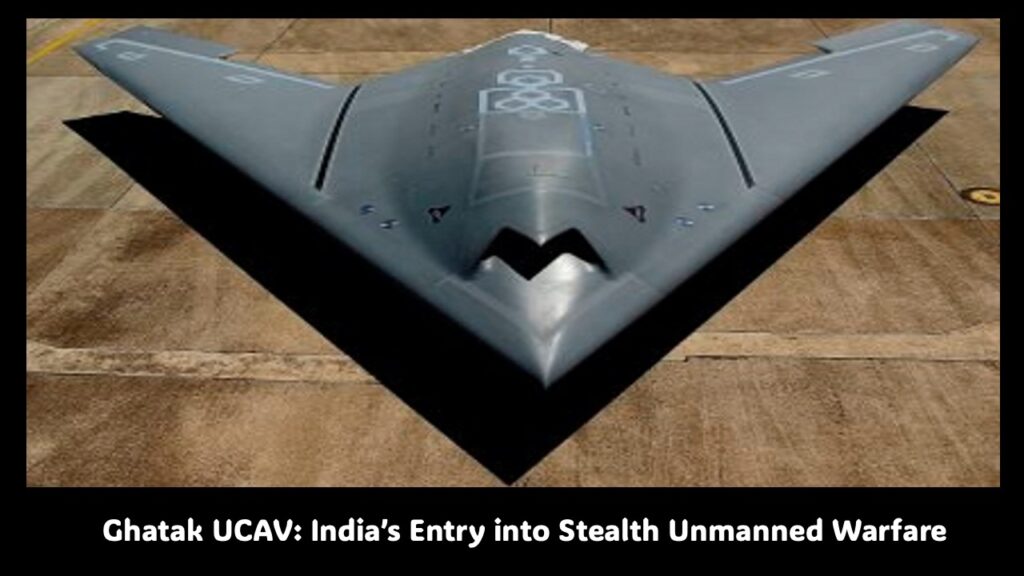
Ghatak UCAV: India’s Entry into Stealth Unmanned Warfare
Perhaps the most transformative element of the India Defence Acquisition Council ₹2.38 trillion (approximately $25–26 billion) package is the approval of four squadrons of the indigenous Ghatak stealth unmanned combat aerial vehicle (UCAV).
This translates to approximately 60–80 aircraft, marking the first large-scale commitment by the Indian Air Force to a dedicated UCAV force. The Ghatak programme, originally conceived as Project AURA around 2010, represents India’s ambition to master advanced unmanned strike capabilities.
Designed as a flying-wing stealth platform, Ghatak is optimised for deep-strike missions in heavily defended airspace. It features an internal weapons bay, low radar cross-section, and autonomous operational capabilities, making it a high-value strategic asset rather than a disposable drone.
Development Timeline and Technological Progress
The Ghatak programme has already demonstrated significant technological progress through its Stealth Wing Flying Testbed (SWiFT), which achieved its maiden flight in July 2022.
Under current timelines:
In 2026, the full-scale prototype is expected to roll out, with its first flight and high-altitude trials planned within the year. The indigenous dry Kaveri engine is also targeted for certification.
By the early 2030s, the first operational squadron is expected to be inducted into the Indian Air Force following successful testing and weapon integration.
From the 2030s to 2047, all four squadrons are expected to be progressively inducted, aligning with India’s long-term military modernisation roadmap.
Operational Role and Battlefield Impact
The India Defence Acquisition Council ₹2.38 trillion package positions Ghatak as a central component of future air warfare doctrine.
Its primary missions include suppression of enemy air defences, precision strikes against high-value targets, intelligence and reconnaissance in denied environments, and manned-unmanned teaming operations.
In such scenarios, pilots operating aircraft like Tejas Mk-2 or Su-30MKI could control multiple Ghatak UCAVs, using them as forward sensors or strike platforms. This approach reduces pilot risk while enhancing strike effectiveness.
The aircraft’s stealth profile and autonomous capabilities ensure survivability even in heavily contested electromagnetic environments.
Strategic Significance: A Shift in Air Power Doctrine
The broader significance of the India Defence Acquisition Council ₹2.38 trillion package lies in its clear signal that unmanned systems are no longer supplementary but central to modern warfare.
India is preparing for a future where drone-centric operations, networked warfare, and artificial intelligence will define combat effectiveness. By investing in Ghatak, India is also accelerating its progress in advanced technologies such as stealth, autonomy, and integrated battle networks.
This move also strengthens the domestic defence ecosystem by prioritising collaboration between DRDO, HAL, and private industry, reducing reliance on imports over the long term.
Challenges Ahead and the Road Forward
Despite its ambition, the India Defence Acquisition Council ₹2.38 trillion package is not without challenges. Engine development, full-spectrum autonomy in contested environments, and large-scale production remain complex hurdles.
However, the rapid progression from proposal to approval indicates strong institutional backing and strategic urgency.
The decisions taken on 27 March 2026 effectively transform India’s defence posture, marking a transition from conventional force structures to a future-ready, technology-driven military.
Building the Air Force of the 2030s
The India Defence Acquisition Council ₹2.38 trillion package represents more than just a procurement decision—it is a blueprint for the Indian Air Force of the future.
By combining proven systems like the S-400 with next-generation platforms such as the Ghatak UCAV and modern transport aircraft, India is creating a balanced, resilient, and technologically advanced air power structure.
As global conflicts increasingly emphasise speed, precision, and survivability, India’s latest defence push ensures it remains prepared not just for today’s threats, but for the battles of the decades ahead.
Also Read:
GHATAK: India’s Shadow-Wing—A Silent Blade Forged for the 2030s Battlefield
Modern Grammar of Warfare — Drones, and the Way India Is Writing Its Own Chapter in the Sky