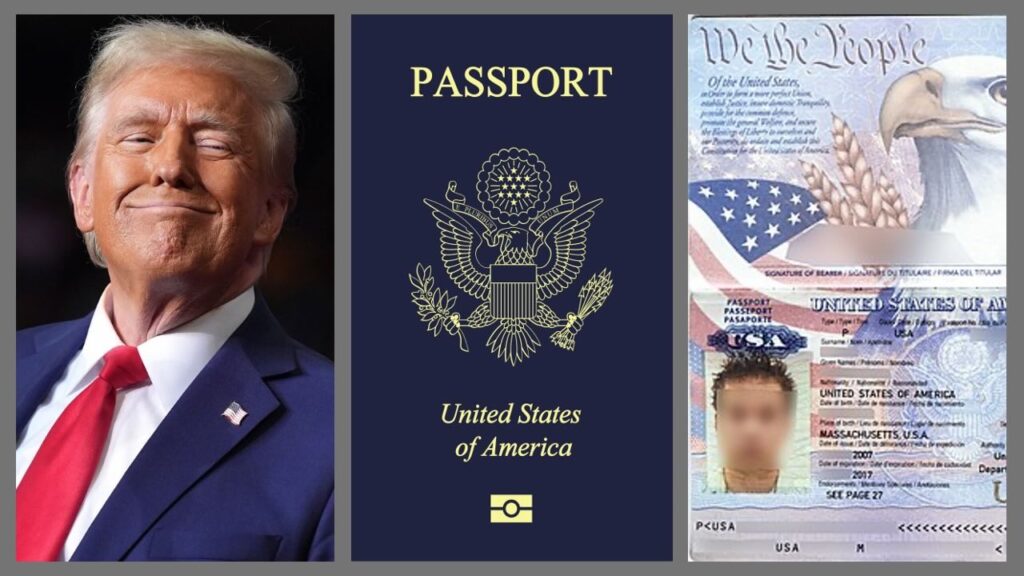
US Citizenship Revocation: Trump Administration Scales Up Denaturalisation Efforts
The Trump administration has significantly expanded efforts to revoke US citizenship
from naturalised Americans as part of its second-term immigration
enforcement agenda. New internal guidance directs immigration officials to identify and refer a sharply increased
number of denaturalisation cases for prosecution.
According to reports from major US media outlets, U.S. Citizenship and Immigration
Services has instructed field offices to submit 100 to 200 potential cases per month to the Department of Justice beginning in fiscal year 2026.
If implemented fully, this would result in up to 2,400 annual
referrals, marking one of the most aggressive citizenship enforcement drives in
modern US history.
Sharp Increase from Historical Levels
The current expansion represents a major shift from past practice. Between 2017 and
early 2025, federal authorities filed just over 120 denaturalisation cases in total.
Earlier initiatives, including Operation Janus during President Trump’s first term,
produced relatively limited numbers. In contrast, the new targets reflect a tenfold increase over historical
averages.
Officials say early cases in the second term have already involved serious offences,
including child exploitation and organised crime links.
Therefore, the administration is signalling a tougher stance on alleged citizenship
fraud.
Legal Basis for Citizenship Revocation
US law permits denaturalisation only under specific conditions. Under the Immigration
and Nationality Act, citizenship may be revoked if it was illegally obtained or secured through material
misrepresentation.
The government must demonstrate that applicants deliberately concealed or falsified
critical information during the naturalisation process.
Key Supreme Court rulings, including Afroyim
v. Rusk and Maslenjak v.
United States, have established high evidentiary standards. Courts
require clear proof that fraud directly influenced the grant of citizenship.
Proceedings take place in federal court, where authorities bear the full burden of
proof.
As a result, successful revocation remains legally demanding.
Expanded Enforcement Priorities
A Department of Justice memorandum issued in mid-2025 outlined new priorities for
denaturalisation enforcement. These include cases involving:
- National security threats
- War crimes and human rights
abuses - Terrorism or espionage links
- Gang, cartel, and trafficking
networks - Major financial and identity
fraud
Officials describe the policy as a “zero-tolerance” approach aimed at restoring
confidence in the naturalisation system.
A USCIS spokesperson stated that enforcement focuses on individuals who “lied or
misrepresented themselves” to obtain citizenship.
Operational Changes at USCIS
To meet new targets, USCIS has introduced nationwide training programmes and case review
mechanisms. Field offices have been instructed to dedicate additional staff to historical file analysis.
Advanced data-matching systems are also being deployed to detect discrepancies in old
applications.
However, denaturalisation cases are complex and time-consuming. Many require years of
investigation, translation of foreign records, and cooperation with international agencies.
Therefore, administrative capacity remains a key constraint.
Constitutional Protections and Legal Hurdles
Legal experts stress that the US Constitution offers strong safeguards against arbitrary
citizenship loss. The 14th Amendment protects birthright citizens from involuntary revocation.
Naturalised citizens, numbering nearly 24 million, remain vulnerable only in narrowly defined circumstances.
Courts have repeatedly warned that citizenship is a fundamental right and must not be
revoked lightly. Any attempt to expand enforcement beyond proven fraud may face constitutional challenges.
Consequently, many referrals may fail to meet judicial standards.
Criticism from Civil Rights Groups
Civil rights organisations and immigration advocates have criticised the scale of the
initiative. They argue that the policy risks targeting minor administrative errors rather than serious
misconduct.
Critics also warn that aggressive enforcement could create fear among immigrant
communities and discourage lawful participation in civic life.
Some legal scholars contend that the drive could disproportionately affect certain
ethnic and religious groups.
In response, the administration maintains that only serious fraud cases are being
pursued.
Political Context and Immigration Strategy
The denaturalisation push forms part of a broader second-term immigration agenda. This
includes tighter border controls, reduced legal migration pathways, and stricter enforcement mechanisms.
Supporters view the policy as necessary to preserve the integrity of citizenship. They
argue that leniency in past decades allowed systemic abuse.
Opponents, however, see it as a continuation of hardline tactics aimed at reshaping the
electorate and redefining national identity.
Therefore, the issue remains politically polarising.
Outlook and Judicial Scrutiny Ahead
The coming months will determine whether ambitious referral targets translate into
successful prosecutions. Most experts expect courts to remain cautious in approving revocations.
Extended litigation, appeals, and procedural reviews are likely to slow
implementation.
For naturalised citizens, the policy underscores the importance of maintaining accurate
records and seeking legal advice if concerns arise.
As legal challenges unfold, US Citizenship Revocation will remain a closely watched
element of America’s evolving immigration landscape.