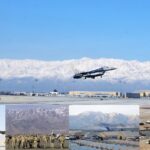
Escalating Tensions: Pakistan Launches Airstrikes in Afghanistan Targeting Militant Hideouts
In a major escalation along the volatile border between Pakistan and Afghanistan,
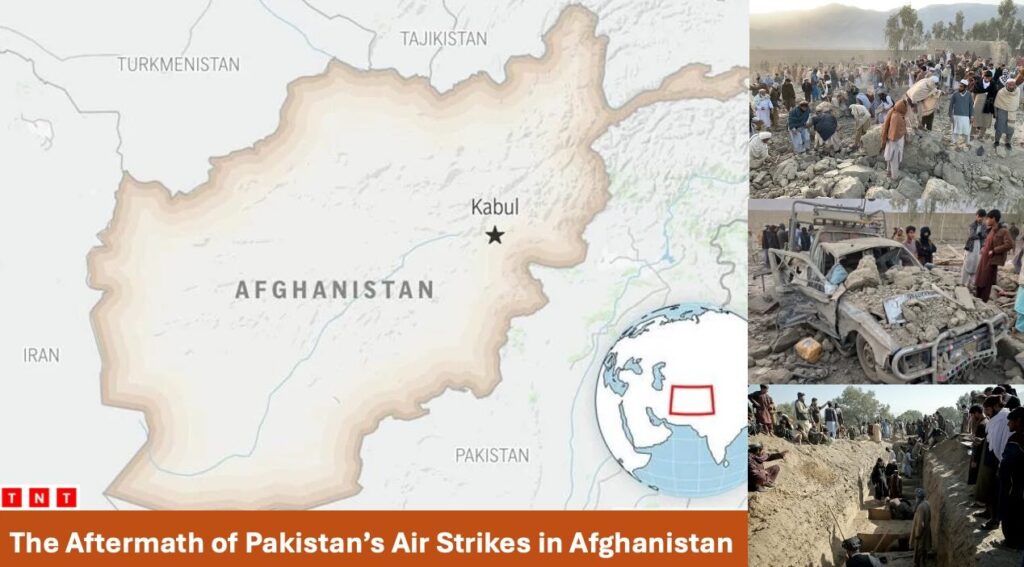
Pakistani forces carried out Pakistan airstrikes in Afghanistan early Sunday, February 22, 2026. The strikes
targeted suspected militant hideouts inside Afghan territory. Officials described the operation as
intelligence-based and selective. It focused on camps operated by the Tehrik-e-Taliban Pakistan and affiliated
networks, including an Islamic State faction.
The operation followed a sharp rise in militant violence inside Pakistan. As a result,
already fragile relations between the two neighbours have further deteriorated.
Pakistan’s Official Position on the Airstrikes
Pakistan’s Information Minister, Attaullah Tarar, stated that seven terrorist camps were
destroyed in eastern Afghan provinces, including Paktika, Khost, and Nangarhar. He emphasised that the action was a
direct response to recent deadly attacks.
Just hours before the operation, a suicide bombing in Bannu district killed two
soldiers, including a lieutenant colonel. In addition, an earlier attack in Bajaur district had claimed the lives of
11 soldiers and a child. Authorities identified the bomber as an Afghan national.
Moreover, a mosque bombing in Islamabad earlier this month killed 31 worshippers.
Pakistani officials linked the attack to militant leaders operating from Afghan soil. Therefore, the government
argued that decisive action had become unavoidable.
Military Assessment and Counterterrorism Impact
According to military sources, the Pakistan Air Force executed the strikes with
high-level coordination. The operation reportedly resulted in the deaths of more than 100 militants, including
several senior commanders.
Officials described the campaign as one of Pakistan’s largest cross-border
counterterrorism actions in recent years. They stated that multiple TTP training and logistics centres were
dismantled.
Furthermore, government representatives reiterated that Pakistan remained committed to
regional peace. However, they stressed that protecting citizens remained the top priority. Islamabad also accused
the Afghan Taliban administration of failing to honour commitments made under the Doha agreement.
Afghanistan’s Response and Civilian Casualty Claims
The Afghan Defence Ministry strongly condemned the airstrikes. It termed them a
violation of national sovereignty and airspace. Officials alleged that several civilian areas had been hit.
These reportedly included a religious madrassa and residential homes in Nangarhar and
Paktika. Taliban spokesperson Zabihullah Mujahid stated on social media that dozens had been killed or injured,
including women and children.
Meanwhile, the Afghan Red Crescent Society confirmed at least 18 fatalities and multiple
injuries. The organisation highlighted the humanitarian impact of the strikes.
Taliban authorities denied sheltering militant groups. They accused Pakistan of
aggression and warned of possible retaliation if such actions continued.
Background: A History of Border Tensions
This incident fits into a long pattern of cross-border violence. In October 2025, deadly
clashes killed dozens on both sides. A Qatari-mediated ceasefire followed.
However, subsequent negotiations in Istanbul in November 2025 failed to produce a formal
agreement. As a result, relations remained fragile.
Pakistan has consistently accused the TTP of using Afghan territory as a base for
attacks. Kabul has rejected these claims. Nevertheless, the TTP has intensified operations in recent years. This has
contributed to rising insecurity in Pakistan’s northwest, alongside Baloch separatist activity.
Rising Security Concerns and Regional Risks
Recent eyewitness reports and social media footage suggest continued aerial
surveillance. Drones have reportedly been seen over several Afghan cities. Additional strikes have also been
reported near border districts.
Local residents have been advised to relocate temporarily. Authorities fear that further
escalation could trigger a wider conflict. Analysts warn that prolonged military exchanges could undermine regional
stability.
Furthermore, such tensions may affect trade routes, refugee movements, and diplomatic
engagement in South Asia.
International Reaction and Travel Warnings
So far, major global powers have not issued formal statements. However, diplomatic calls
for restraint are expected in the coming days.
Countries such as Canada have already maintained strict travel advisories for border
regions. These warnings cite terrorism, instability, and armed conflict risks.
International observers stress that sustained dialogue remains essential to prevent
long-term destabilisation.
Ongoing Developments and Regional Outlook
As of now, both sides remain on high alert. Security forces have been reinforced along
sensitive border sectors. Intelligence agencies are also monitoring militant movements closely.
Tattvam News Today will continue tracking developments related to Pakistan airstrikes in
Afghanistan and their broader implications. The current crisis highlights the complex relationship between
militancy, sovereignty, and regional security in South Asia.
With diplomatic channels strained and public sentiment hardening, the coming weeks will
be critical in determining whether tensions ease or intensify further.