U.S. Military Aircraft and Carrier Activities Off the Coast of Venezuela
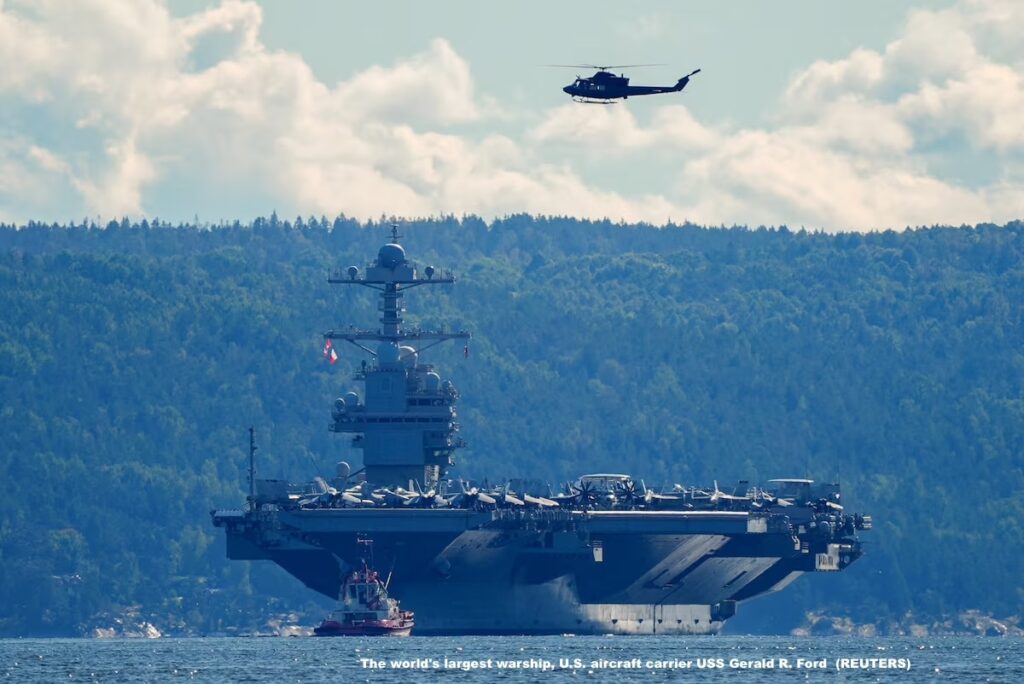
Recent open-source intelligence from October 24, 2025, reveals heightened U.S. military activity in the Caribbean, marked by MV-22B Osprey tiltrotor flights reportedly operating from bases in Puerto Rico. This development, alongside the deployment of the advanced and largest aircraft carrier USS Gerald R. Ford strike group to Latin America, has sparked speculation about an increased U.S. Marine Corps presence near Venezuela amid growing regional security tensions.
MV-22 Osprey Flights and Regional Military Buildup
Flight tracking data and local spotter reports indicate unusual MV-22B Osprey operational patterns in the Caribbean, highlighting the tiltrotor’s role as a rapid insertion and special operations asset. These activities coincide with recent U.S. bomber transits near Venezuelan airspace, suggesting a broader U.S. military posture aimed at rapid response and monitoring in the region. The tiltrotor’s unique vertical takeoff and landing combined with turboprop speed makes it a vital tool for sudden littoral insertions and projected Marine Corps readiness.
While the Pentagon has not officially confirmed a new assault operation or specific marine deployments, the combination of Osprey activity with other assets like long-range bombers and amphibious ships signals an escalated surveillance and potential quick-reaction capability in proximity to Venezuela.
Aircraft Carrier Strike Group Deployment
Complementing the aerial surveillance and rapid deployment assets, the U.S. Navy has dispatched the USS Gerald R. Ford aircraft carrier and its strike group to Latin America. This move represents a significant military escalation aimed at disrupting narcotics trafficking and degrading criminal organisations operating in the Caribbean and Eastern Pacific.
The deployment follows a series of U.S. operations targeting suspected drug trafficking vessels, including a recent strike on an alleged drug boat in the Caribbean that resulted in six fatalities. Secretary of Defense Pete Hegseth shared images of the burning vessel on social media, underscoring the Department of Defense’s commitment to intensify its campaign against illicit transnational criminal activities.
Regional Implications and Strategic Goals
The expanded U.S. military footprint has caused unease among Latin American governments, reflecting broader geopolitical tensions and concerns about stability. While combating drug cartels remains a declared priority, the scale of military assets signals a firm U.S. stance on regional security threats and monitoring of Venezuelan instability.
Pentagon officials emphasize that the enhanced presence improves their ability to identify, observe, and disrupt threats that jeopardise U.S. interests and the security of the Western Hemisphere. The combined air and naval operations underscore the strategic importance of the Caribbean as a theatre for power projection and rapid intervention, particularly as political and economic uncertainties persist in Venezuela.