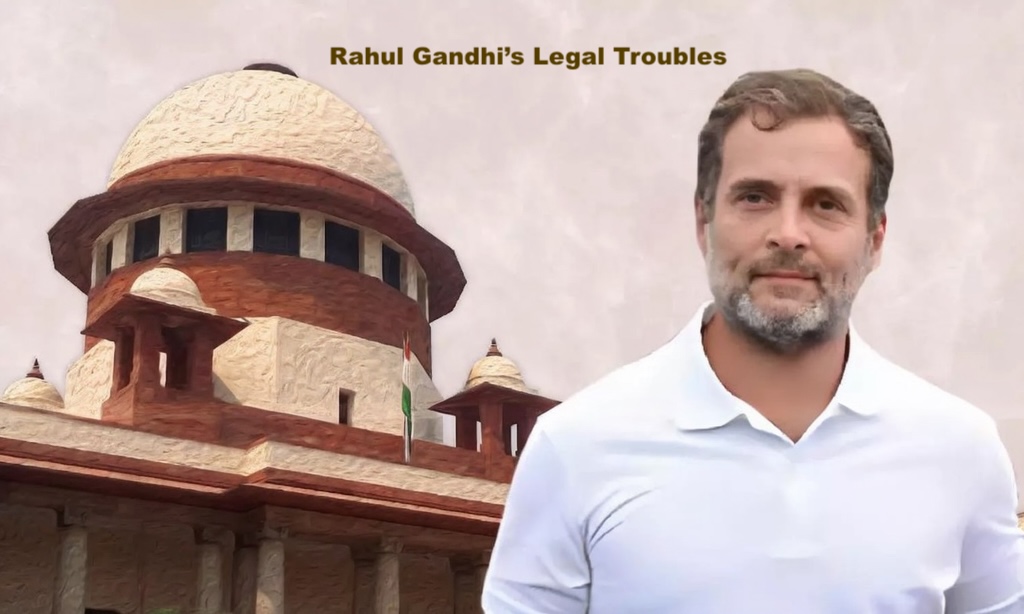
Rahul Gandhi’s Legal Troubles Deepen
Introduction: Fresh Complaint in Lucknow, But Many Ongoing Legal Battles
A Lucknow court recently registered a complaint against senior Congress leaders for alleged anti-national statements, adding yet another case to Rahul Gandhi’s growing list of legal challenges in 2025. However, the new matter is only a small part of the broader legal pressure, as courts across India continue to hear earlier complaints over defamation, sedition, and financial misappropriation.
National Herald: Allegations of Misappropriation and Money Laundering
The National Herald case, actively ongoing since 2014, saw fresh movement this year as the Enforcement Directorate filed new chargesheets against Sonia Gandhi, Rahul Gandhi, and Sam Pitroda in April 2025. The case alleges that Congress gave interest-free loans to Associated Journals Limited, which were never repaid, and that Young Indian (closely held by Congress leaders) acquired almost all AJL shares and properties through suspected criminal misappropriation. The Delhi court is conducting regular hearings, with property attachments and appeals pending.
Sultanpur Court Proceeds With 12-Year-Old ISI Remark Case
One of the most significant ongoing cases involves a 2013 statement made by Rahul Gandhi in Indore, where he claimed riot victims from Muzaffarnagar were in contact with the ISI. The local petitioner alleges this hurt religious sentiments and defamed the Muslim community. After initial dismissals in Kanpur case, the case is back for monitoring in Sultanpur’s Fast Track Court, where the judge has directed the transfer of earlier files and scheduled further hearings throughout September. The petitioners continue to insist on Gandhi’s personal appearance, raising the stakes for possible criminal liability.
Defamation Case Advances in Sultanpur Court
Rahul Gandhi’s defamation case in Sultanpur, filed by BJP leader Vijay Mishra over remarks made about Amit Shah during the 2018 Karnataka elections, has seen recent progress. After multiple delays and Gandhi’s court appearance in February 2024 where he was granted bail, cross-examination of the complainant began but remains incomplete. The next hearing is scheduled for January 10, 2025. Gandhi maintains his innocence, claiming political victimisation while the court awaits further evidence.
Other Defamation Cases: Trials and Statements Under Review
Rahul Gandhi faces several other ongoing defamation cases across India, including:
- Defamation proceedings in Pune courts relating to his remarks about right-wing ideologue Vinayak Savarkar, where he has claimed threats from the complainant’s supporters.
- Cases filed over remarks alleging RSS as the “21st-century Kauravas” and other statements deemed defamatory by various claimants.
- Active suits in Surat, Patna, Ahmedabad, Ranchi, Assam, and Lucknow, most involving statements about political opponents and groups.
- Bail granted in most cases, though Gandhi remains at risk of conviction, which could impact his political career and parliamentary standing.
- A 2023 Surat court conviction sentencing him to two years’ imprisonment for remarks on the “Modi” surname, leading to temporary disqualification from Lok Sabha before the Supreme Court stayed the conviction.
- The Supreme Court granted interim stays on some cases, such as the one related to remarks on the 2020 Galwan valley clash, but also rebuked Gandhi for airing such issues on social media instead of Parliament.
These multiple cases collectively increase legal pressure on Rahul Gandhi, with several hearings ongoing throughout 2025.
Legal Landscape in 2025: Political Statements and Judicial Oversight
Legal experts observe that court action against Gandhi, alongside older and new cases, reflects intensified judicial scrutiny of political speech. While Congress leaders claim the proceedings are politically motivated, lawyers warn that cumulative penalties could impact Gandhi’s eligibility for the Lok Sabha and broader political role.
Continued Legal Scrutiny Over Citizenship Status in Delhi and Allahabad High Courts
Apart from the criminal complaints, Rahul Gandhi is also facing significant legal challenges related to his Indian citizenship. In Allahabad High Court, a petition has been reopened following new evidence questioning Gandhi’s citizenship status under Section 9(2) of the Citizenship Act, 1955. The court has directed the Central Government to clarify his citizenship within a defined timeframe but expressed displeasure over delays in the process. In parallel, the Delhi High Court is hearing a case filed by former BJP MP Subramanian Swamy, alleging Gandhi’s dual citizenship due to purported registration as a British citizen while serving as a UK company director. The Ministry of Home Affairs is examining these petitions, with hearings ongoing and no final decision announced yet. These citizenship cases add another layer of complexity to Rahul Gandhi’s legal landscape, raising potential implications for his political career and electoral eligibility.
Conclusion: Uncertain Road Ahead
With hearings scheduled in Sultanpur, Delhi, Pune, and now Lucknow, Rahul Gandhi must respond to a complex array of legal complaints. The outcome of these cases may significantly shape not just his career but the rules governing political speech and accountability in India.