Anti-Immigration Protests Sweep Australia
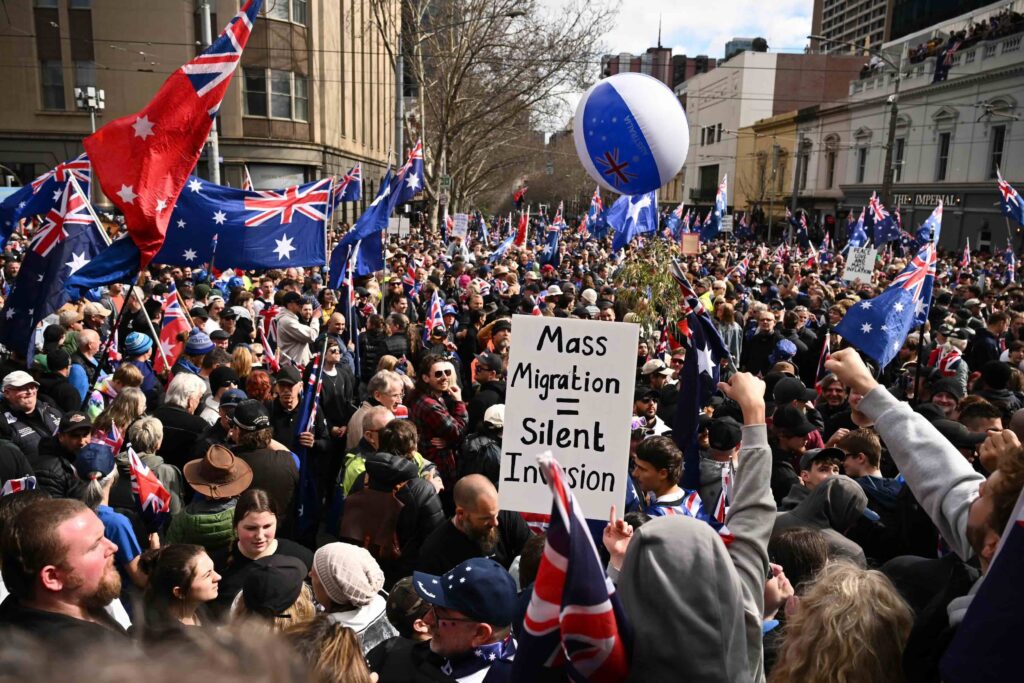
Australia is currently grappling with a wave of anti-immigration protests that have unfolded in major cities including Sydney, Melbourne, Brisbane, Canberra, Adelaide, and Perth. Thousands of demonstrators gathered on August 31 under the banner of “March for Australia,” demanding an end to what organizers describe as “mass immigration” that they claim is straining the nation’s social fabric.
A significant and distressing aspect of these rallies has been the specific targeting of the Indian community, now Australia’s second-largest migrant group. Prominent flyers and social media posts by protest organizers highlighted Indians, with slogans stating, “More Indians in five years than Greeks and Italians in 100,” and warning that this demographic shift is not merely a cultural change but a replacement. This messaging has stoked tensions within Australia’s multicultural society.
The Indian diaspora in Australia, numbering close to 976,000 as of the 2021 census and growing rapidly due to skilled migration and student visas, has been urged by community leaders to remain cautious, with advisories to avoid public outings amid fears of violence. Australian authorities have heightened police deployment to manage potential clashes and ensure safety.
The Australian government has unequivocally condemned the protests. Minister for Multicultural Affairs Anne Aly described them as “organised by Nazis,” while Home Affairs Minister Tony Burke stated, “There is no place in our country for people who seek to divide and undermine our social cohesion. Nothing could be less Australian.” Government officials emphasized that all Australians, regardless of heritage, deserve to feel safe and welcomed.
Organizers of the “March for Australia” argue that high levels of immigration have led to challenges including housing shortages, congestion, strained healthcare services, and cultural shifts that they believe threaten the country’s identity. However, critics accuse the movement of fueling racism and far-right extremism.
This surge in anti-immigrant sentiment comes amid broader national debates on immigration policy and integration, highlighting the delicate balance Australia faces as a successful immigrant nation. The protests underscore the challenges faced by migrant communities in navigating identity, acceptance, and social cohesion in a rapidly changing demographic landscape.
The Indian community remains a vital part of Australia’s social and economic fabric, contributing significantly across sectors such as technology, medicine, and academia. As Australia confronts these tensions, calls for unity, respect, and inclusive dialogue are growing louder, aiming to preserve the multicultural ethos that many regard as foundational to the country’s success.