FIFA World Cup 2026 Broadcast Rights in India Nearing Closure as Tournament Approaches
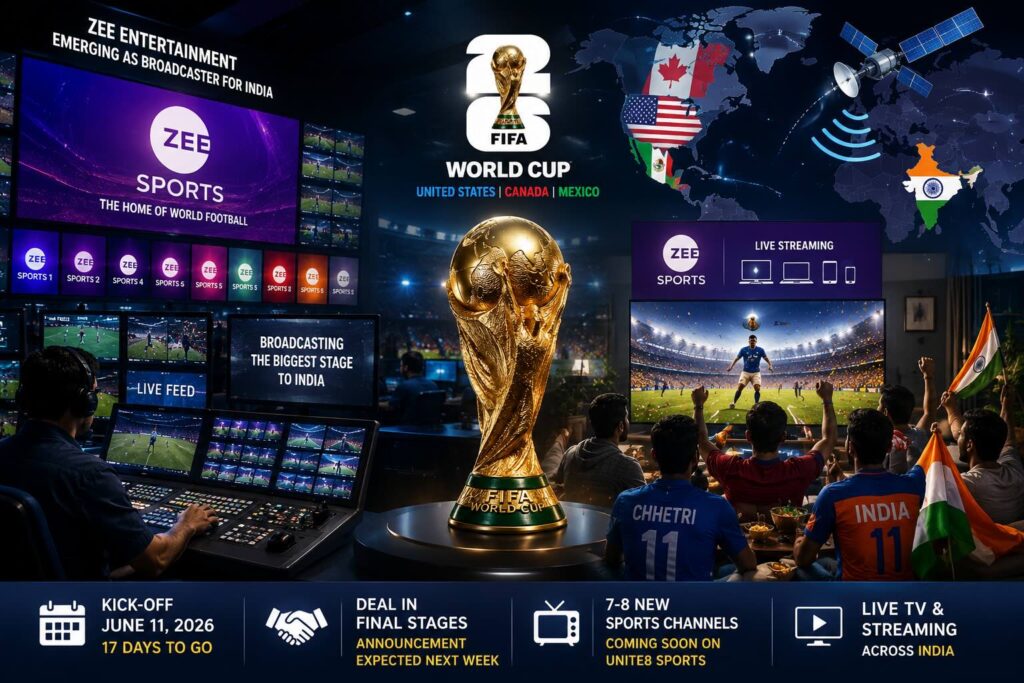
New Delhi, May 25, 2026: With only 17 days left before the FIFA World Cup 2026 begins across the United States, Canada, and Mexico, Indian football fans may finally have clarity on where to watch the tournament. After months of uncertainty and prolonged negotiations, FIFA is reportedly in the final stages of securing a broadcast agreement for India, with Zee Entertainment Enterprises emerging as the frontrunner.
Deal Expected to Be Announced Next Week
According to industry sources, negotiations between FIFA and Zee have entered the concluding phase, and an official announcement is expected sometime next week. The agreement is believed to cover the FIFA World Cup 2026 and could potentially extend to the 2030 edition as well.
The deal value is estimated at around $30-35 million, significantly lower than FIFA’s initial expectations, which were reportedly close to $100 million. The reduced valuation reflects concerns among Indian broadcasters regarding advertising returns, especially due to the North American time zones that will push many matches into late-night and early-morning slots for Indian viewers.
Zee Planning Major Sports Comeback
Zee, which stepped away from sports broadcasting more than a decade ago, is now preparing for a large-scale re-entry into the segment. The company is expected to launch 7-8 dedicated sports channels, possibly under the Unite8 Sports brand, timed around the World Cup.
Executives from Zee are understood to have held positive discussions with FIFA officials during their recent visit to India, strengthening confidence that the agreement is close to completion.
Meanwhile, JioHotstar, formed through the Reliance-Disney merger and the broadcaster for the 2022 edition, also remained in contention. However, sources suggest its valuation of roughly $20 million fell short of FIFA’s expectations. Other broadcasters, including Sony, reportedly chose not to pursue the rights aggressively.
As of now, FIFA’s official listings and related public sources still show India’s broadcaster status as TBA (To Be Announced).
A Sharp Contrast to the 2022 World Cup
The current delay stands in contrast to the relatively smooth rights process for the 2022 FIFA World Cup in Qatar. Back then, Viacom18 secured the broadcasting rights nearly 14 months before the tournament for an estimated $60 million, delivering extensive television and digital coverage through JioCinema.
The 2026 edition, however, has presented unique commercial challenges. The expanded 48-team format, combined with inconvenient match timings for Indian audiences, led to a prolonged standoff between FIFA and broadcasters over pricing.
Why the Delay Happened
Several factors contributed to the unusually late negotiations:
- Mismatch in valuation: FIFA’s original asking price was considered too high relative to the advertising and subscription revenue broadcasters expected from the Indian market.
- Time-zone concerns: Matches hosted in North America will often air during overnight or early-morning hours in India, potentially affecting viewership and advertiser interest.
- Last-minute uncertainty: Rights agreements for major tournaments are typically concluded well in advance, raising concerns among fans about the possibility of missing official coverage.
- Prasar Bharati also reportedly stayed away from the bidding process.
Relief for Indian Football Fans
Once the agreement is finalised, viewers can expect comprehensive television coverage and live streaming access through Zee’s platforms and upcoming sports network. The development comes at a time when football’s popularity in India continues to grow steadily through tournaments like the ISL and the influence of players such as Sunil Chhetri.
Former AIFF General Secretary Shaji Prabhakaran indicated that negotiations have effectively concluded and that an official confirmation is now only a matter of time.
For now, football fans are advised to wait for announcements from FIFA, Zee or official sports broadcasters and avoid relying on unofficial streaming platforms as the countdown to the world’s biggest football tournament enters its final stretch.
Also Read:
Could the 2026 FIFA World Cup Finally Produce a First-Time Winner?