Iran War and Emerging Alignments in West Asia: Fractured Gulf Unity Gives Way to Competing Blocs
Iran war 2026 — triggered by intense US-Israeli strikes in late February — has not only battered Tehran’s military infrastructure but also shattered the old geopolitical map of West Asia. What began as a coordinated campaign against Iran’s nuclear sites, missile program, and proxies has evolved into a messy, two-week ceasefire (announced April 8 and now fraying) that has exposed deep fractures in the Gulf Cooperation Council. The Strait of Hormuz remains a flashpoint, with Iran retaining de facto leverage and the United States announcing a naval blockade starting today.
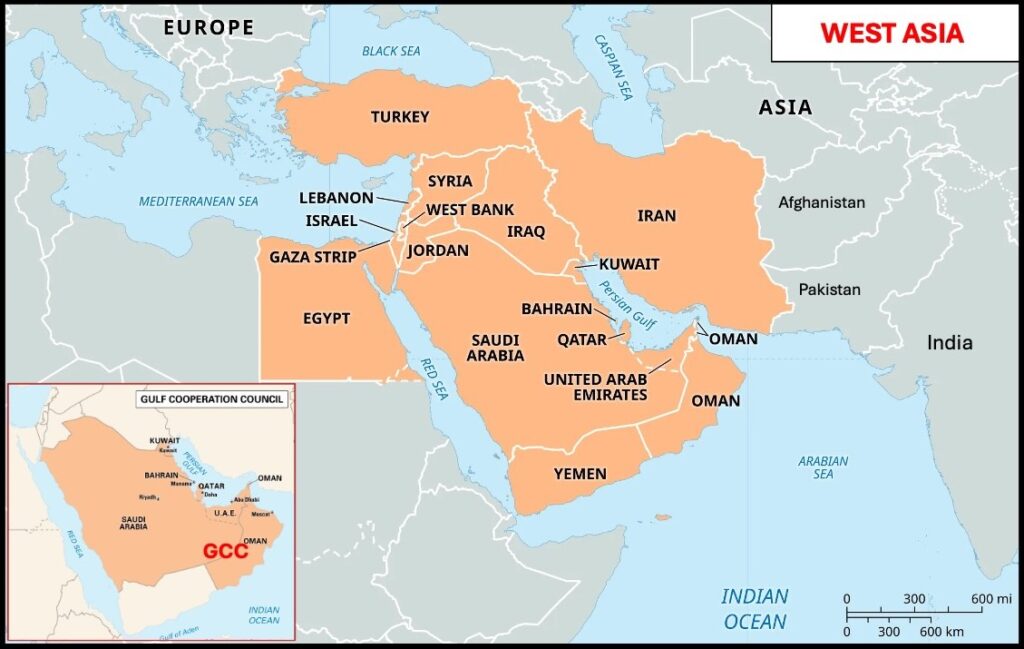
The old narrative of a monolithic “Sunni bloc” versus Iran lies in ruins. In its place, two loose but increasingly defined security-economic convergences are taking shape — one Saudi-led and traditionalist, the other UAE-led and pragmatic. Iran itself, while militarily bloodied, is far from isolated or destroyed. Its asymmetric toolkit, proxy networks, and control over key chokepoints ensure it remains a force to be reckoned with for years to come.
The War That Fractured the GCC
Iran’s retaliatory barrage — hundreds of missiles and drones targeting UAE ports, Saudi energy sites, Kuwait, Bahrain, and beyond — hit hardest where ties to Israel and the US were strongest. The UAE absorbed the heaviest punishment precisely because of its Abraham Accords partnership with Israel. Saudi Arabia took hits as well but suffered less intensely. Both publicly denied allowing their territory to be used for strikes on Iran, yet Tehran made its point: proximity to Washington’s allies brings consequences.
The fragile ceasefire, brokered partly in Islamabad by Pakistan, was always conditional on reopening Hormuz. Iran’s insistence on retaining influence over shipping fees (in yuan, no less), coupled with its continued calibrated strikes on Gulf targets, has eroded trust. Gulf states are now openly diverging: the UAE leans hawkish toward deeper US-Israeli coordination, while Saudi Arabia hedges with traditional partners. This divergence has accelerated long-simmering rivalries, particularly over Yemen and Red Sea ports.
Bloc 1: The Saudi-Led Quartet — “Islamic NATO” in the Making?
Saudi Arabia, Pakistan, Turkey, and Egypt are coalescing into a new diplomatic-military axis. The binding logic is clear: a shared desire to curb both Iranian resurgence and unchecked Israeli dominance, while maintaining an emphasis on Islamic solidarity and the Palestinian cause.
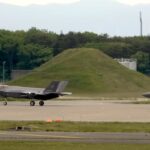
Pakistan’s role is pivotal. In recent days, Islamabad has deployed approximately 13,000 troops along with F-16 fighter aircraft to Saudi bases under their 2025 Strategic Mutual Defence Agreement — even as it continues to host faltering US-Iran talks. This is not a symbolic deployment; it serves as a direct deterrent against further Iranian strikes on Saudi oil infrastructure.
Foreign ministers of the four nations met in Islamabad in late March, positioning themselves as the primary negotiating channel between Tehran and Washington. Analysts increasingly view this as the embryo of a post-war order designed to balance power while preventing domination by either Iran or Israel.
This bloc remains state-centric and traditional in character. It prioritizes sovereignty, mediation leverage, and military credibility — with Pakistan’s airpower and nuclear overhang, Saudi financial strength, and Turkey’s ideological influence forming its core. Qatar occasionally tilts toward this grouping, while Oman continues to maintain a neutral posture.
Also Read: Turkey’s Bid to Join the Saudi-Pakistan Defence Pact: A New Sunni Bloc or an Echo of Past Failures?
Bloc 2: The UAE-Led Abrahamic Triad — Tech, Trade, and Maritime Power
Countering the Quartet is a more agile, normalisation-driven alignment centred on the UAE, Israel, and India, with extensions to Morocco, Greece, Cyprus, Ethiopia, and the strategically significant Horn of Africa.
The UAE’s deepening ties with Israel under the Abraham Accords now extend into shared Red Sea and African interests, including DP World’s operations in Berbera and Israel’s recognition of Somaliland in December 2025. At the same time, the UAE-India defence framework signed in January 2026 during Mohammed bin Zayed’s visit to New Delhi adds economic and strategic depth — targeting $200 billion in trade and expanding cooperation in drones, missile systems, and maritime security.
Israeli Prime Minister Benjamin Netanyahu has articulated a broader “Hexagon” vision linking Israel, India, Greece, and Cyprus with Arab and African partners, explicitly aimed at countering both Iranian influence and emerging Sunni coalitions.
This bloc is pragmatic, maritime-focused, and economically dynamic. It hedges through energy ties with Russia while investing heavily in technology and alternative trade corridors. However, it has also paid the highest price in Iranian retaliation and remains somewhat isolated within traditional Arab political circles, particularly on issues such as Yemen and Somaliland.
Also Read: India–UAE Defence Convergence: Akash, BrahMos, and Abu Dhabi’s Strategic Hedging in a Fractured Gulf
Saudi vs. UAE: The Rivalry Fueling the Split
Yemen remains the sharpest point of divergence. Saudi Arabia supports centralized governance, while the UAE has long backed southern separatist forces. Financial tensions have also surfaced, including UAE demands for early repayment of $3 billion in loans extended to Pakistan. These are not isolated disputes but indicators of competing visions for the region’s future order.
Saudi Arabia has notably refrained from joining the Abraham Accords. Despite continued pressure from Donald Trump, Crown Prince Mohammed bin Salman has maintained that normalization with Israel must be tied to tangible progress on the Palestinian issue. As a result, negotiations remain stalled, placing Saudi Arabia firmly within the Quartet camp while the UAE deepens its alignment with Israel and India.
Also Read: Saudi-UAE Rift Deepens in 2026 as Former Allies Turn Strategic Rivals
Iran: Weakened, But a Force to Reckon With
A crucial reality often overlooked in prevailing victory narratives is that Iran is neither isolated nor defeated. Its air defence systems have been degraded, senior figures have been eliminated, and oil exports have been disrupted. Yet the regime endures, now under Mojtaba Khamenei.
Iran’s proxy networks — including the Houthis, remnants of Hezbollah, and Iraqi militias — remain operational. Its leverage over the Strait of Hormuz persists despite the US naval blockade, with shipping insurance premiums surging and global oil flows intermittently disrupted.
Diplomatically, Tehran retains multiple avenues. Contacts with Saudi Arabia continue, while Russia and China provide economic backing. Pakistan’s mediation role further underscores Iran’s continued relevance. Tehran’s strategy has consistently focused on denying its adversaries a decisive victory rather than achieving outright battlefield dominance — and in that sense, it has succeeded in exposing vulnerabilities across the Gulf.
What Comes Next?
The coming six to twelve months will be highly fluid. If the ceasefire collapses and US-Israeli pressure resumes, competition between the two emerging blocs is likely to intensify across theatres such as Yemen, Sudan, and the Red Sea corridor. Pakistan’s balancing act — acting as both Saudi security partner and US-Iran intermediary — reflects the complexity of this new multi-alignment era.
Washington continues to hold significant leverage, particularly through efforts to expand normalization frameworks, but Gulf states are increasingly exploring post-American strategic options. Russia and China stand to benefit from this fragmentation, while India gains from its growing integration into the UAE-Israel axis.
The bottom line is clear: the Iran war has not unified West Asia against Tehran. Instead, it has accelerated the emergence of a new regional order defined by competing alignments — a Saudi-led traditionalist bloc and a UAE-led pragmatic coalition — with Iran, diminished yet resilient, continuing to shape outcomes. The region is no longer defined by a singular Sunni-Shia divide but by a dynamic contest among overlapping mini-blocs, where control over Hormuz, influence in Yemen, and the unresolved Palestinian question will determine the balance of power for years to come.