No, It Is Not Confirmed That Iran’s Supreme Leader Ayatollah Ali Khamenei Has Been
Killed
Latest Verified Status — Conflicting Reports After Major Strikes
As of early morning March 1, 2026 (IST),
claims of the death of Iran’s Supreme Leader Ayatollah Ali Khamenei remain unconfirmed and
unverifiable despite intense and competing statements from Israeli and Iranian
sources amid a dramatic escalation of hostilities following joint United States–Israel airstrikes on Iranian leadership targets on February 28, 2026.
What the Claims Say
Israeli Statements and Media Reports
Israeli Prime Minister Benjamin Netanyahu
publicly asserted that there were “many signs” suggesting Khamenei may no longer be alive after strikes destroyed part of his Tehran
compound and other regime sites.
Several Israeli media outlets, most prominently Channel 12, quoted unnamed Israeli intelligence sources to say Israel assesses the supreme leader was “likely
killed” or “at least wounded,” although these assessments are based on classified inputs and have not been
independently confirmed.
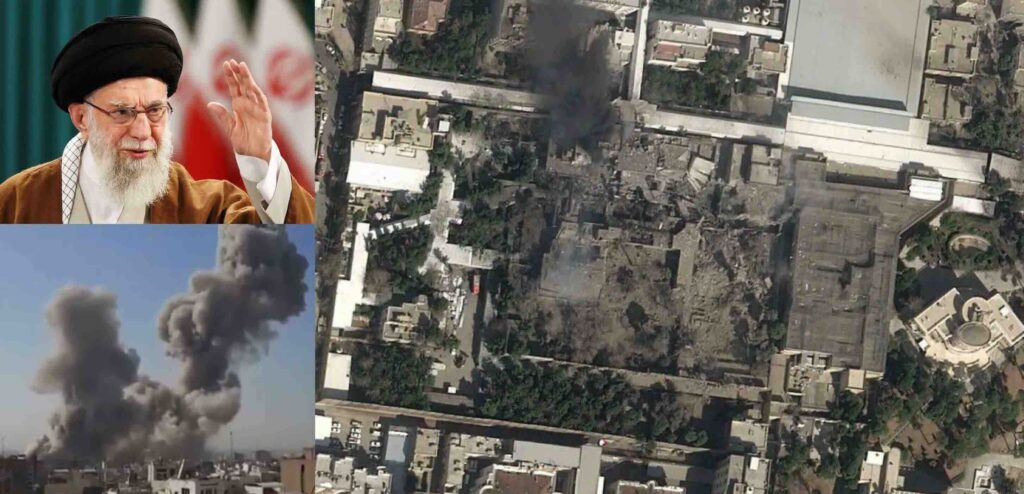
Satellite imagery circulating in global media showed significant destruction at a
compound linked to Khamenei in Tehran, fueling speculation.
Israeli sources also reported the deaths of other senior Iranian officials and military
commanders in the operation, although details on individual casualties vary and remain largely unverified.
Iran’s Official Position
Iranian Government Denies the Reports
Iran’s Abbas Araghchi, in an interview
with NBC News, explicitly stated that Supreme Leader Khamenei was “alive, as far as I know,” and that senior
officials, including President Masoud Pezeshkian, were safe.
Araghchi stressed that many commanders may have been killed, but dismissed claims of
broader leadership decapitation. He also spoke of Iran’s interest in de-escalation despite continuing missile
responses to the strikes.
Iranian state media has not released independent live video or authenticated recent
appearances of Khamenei since the strike, but Tehran insists that he is alive and that all senior leadership remains
intact.
Who Is Khamenei and Why Target Him?
Ayatollah Ali Khamenei, aged 86, has been Iran’s Supreme Leader since 1989, succeeding
Ruhollah Khomeini, the founding figure of the Islamic Republic (who died
in 1989). As supreme leader, Khamenei holds ultimate authority over Iran’s military, judiciary, and government —
making his status pivotal in any strategic confrontation.
The strikes on February 28, 2026, were part of a major joint operation by the United
States and Israel, described by some Western officials as targeting Iran’s nuclear infrastructure and its senior
leadership networks, including missile launchers, Revolutionary Guard units, and sites linked to regime command
structures.
The Situation on the Ground
Damage and Military Context
Satellite images showed heavy damage to parts of Tehran associated with the supreme
leader’s compound, with reports of smoke and explosions around central districts. The Israeli strikes reportedly
also hit missile facilities and other government sites.
Reports from some sources indicate that Khamenei may have been relocated to a
secure location before the strikes hit, possibly outside Tehran, which could
explain the absence of confirmed visuals of him at the time of the attacks.
Iran has responded to the strikes with ballistic missiles at Israeli and US positions in
the region, further escalating tensions and contributing to widespread uncertainty about the leadership’s
status.
Why the Confusion and Lack of Confirmation?
No Independent Verification
- There is no officially
confirmed report from any independent or neutral monitoring
agency that Khamenei has died. - Israeli statements are assessments, not
confirmations with substantiated evidence such as conclusive imagery or communications. - Iranian denials, while strong, are also
framed with caution (“as far as I know”), leaving room for ambiguity.
This combination of intelligence claims, state denials, and absence of
independent proof creates a fluid and uncertain narrative — common in wartime
information environments where both sides manage strategic messaging.
What Analysts Say
Analysts caution that even if a leader like Khamenei were killed, Iran’s constitutional
mechanisms and security architecture could provide interim successors or power transfer arrangements. However, there
is currently no verified signal of such a transition.
Meanwhile, speculative public opinion and social media commentary are rife, but such
content should not be treated as factual evidence without corroborated sources.