Pakistan Declares ‘Open War’ After Afghanistan Airstrikes
Islamabad/Kabul, February 27, 2026 — Pakistan Afghanistan airstrikes sharply escalated regional tensions on Friday after Pakistani fighter jets struck targets in Kabul, Kandahar, and Paktia. The attacks followed cross-border assaults by Taliban forces on Pakistani military positions late Thursday night.
Pakistan’s Defence Minister Khawaja Muhammad Asif declared that Islamabad’s “patience has run out” and warned that the situation had turned into an “open war”. He accused Afghan authorities of sheltering anti-Pakistan militants and destabilising the border region.
The strikes represent the most serious confrontation in months along the 2,600-kilometre Durand Line. As a result, concerns have grown over the collapse of the fragile Qatar-mediated ceasefire agreed in October 2025.
Pakistan Afghanistan Airstrikes and Military Developments
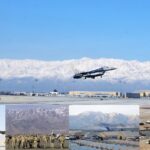
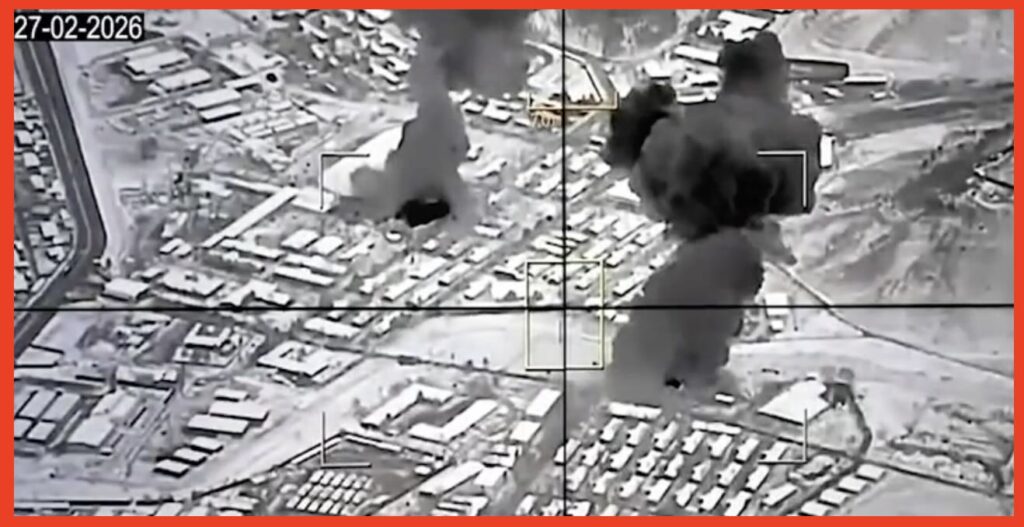
The Pakistan Afghanistan airstrikes began around 01:50 local time on Friday. According to security officials, Pakistani jets targeted alleged Taliban brigade headquarters, ammunition depots, and operational command centres.
Residents in Kabul and Kandahar reported loud explosions, sustained gunfire, and thick smoke rising from several locations. International news agencies confirmed hearing aircraft activity for over an hour.
Following the operation, Pakistan’s government spokesperson Mosharraf Zaidi claimed that 27 Taliban posts were destroyed and nine were captured. Information Minister Attaullah Tarar stated that 133 fighters were killed and over 200 were wounded.
However, Taliban officials rejected these figures. They alleged that several strikes hit civilian areas, including a religious seminary. Independent verification of casualty numbers remains impossible due to restricted access and ongoing hostilities.
Pakistan named the operation “Ghazab Lil Haq”, meaning “Wrath for the Truth”, describing it as a calibrated response to repeated provocations.
Official Reactions From Pakistan and Afghanistan
Prime Minister Shehbaz Sharif stated that Pakistan’s armed forces were fully prepared to counter any aggressive intentions. He emphasised national unity and reaffirmed support for the military.
President Asif Ali Zardari praised the operation as comprehensive and decisive. Meanwhile, Defence Minister Asif alleged indirect Indian involvement in the conflict, although no public evidence was presented.
On the Afghan side, Taliban spokesperson Zabihullah Mujahid condemned the airstrikes as a violation of sovereignty. He claimed that civilian homes were targeted and warned of further retaliation.
The Taliban Defence Ministry described its earlier cross-border action as a response to repeated “rebellions” by Pakistani forces. It also accused Islamabad of exaggerating battlefield claims.
Both sides continue to rely heavily on information warfare, making objective assessment difficult.
Background, International Response, and Current Situation
Tensions between Pakistan and Afghanistan have persisted for decades. Islamabad accuses Kabul of harbouring Tehrik-i-Taliban Pakistan militants responsible for deadly attacks inside Pakistan. Afghanistan denies these allegations and refuses to recognise the Durand Line as an international boundary.
Since the Taliban’s return to power in 2021, border clashes have become more frequent. The current crisis intensified after the breakdown of the 2025 ceasefire, leading to increased troop deployments and surveillance operations.
The United Nations expressed concern over the Pakistan Afghanistan airstrikes. Secretary-General António Guterresurged restraint and protection of civilians. UN spokesperson Stéphane Dujarric called for renewed diplomatic engagement.
India strongly criticised Pakistan’s actions and reaffirmed support for Afghan sovereignty. Major powers, including the United States, China, and Russia, have so far issued limited public responses. However, China is expected to encourage stability due to its economic interests in the region.
As of Friday morning (IST), no ground invasion has been reported. Nevertheless, air travel disruptions, economic slowdowns, and civilian anxiety have been reported in several Afghan cities. Humanitarian agencies are preparing for possible displacement if fighting expands.
Security analysts warn that prolonged hostilities could destabilise South Asia further. Diplomatic intervention is therefore seen as increasingly necessary to prevent wider conflict.