Associate Nations in T20 World Cup 2026 and the Crisis in ICC Development Policy
The Associate Nations T20 World Cup performances in 2026 have emerged as one of the tournament’s defining narratives. Since the competition began on February 7 in India and Sri Lanka, emerging teams such as Nepal, Netherlands, USA, and Ireland have consistently pushed established powers to the brink. These matches have transformed expected one-sided contests into high-intensity encounters.
Their displays confirm that in the shortest format, the gap between Full Members and associates has narrowed significantly. However, these performances have also revived long-standing questions about why the International Cricket Council fails to provide regular, high-quality exposure to developing teams.
Nepal’s Near-Historic Challenge Against England
One of the tournament’s most memorable matches unfolded at Mumbai’s Wankhede Stadium, where Nepal came within touching distance of defeating England. Batting first, England posted 184 for 7, led by half-centuries from Jacob Bethell and Harry Brook. Will Jacks added late momentum with a rapid cameo.
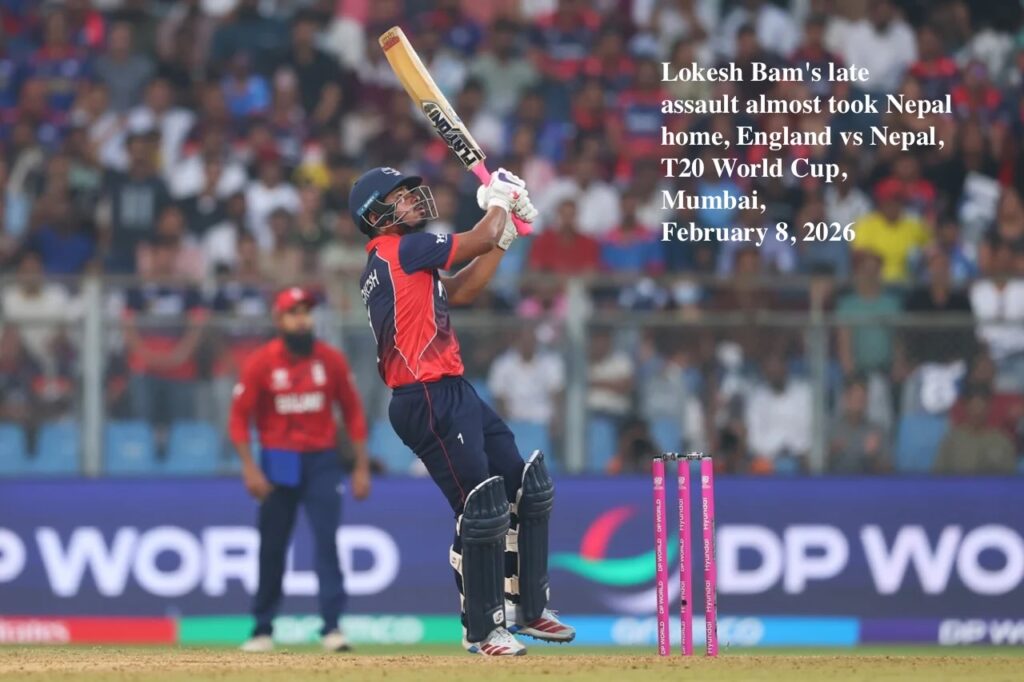
Nepal responded with remarkable confidence. They reached 180 for 6 in their twenty overs, losing by only four runs. Dipendra Singh Airee delivered an all-round performance with 44 runs and figures of 2 for 23. Captain Rohit Paudel and Lokesh Bam maintained pressure during the final stages.
With ten runs required from the last over, Sam Curran defended successfully. Nevertheless, Nepal’s performance electrified the crowd. It demonstrated that the Himalayan nation was not merely participating. It was competing at the highest level.
Netherlands Push Pakistan to the Edge
On the opening day in Colombo, the Netherlands produced another dramatic contest against Pakistan. The Dutch posted 147 after stabilising their innings through Scott Edwards and Bas de Leede.
Their bowlers then dismantled Pakistan’s top order. The 2022 champions slumped to 114 for 7 while chasing 148. Paul van Meekeren and his teammates maintained discipline throughout most of the innings.
Only Faheem Ashraf’s unbeaten 29 from 11 balls rescued Pakistan. His late assault secured a three-wicket victory with three balls remaining. Netherlands players later stated that they had lost through minor lapses rather than inferior skill. Their performance reflected tactical maturity and mental resilience.
USA Continue Their Post-2024 Momentum
The United States entered the tournament with confidence following their famous 2024 upset over Pakistan. Against India in Mumbai, they again demonstrated their growing competence.
India struggled early on a difficult surface. They slipped to 46 for 4 before Suryakumar Yadav’s unbeaten 84 guided them to 161 for 9. USA’s bowling attack, led by Shadley van Schalkwyk’s 4 for 25, maintained sustained pressure.
In reply, the Americans fought resolutely. They reached 132 for 8 and lost by 29 runs. Although the margin appeared comfortable, the contest remained competitive throughout. However, since 2024, the USA has received limited opportunities against top-ranked nations.
Ireland, Scotland, and the Wider Associate Surge
Ireland delivered a disciplined performance against co-hosts Sri Lanka in Colombo. They restricted the hosts effectively before falling short by 20 runs. Sri Lanka finished on 163 for 6, while Ireland managed 143.
Their spinners and fielders maintained intensity, reflecting Ireland’s tradition of challenging stronger sides. Scotland also tested West Indies before losing by 35 runs.
Meanwhile, teams such as Oman, Namibia, and Italy have impressed in qualifiers and early matches. Across the tournament, associate encounters have been competitive, entertaining, and tactically sound. The era of routine mismatches is clearly fading.
Persistent Lack of High-Level Exposure
Despite these achievements, associate nations continue to face systemic neglect. Fans, analysts, and players repeatedly question why Full Member boards rarely schedule bilateral series against them.
Nepal has delivered consistent performances in Asia qualifiers and T20 internationals. Yet opportunities against Test-playing nations remain scarce. The USA’s 2024 success generated global interest, but it was not followed by sustained touring programmes. Similar patterns affect the Netherlands, Ireland, and Scotland.
The ICC promotes development schemes, funding models, and coaching initiatives. However, without regular elite competition, these programmes have limited impact. Skills stagnate when teams repeatedly face similar opposition. True growth requires exposure to varied conditions and sustained pressure.
Commercial Priorities and Structural Barriers
The shortcomings in development reflect deeper institutional priorities. Revenue remains the dominant factor shaping international schedules. Series involving major teams, especially India, generate enormous broadcasting income. In contrast, associate fixtures attract smaller audiences.
Power concentration also plays a decisive role. Established Full Members control financial distribution and voting mechanisms. Associates receive limited funding and possess minimal influence.
In addition, frequent upsets could weaken the commercial appeal of elite rivalries. Therefore, protecting hierarchy becomes an implicit objective. This dynamic does not reflect deliberate hostility. Instead, it reveals profit-driven inertia that marginalises emerging nations.
Link Between Development Gaps and Tournament Predictability
The struggles of associate teams connect directly with wider concerns about competitive imbalance. As examined in Why ICC Tournaments Are Becoming Predictable, unequal access to high-level competition reinforces recurring hierarchies.
Dominant teams benefit from continuous elite exposure, advanced infrastructure, and psychological conditioning. Associates, by contrast, receive sporadic opportunities. Consequently, group-stage excitement rarely translates into sustained tournament success.
The thrilling contests of 2026 illustrate untapped potential. Yet without structural reform, these performances remain isolated moments rather than building blocks for systemic change.
Need for Structural Reform in Global Cricket
The 2026 tournament has delivered compelling evidence that associate nations possess both talent and resilience. However, meaningful reform remains essential if cricket is to fulfil its global ambitions.
The ICC must mandate regular bilateral series involving emerging teams. It must also increase and protect revenue allocations. Greater access to franchise leagues can further accelerate development. In addition, reforms to the Future Tours Programme should prioritise competitive balance over commercial convenience.
Without such measures, development rhetoric will continue to outpace reality. Predictability will persist. Most importantly, a generation of gifted cricketers will remain confined to sporadic moments of recognition.
The associate nations have proven their worth on the world stage. The responsibility now lies with cricket’s governing structures to ensure that these performances mark the beginning of lasting transformation rather than fleeting spectacle.