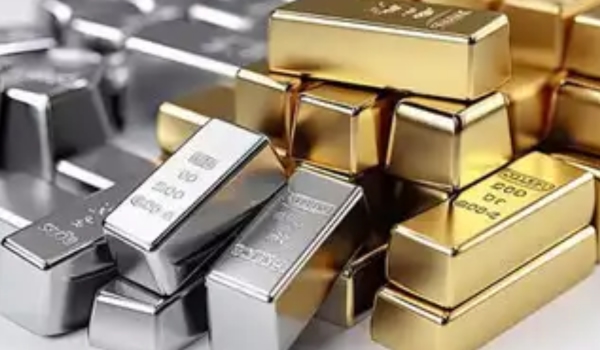
Gold Price Surge Past $5,200 Redefines Safe-Haven Demand
Gold Price Surge Reflects Rising Global Anxiety
The gold price surge beyond the $5,200 per ounce mark on January 28, 2026, has reset historical benchmarks and underscored intensifying global uncertainty. Spot gold climbed sharply during Asian and European trading hours, briefly touching levels above $5,280 before consolidating. The rally extends a powerful upward trend that has gathered momentum over recent months as investors increasingly seek protection from geopolitical, monetary, and currency-related risks.
The move represents one of the strongest multi-month advances in modern commodities history. Gold has now gained more than 35 percent since mid-2025, cementing its position as the preferred refuge amid heightened systemic stress.
Key Drivers Behind the Gold Price Surge
Geopolitical Flashpoints Fuel Safe-Haven Buying
Geopolitical instability remains the dominant force behind the gold price surge. Markets have reacted sharply to a series of destabilising events, including the US capture of Venezuelan President Nicolás Maduro, escalating threats involving Iran, renewed tensions in the Middle East, and unconventional territorial rhetoric linked to Greenland.
These developments have heightened fears of wider conflict and diplomatic breakdowns. Historically, such periods drive sustained inflows into gold, which is perceived as insulated from sovereign risk, sanctions, and political volatility.
Weak US Dollar Accelerates Gold Momentum
A sharply weaker US dollar (globally) has acted as a major accelerator. The dollar index has fallen to near four-year lows, enhancing gold’s appeal for non-dollar investors. During the latest session alone, gold gained over 3 percent as the dollar slid, reinforcing the inverse relationship between the two assets.
Currency instability has become a critical factor, particularly as political commentary from Washington has raised doubts over long-term dollar policy discipline.
Policy and Monetary Uncertainty Support Gold Price Surge
Federal Reserve Independence in Question
Concerns surrounding US monetary governance have intensified. Anticipation of Federal Reserve rate cuts later in 2026 has coincided with political and legal scrutiny surrounding Fed Chair Jay Powell. This has unsettled markets and increased demand for non-yielding but stable assets such as gold.
Lower interest rate expectations reduce the opportunity cost of holding gold, while doubts over institutional independence amplify demand for assets outside the traditional financial system.
Inflation and Fiscal Risks Add Pressure
Persistent inflation risks, combined with expanding fiscal deficits, have reinforced gold’s role as an inflation hedge. Investors remain wary that policy uncertainty could reignite price pressures even as growth slows, a combination historically supportive of precious metals.
Central Bank Buying Anchors the Gold Price Surge
Strategic Reserve Diversification
Central banks have emerged as a structural pillar of demand. Several monetary authorities, particularly in Asia and emerging markets, continue to diversify reserves away from the dollar and into gold. This steady institutional accumulation has provided a strong price floor, limiting downside corrections despite sharp rallies.
Such buying reflects strategic considerations rather than short-term speculation, signalling confidence in gold’s long-term role within global reserve frameworks.
Silver Rally Mirrors and Amplifies Gold Price Surge
Silver Outpaces Gold in Percentage Gains
Silver has surged alongside gold, often with greater volatility. Spot silver traded between $114 and $116 per ounce on January 28, after touching record highs near $118 earlier in the week. Monthly gains now exceed 55 percent, while year-on-year increases surpass 250 percent in some benchmarks.
Silver’s dual identity as both a safe-haven and industrial metal has magnified its appeal. Strong demand from electronics, renewable energy, and electric vehicle supply chains has combined with speculative inflows and robust Asian buying.
Indian Market Impact
In India, silver prices have climbed sharply, with spot and MCX rates approaching ₹3.7–3.8 lakh per kilogram. The rise has increased hedging costs for manufacturers while boosting returns for long-term holders.
Market Implications of the Gold Price Surge
Asset Allocation Shifts Underway
The gold price surge has prompted institutional investors to rebalance portfolios away from equities and bonds. While equities remain supported by liquidity, gold’s rise suggests growing caution over valuations and macroeconomic stability.
Commodity-exporting economies may benefit from improved trade balances, while import-dependent nations face inflationary pressures from higher precious metals prices.
Outlook: Can the Gold Price Surge Continue?
Several major financial institutions remain bullish. Deutsche Bank has projected gold prices could reach $6,000 per ounce by the end of 2026, driven by continued central bank buying and persistent geopolitical risk. Short-term targets around $5,300 remain in focus if dollar weakness and policy uncertainty persist.
However, any de-escalation in global conflicts or an unexpected tightening of monetary policy could slow the rally. Volatility is likely to remain elevated, but gold’s structural support appears firmly entrenched.