Swiss Nightclub Fire in Crans-Montana Kills Dozens on New Year’s Eve
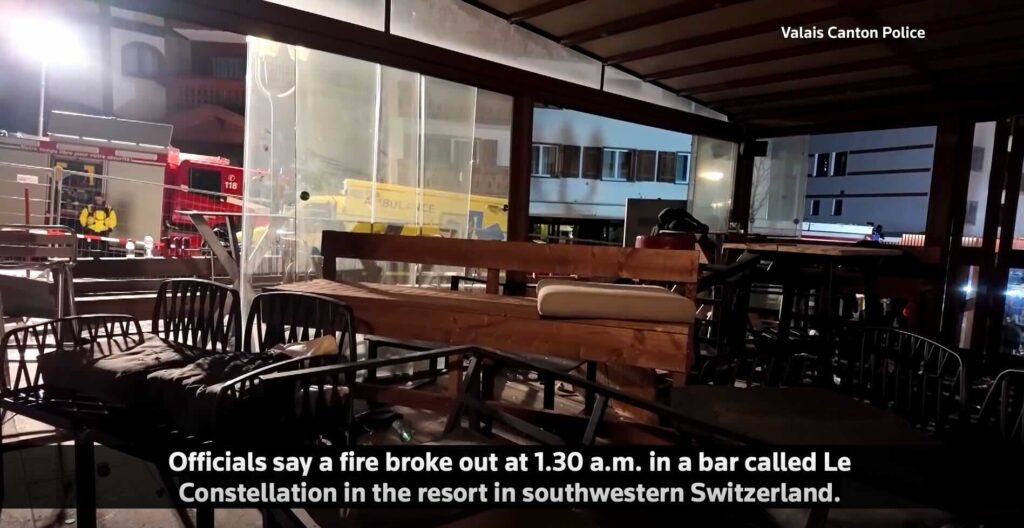
As the world welcomed 2026 with celebration, tragedy struck one of Europe’s most
exclusive ski resorts. A Swiss nightclub fire tore through the popular
Le Constellation bar in
Crans-Montana in the early hours of January 1, killing around 40 people and injuring more than 115. Many of the
injured remain in critical condition.
The fire broke out at approximately 1:30 a.m. local time during packed New Year’s Eve
festivities. Authorities have ruled out terrorism or deliberate wrongdoing, calling the incident a tragic accident.
However, the scale and speed of the blaze have stunned Switzerland and reignited global debate on nightclub fire
safety.
Eyewitnesses described scenes of panic as flames engulfed the ceiling within seconds,
leaving little time to escape.
How the Swiss Nightclub Fire Unfolded in Crans-Montana
Preliminary findings by Valais canton police indicate that the fire began when
indoor sparklers or decorative candlesignited the bar’s flammable wooden
ceiling. Such sparklers are often used during champagne celebrations, especially on New Year’s Eve.
Once ignited, the fire spread rapidly, triggering a flashover effect. Investigators
believe one or more explosions followed, possibly caused by overheated materials or gas canisters inside the venue.
Video footage circulating online shows the ceiling fully ablaze within moments.
The bar was hosting hundreds of revellers at the time. Panic ensued as thick smoke
filled the space and people rushed towards narrow staircases and exits.
Victims, Survivors, and Scenes of Chaos
Most victims were young, aged between 16 and 26. They included Swiss nationals as well
as tourists from France, Italy, and other countries. Crans-Montana is known for attracting wealthy visitors,
international tourists, and celebrities during peak ski season.
A survivor told reporters from a hospital bed that the fire felt instantaneous.
According to the account, patrons had barely 30 seconds before visibility vanished due to smoke. Several people were
trampled as crowds surged towards exits.
Others escaped by jumping from the outdoor terrace. Many were treated for severe burns
and smoke inhalation.
Emergency Response and National Shock in Switzerland
Emergency services responded within minutes. Firefighters, police, and medical teams
were quickly overwhelmedengo. Over ten helicopters were deployed to transport the injured to hospitals in Sion,
Lausanne, and Geneva.
Swiss President Guy Parmelin visited the site later that day. He described the disaster
as one of the darkest moments in recent Swiss history and offered condolences to the victims’ families.
A temporary no-fly zone was imposed over the resort. Streets were sealed off as forensic
teams began the painstaking process of identification. In some cases, DNA testing is required due to the severity of
burns.
Le Constellation Bar and Fire Safety Concerns
Le Constellation had been a fixture in Crans-Montana for decades. The venue was
remodelled in 2015 and enjoyed a reputation for lively après-ski parties. Official records show no prior fire safety
violations.
However, recent online reviews suggested overcrowding and poor crowd management.
Investigators are now examining whether fire exits were sufficient and whether the use of combustible interior
materials met safety norms.
Valais prosecutors have launched a full investigation into possible negligence, despite
the fire being classified as accidental at this stage.
Parallels with the Goa Nightclub Fire in India
The Swiss nightclub fire bears striking
similarities to a deadly nightclub blaze in Goa, India, just weeks earlier. On December 6–7, 2025, a fire at
Birch by Romeo Lane in Arpora
killed 25 people and injured around 50 during a crowded Bollywood-themed event.
In Goa, indoor pyrotechnics and a suspected gas cylinder explosion ignited flammable
temporary roofing made of palm leaves. Like Crans-Montana, panic, smoke inhalation, and blocked exits turned
celebration into catastrophe.
However, the Goa tragedy exposed deeper systemic failures.
Regulatory Failure and Criminal Negligence in Goa
Investigations revealed that the Goa nightclub was operating illegally on a salt pan
without proper licences. Documents were forged, and trade permits had expired. Fire extinguishers and trained staff
were reportedly absent.
The club’s owners fled India hours after the fire but were detained in Thailand and
deported back on December 16, 2025. They now face charges including culpable homicide.
A magisterial inquiry also implicated local officials. Arrests followed, including that
of the village sarpanch. The deaths of entire families and migrant workers intensified national outrage.
A Global Pattern of Nightclub Fire Disasters
These tragedies echo earlier disasters worldwide. The 2003 Station nightclub fire in the
United States killed 100 people. The 2015 Colectiv nightclub fire in Romania claimed 64 lives. In both cases, indoor
pyrotechnics and flammable décor played a fatal role.
Safety experts warn that festive seasons amplify risk. Venues are overcrowded, exits are
compromised, and enforcement becomes lax.
Despite Switzerland’s strict building standards, the Crans-Montana fire shows that even
compliant venues are vulnerable when pyrotechnics meet combustible interiors.
Calls for Reform and Prevention Measures
Fire safety specialists are now urging universal reforms. These include banning indoor
pyrotechnics, mandating non-flammable interior materials, and enforcing rigorous evacuation drills.
Swiss authorities have pledged enhanced inspections across Alpine resorts. In India, the
Goa government has ordered statewide audits of nightlife venues and announced compensation for victims’
families.
Experts agree that fires of this nature spread in seconds. Preparedness, not reaction,
saves lives.
Mourning Across Continents as Lessons Emerge
From the snow-covered Alps to Goa’s coastal nightlife hubs, communities are united in
grief. Memorials have appeared in Crans-Montana, while families in India continue to demand accountability.
As one Goa survivor reflected, the night began with music and dancing, but the fire
moved faster than joy. The hope now is that these tragedies force lasting change, ensuring that future celebrations
do not end in mourning.