Thai-Cambodia Border Tensions Erupt: Alert Levels Raised, Airstrikes Launched, and War Fears Grow
Rising Heat on the Frontier: Thailand Raises Alert Levels and Evacuates Civilians
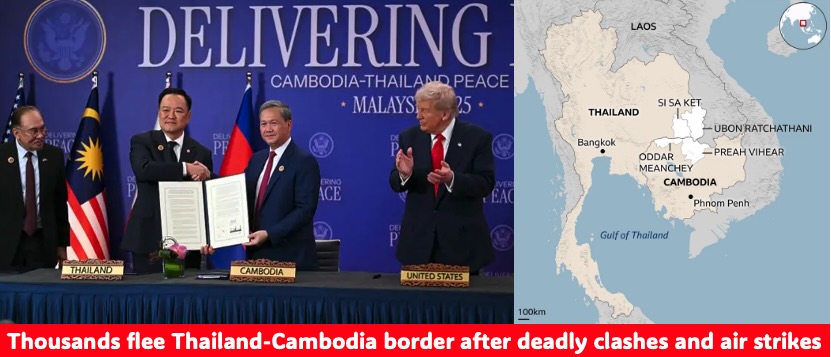
The Thai-Cambodia border tensions reached a dangerous new stage on 7 December 2025, as Thailand placed four provinces on elevated military alert following reports of Cambodian troop movements near the disputed Preah Vihear temple zone. The alert covered Surin, Sisaket, Sa Kaeo, and Ubon Ratchathani, areas that have witnessed repeated clashes for more than a decade.
Thai authorities issued evacuation orders for residents in vulnerable villages close to the line of contact. Officials warned of risks from potential artillery, mortar, and rocket fire. The decision reflected a rapid deterioration of the fragile truce that had held since mid-2025.
This escalation is rooted in a long history. The Preah Vihear dispute traces back to the 1907 Franco-Siamese treaty map, the ICJ’s 1962 ruling awarding the main temple to Cambodia, and the 2011-2013 legal clarifications on surrounding land. Those decisions never resolved every ambiguity. For both countries, nationalism and sovereignty remain powerful drivers.
The Warning Was Not Exaggerated: Thai Airstrikes Hit Cambodian Positions on December 08, 2025
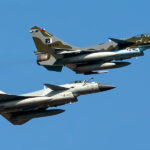
The situation crossed a dangerous threshold early on 8 December, when Thailand launched airstrikes on Cambodian positions near the An Ses area in Preah Vihear province. Thai officials stated that the strikes targeted artillery and mortar sites allegedly used to fire on Thai units.
The clashes were intense. Cambodia accused Thailand of initiating unprovoked attacks. Thailand countered by claiming Cambodia opened fire first using BM-21 Grad rockets, tank shells, and heavy artillery.
Within hours, the fighting resulted in one Thai soldier killed and four wounded, according to updated field reports. Shelling continued across several points along the frontier, with both armies using tanks, artillery batteries, and cluster munitions. A Thai F-16 strike also hit a casino building which, according to Thai officials, had been converted into a Cambodian forward outpost.
These actions mark the most serious exchange of fire since the July 2025 conflict, which left more than 40 people dead.
A Fragile Ceasefire Collapses Despite ASEAN and U.S. Mediation
The July 2025 ceasefire, partially brokered by U.S. President Donald Trump and Malaysian Prime Minister Anwar Ibrahim, has been deteriorating steadily since October. Tensions surged again in May 2025 when a Cambodian soldier died in a border skirmish. Both sides have since redeployed tanks and armoured units near Preah Vihear and Ta Muen Thom.
The December escalation shows how quickly diplomacy can collapse when domestic political pressures escalate. Acting Thai Prime Minister Phumtham Wechayachai warned openly on 7 December that the situation could slide into a “full-scale war”. He rejected outside mediation from the U.S., China, or Malaysia, insisting that Thailand would only hold direct bilateral discussions.
Cambodian Prime Minister Hun Manet responded by invoking the ICJ’s jurisdiction and accusing Thailand of violating internationally recognised boundaries. He ordered reinforcements to the front while calling for urgent international attention.
ASEAN has appealed for restraint, but both military and political signals suggest the crisis could deepen before cooler heads prevail.
The Viral Image on Social Media: Accurate and Symbolic
The graphic circulating online — showing Thai and Cambodian tanks under their respective national flags — is not misinformation. It reflects the real mobilisation of armour on both sides of the border since mid-2025. Thai T-84 tanksand Cambodian T-55 units have remained deployed in the region since the May and July flare-ups.
The viral post warned of a possible Thai-Cambodia war. Within 24 hours, the prediction was alarmingly close to reality, as the border erupted into its heaviest combat in years.
Where the Conflict Stands Now
The question now is: what remains of the much-publicised Thailand-Cambodia ‘peace deal’?
The July clashes, which killed dozens, forced both sides into a hurried ceasefire. Malaysia mediated the agreement, but the breakthrough only came after U.S. President Donald Trump phoned the leaders in Bangkok and Phnom Penh and threatened to freeze ongoing tariff negotiations unless they halted hostilities.
In October, Trump flew to the ASEAN Summit in Malaysia to witness the signing of a joint peace declaration. He declared it “a monumental step” for Southeast Asia, raising hopes that the long-running border confrontations had finally stabilised.
Those hopes evaporated quickly. Within two weeks of the ceremony, Thailand suspended implementation of the agreement, citing a landmine blast near the frontier that injured two of its soldiers. Bangkok argued that the security situation made adherence to the deal untenable.
Cambodia, however — which went so far as to nominate Trump for a Nobel Peace Prize for his role in brokering the ceasefire — maintains that it is still committed to the pact.
Meanwhile, the border remains highly unstable. Both militaries have reinforced their positions, and sporadic artillery exchanges continue. Thailand is still evacuating civilians from exposed villages, while Cambodia has strengthened fortifications around Preah Vihear and Oddar Meanchey, expecting further engagements.
ASEAN’s diplomatic push continues, but neither country appears willing to concede ground on sovereignty claims tied to the undemarcated temple zones. The next phase of this confrontation will hinge on political restraint, military risk-taking, and regional pressure. For the moment, the frontier sits on the brink of a dangerous escalation – and the region is watching with unease.