Inside White Collar Terror Module: From Delhi’s Red Fort Blast to the Nowgam Accident
The investigation into the J&K White Collar terror module has unfolded like a grim tapestry woven from two very different explosions—one a deliberate act of terror in Delhi, the other a tragic accident inside a Srinagar police station. Yet together, they exposed a sophisticated, well-hidden network that fused radical ideology with professional respectability, stretching from Kashmir’s quiet lanes to the lecture halls and laboratories of north Indian institutions.
What began with a handful of posters pasted on Srinagar’s walls eventually revealed a far more unsettling reality: a recruitment pipeline of doctors, academics, and clerics, operating under the remote direction of Jaish-e-Mohammed and Ansar Ghazwat-ul-Hind handlers in Pakistan. By the time investigators cracked the network, more than 2,900 kilograms of explosive precursors, multiple assault weapons, and a string of radicalised MBBS/MD professionals across three states had been uncovered. And an educational institution—Al-Falah University in Faridabad—appeared repeatedly at the centre of the unfolding conspiracy.
Whispers on a Wall: Srinagar’s Posters and the First Breakthrough
It was the reappearance of Urdu posters in Srinagar’s Nowgam area on 19 October 2025—bearing JeM insignia and threatening local police—that set the entire chain of events in motion. Such public propaganda had largely disappeared from Kashmir’s streets in recent years. Their sudden return signalled intent, prompting Srinagar SSP Dr. G.V. Sundeep Chakravarthy to register FIR and initiate an extensive investigation.
CCTV footage helped officers identify three overground workers—Arif Nisar Dar, Yasir-ul-Ashraf, and Maqsood Ahmad Dar—who were arrested swiftly. Their interrogation led to the arrest of Maulvi Irfan Ahmad from Shopian. Irfan’s digital trail pointed to encrypted Telegram groups connected to JeM handler Umar bin Khattab. His associate, Zameer Ahanger, admitted to raising ₹26 lakh through hawala channels for logistics.
But an unexpected detail emerged: several of Irfan’s key recruits were not foot soldiers. They were medical professionals and university educators, trained and well-placed across north India.
A Network Hidden in Plain Sight: Doctors, Academics, and a University Under Scrutiny
The investigation soon revealed that a cluster of recruits studied or worked at (Medical Faculty of) Al-Falah University, Faridabad, raising serious concerns about how deeply the institution’s ecosystem had been infiltrated. While the university itself has not yet been accused of complicity, the unusual concentration of radicalised individuals connected to it has drawn scrutiny from both investigators and accreditation bodies.
Among these individuals was Dr Muzammil Ahmad Ganaie, a faculty member at Al-Falah. His arrest would prove pivotal. In raids across his rented homes in Dhauj and Fatehpur Tagga, investigators found a staggering 360 kg of ammonium nitrate, along with another 2.5 tonnes of chemicals used for improvised explosive devices. Weapons (including AK 47), timers, detonators, and rifles completed the cache—one of the largest such recoveries in a JeM-linked case in more than a decade. Ganaie admitted to stockpiling materials for nearly two years.
Equally significant was the arrest of Dr Umar Nabi, another Al-Falah associate, whose name would later surface in the Delhi blast. The arrest of Dr Shaheen Saeed, a former professor (female doctor) connected to the same circle, and several students further deepened suspicion over how the university became a fertile ground for covert radicalisation networks.
As the raids expanded, officers apprehended additional suspects from Saharanpur, Mewat, Kanpur, Lucknow including Dr Adeel Majeed Rather who had fled to Uttar Pradesh while working at Sarvodaya Hospital in Saharanpur. Many of these recruits maintained respectable professional positions, using their jobs as cover while participating in anti-national activities coordinated through encrypted platforms.
Delhi Erupts: A Blast Born in Panic
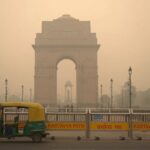
On 10 November, just as the Faridabad raids intensified and arrests mounted, a Hyundai i20 exploded near Red Fort’s Gate 1, killing thirteen people and injuring dozens. CCTV footage and DNA evidence identified the driver as Dr Umar Nabi, the Al-Falah associate. Investigators believe the blast may have been triggered in panic or as a last option left after anticipating arrest—a desperate attempt to execute an attack or destroy evidence before police could close in.
The attack sent shockwaves across the capital. The NIA assumed charge of the Delhi portion of the investigation, while J&K Police continued with the primary case connected to the posters and radicalisation. Licences of key medical professionals implicated in the network were promptly revoked.
A Tragedy Within the Investigation: The Accidental Nowgam Inferno
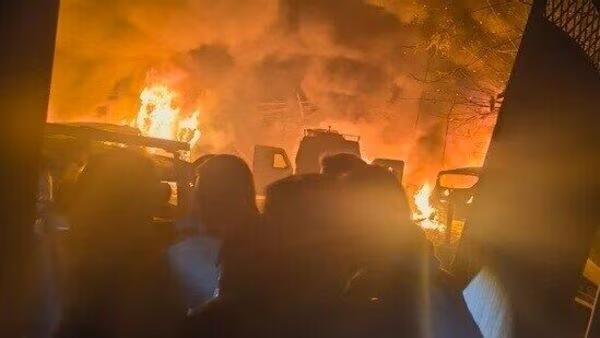
Four days after the Red Fort blast, fire struck again—this time not as a terror act, but as a devastating accident that took place at the very heart of the investigation. On the night of 14 November, as forensic teams at Nowgam Police Station handled the volatile ammonium nitrate transferred from Faridabad, an accidental detonation engulfed the station in flames.
The blast killed nine people, including senior forensic specialists, crime branch personnel, and a revenue officer. Over thirty more were injured. CCTV footage showed how rapidly the flames consumed the facility, sending shockwaves across the district and raising painful questions about risk protocols.
This explosion was not linked to any coordinated attack, nor was it part of the terror module’s operational plans. It was a tragic by-product of the investigation—a fatal intersection of unstable explosive material and the unavoidable need to analyse evidence tied to earlier FIR, which originated in Srinagar. Because the primary case lay within J&K, both legal procedure and the chain of custody necessitated that key evidence, including explosives, be examined in designated facilities under the same jurisdiction.
The magnitude and volatility of the seized chemicals, however, turned a routine forensic exercise into a disaster, underscoring the inherent dangers faced by officers tasked with dismantling terror networks.
The Legal Through-Line: Why Everything Led Back to J&K
Public confusion over why accused individuals from Saharanpur, Faridabad, and Kanpur were remanded to J&K—and why dangerous explosives were moved nearly a thousand kilometres—sparked intense debate. However, the legal foundations are unambiguous. The entire case stemmed from the original FIR, which was registered in Srinagar based on the original radicalisation and poster activity. Under CrPC, interstate arrests must return to the originating jurisdiction. Evidence, too, must be worked within the scope of the primary FIR unless NIA formally absorbs all components.
In other words, the Delhi blast, the Faridabad explosives, and the Saharanpur arrests all fed back into a single investigative spine rooted in Nowgam.
A Network Broken, Lessons Unfolding
As agencies continue piecing together digital evidence and financial trails, one truth emerges with clarity: this was not a traditional militant cell. The J&K White Collar Terror Module relied on educated recruits who leveraged their professional access, technological literacy, and social legitimacy to operate unseen. Their activities ranged from stockpiling chemicals in urban clusters to experimenting with biological agents, and from securing unregistered vehicles to building layers of anonymity online.
Al-Falah University’s recurring mention across the arrested individuals has already triggered reviews of campus oversight, accreditation processes, and student vetting mechanisms. The case has exposed how spaces meant for education can be exploited by extremist networks seeking high-skill recruits.
The twin tragedies—the terror attack in Delhi and the accidental blast in Nowgam—have deepened the sense of urgency. They are reminders not only of the lethal ambition of the network, but also of the risks borne by those who dismantle it.
The story began with anonymous posters.
It grew into a terror blast near Red Fort.
And it ended, for now, with an accidental inferno inside the very station hunting the perpetrators.
The investigation continues—but India has already learned that the battleground has shifted. Today’s extremist does not always emerge from a training camp; sometimes, he walks in through the gates of a university.