Bridging the Frontier: Zojila Tunnel Breakthrough Secures India’s Lifeline to Ladakh
SONAMARG / DRAS, 08 June 2026
In a landmark moment for Indian engineering and border connectivity, Union Minister for Road Transport and Highways Nitin Gadkari is scheduled to trigger the final underground breakthrough blast on 9 June 2026.
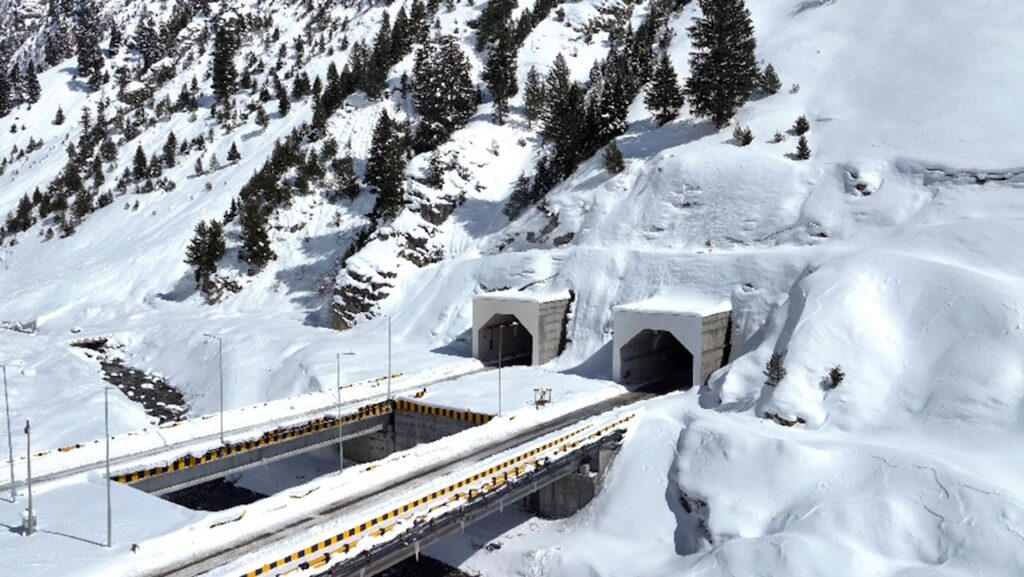
The symbolic event is expected to mark the completion of the arduous excavation phase of the 13.153-km Zojila Tunnel, linking excavation teams advancing from Baltal in Kashmir and Minamarg in Ladakh. Once the breakthrough is achieved, it will represent a major step toward establishing year-round road connectivity between the Kashmir Valley and Ladakh and bring one of India’s most ambitious Himalayan infrastructure projects significantly closer to completion.
With this breakthrough, the mountain will be officially breached, creating the world’s longest single-tube, bi-directional highway tunnel at an altitude of 11,578 feet. Engineered by Megha Engineering and Infrastructures Limited (MEIL) using the New Austrian Tunnelling Method (NATM), crews have overcome sub-zero temperatures, unstable geological strata, and severe avalanche zones. Once the milestone is achieved and the excavation phase is complete, structural lining, ventilation systems, and advanced safety installations will continue toward a final operational deadline of February 2028.
India’s Himalayan Tunnel Revolution: Forging All-Weather Lifelines
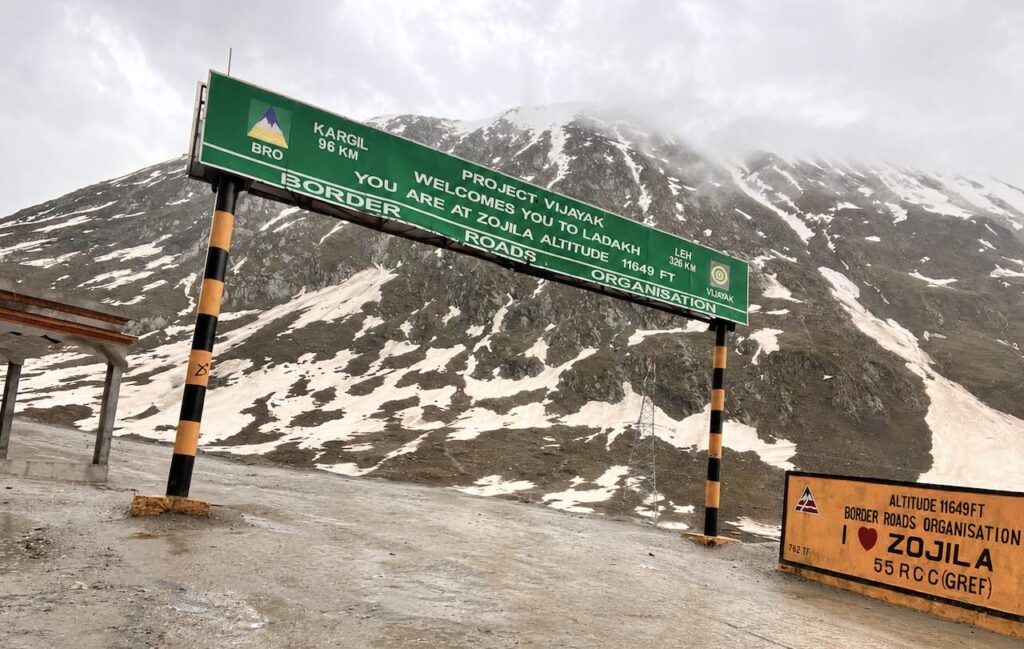
High in the unforgiving Himalayas, where heavy snow, avalanches, and bone-chilling winters have isolated Ladakh for centuries, India is rewriting the script of regional connectivity. A network of world-class tunnels is rapidly turning seasonal barriers into year-round highways. This shift permanently transforms travel safety, local economies, tourism, and national security logistics. From this landmark Zojila breakthrough to critical complementary projects across the Srinagar-Leh and Manali-Leh axes, this marks one of the most ambitious infrastructure drives in modern Indian history.
Current Milestones on the Srinagar-Leh Axis (NH-1)
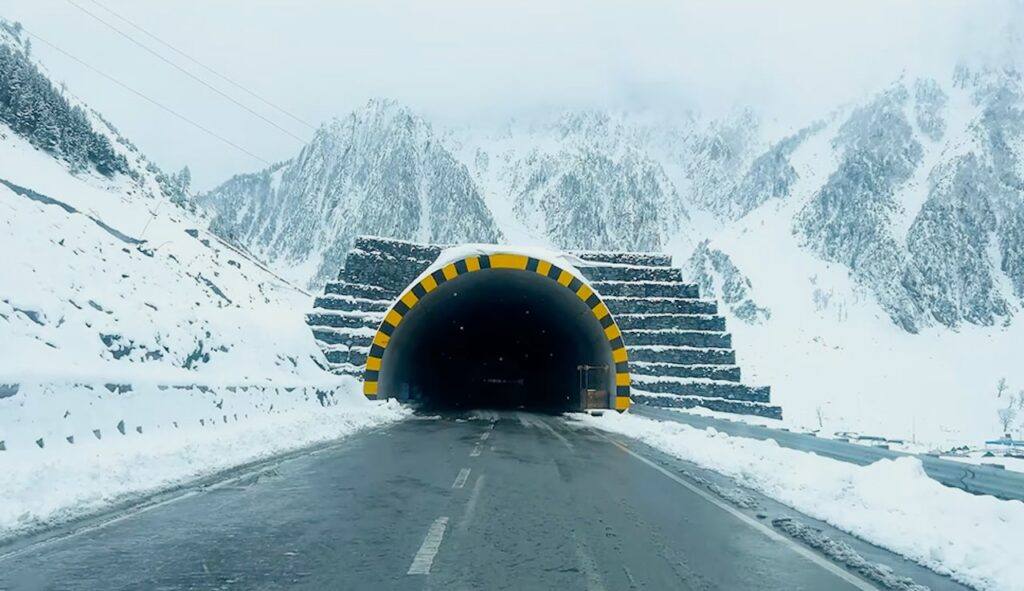
The Z-Morh Tunnel, a 6.5 km engineering marvel between Gagangir and Sonamarg, became fully operational on 13 January 2025. It bypasses the deadly avalanche-prone stretch under the Thajiwas glacier, keeping Sonamarg and Baltal accessible year-round.
The main 13.153 km single-tube Zojila road tunnel serves as the crown jewel of this axis. Following today’s successful blast, full operational readiness featuring advanced ventilation, fire safety, emergency cross-passages every 250-750 metres, parking bays, CCTV, and intelligent traffic control systems is on track for February 2028.
Additional elements in the Zojila infrastructure complex include the Nilgrar Tunnels T1 and T2, which are already structurally complete. The project also incorporates roughly 2.35 km of cut-and-cover galleries and reinforced snow shelters alongside three massive ventilation shafts, including one vertical shaft descending nearly 500 metres into the mountain core. As an immediate outcome, the crucial Srinagar-Kargil segment becomes reliably all-weather post-2028, acting as a permanent lifeline for both civilian communities and military movements.
Travel Time Revolution: Srinagar to Kargil
The integration of the Z-Morh and Zojila tunnel systems fundamentally rewrites travel times across the 202 to 210 km route. Historically, travelling between Srinagar and Kargil was a grueling full-day ordeal lasting anywhere from 8 to over 12 hours. Commuters routinely faced heavy traffic, military convoys, and the treacherous Zojila Pass, which alone demanded 3 to 4 hours of navigation.
In the post-2028 tunnel era, this journey transforms into a comfortable and predictable 6 to 8 hours drive. Drivers will navigate the Z-Morh section in approximately 15 minutes compared to the previous 1 to 2 hours. Furthermore, traversing the core of the mountain through the Zojila Tunnel will take just 15 to 20 minutes instead of the hours spent on the pass.
This drastic reduction slashes driver fatigue, eliminates longstanding high-altitude traffic choke points, and enables reliable winter travel. The entire Srinagar-Leh highway becomes a much more viable road trip, ideally split into a comfortable two-day journey with an overnight stop in Kargil for acclimatisation.
The Broader Network: Connecting the Remaining Passes
Beyond Kargil, the route toward Leh remains vulnerable to seasonal closures at Namika La and Fotu La, the latter being the highest point on the current highway at 4,108 metres. However, relief is on the horizon with the newly approved Fotu La Tunnel project.
This 1.96 km twin uni-directional tube system represents a total project length of 2.65 km costing 1,196 crore rupees. Bidding opens around July 2026, launching a 3-year construction timeline designed to eliminate steep gradients, hairpin bends, and winter snow blocks while shaving 8.5 km off the highway route.
Simultaneously, massive progress is unfolding on the Manali-Leh Axis. The 9.02 km Atal Tunnel has already been providing reliable, all-weather access from Manali to the Lahaul Valley since October 2020 by bypassing the hazardous Rohtang Pass.
Further along the alternate Darcha Padum Nimmu axis, crews are constructing the Shinku La Tunnel. Sitting at an extreme altitude of 15,800 to 16,700 feet, this 4.1 km twin-tube structure is roughly 50% complete as of mid-2026. Targeted for an August 2028 opening, it will reduce the Manali-Leh distance by about 60 km and unlock the isolated Zanskar region to year-round winter tourism.
Socio-Economic and Geopolitical Multipliers
From Seasonal Isolation to Global Destination
Year-round accessibility completely transforms the economic landscape of these frontier territories. A tourism boom is anticipated, as hotels, homestay, pilgrimage routes, and adventure sports like trekking, winter biking, and skiing can operate 12 months a year. Sonamarg is already seeing massive benefits, and regions like Kargil, Dras, Zanskar, and Leh are poised to follow.
This connectivity acts as an economic lifeline by lowering transport costs for fresh produce, essential trade goods, and medical supplies. It lowers the overall cost of living for locals while stabilizing high-altitude agriculture, handicrafts, and small businesses. Furthermore, permanent roles in hospitality, tourism guiding, construction, and high-altitude highway maintenance will multiply, bringing sustainable prosperity to communities long dependent on short summer windows.
Strategic Defence and Border Security
In a high-altitude border region defined by tense borders with China and Pakistan, these tunnels serve as indispensable geopolitical force multipliers. They ensure rapid, year-round deployment of troops, heavy artillery, and supplies to forward positions along the Line of Control (LoC) and Line of Actual Control (LAC), effectively eliminating weather as an operational vulnerability.
Permanent road transit reduces heavy reliance on expensive winter airlifts, maximising operational readiness during harsh winters. Geopolitically, this accelerated infrastructure actively counterweights rapid development on the Tibetan side, securing India’s strategic depth and sending a clear message of capability in the high Himalayas.
The Road Ahead
The successful breakthrough at Zojila is far more than an engineering milestone; it is a definitive victory over geography. When these infrastructure networks link up completely over the coming years, Ladakh and Kashmir will permanently shed their status as isolated, seasonal outposts. They will emerge as fully integrated, vibrant, and secure parts of the nation.
For the traveller, this means you can pack your bags for any season and prepare for epic journeys without the old Himalayan heartaches. The mountains are no longer barriers; they are being bridged, one historic tunnel at a time.
Also Read:
The Ultimate Travel Guide to Ladakh: Part 2 – A Breathtaking Journey Via Srinagar to Leh Highway