Snow, Sandstone & Sanctions: My First Jordan Odyssey – January 2002
Posted: April 2026
The Dead Sea Detour: Floating on History’s Edge
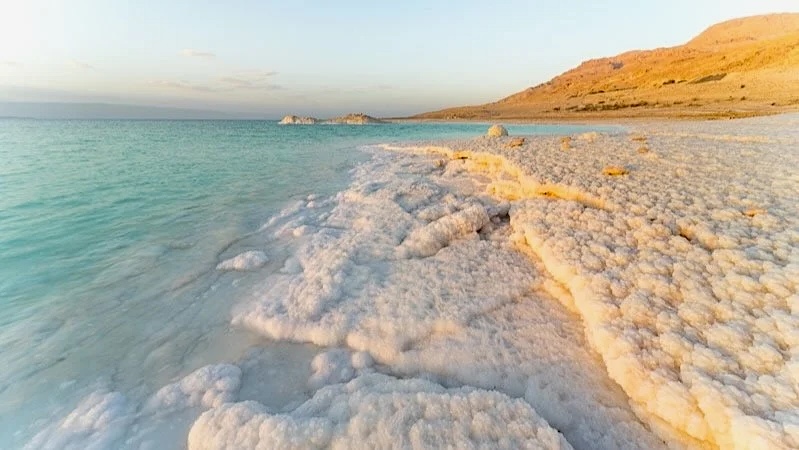
After days of dusty pipeline route surveys, we carved out a precious day and a half. We drove west from Amman, descending into the Jordan Rift Valley until the earth dropped away — literally. At approximately 430 metres below sea level, the Dead Sea is the lowest point on Earth. We checked into a resort right on the shore with infinity pools overlooking the Israeli mountains. The hypersaline water felt like warm, oily silk; you literally float without trying. We slathered ourselves in the famous black mineral mud, laughed like kids, and watched the sunset paint the cliffs fiery orange.
Another mind-blowing fact: As you drive along the road hugging the Dead Sea, the elevation drops to roughly -350 to -390 metres below sea level. Suddenly it sinks in — you are driving deeper than the floor of many parts of the Atlantic, Pacific, or Indian Ocean. That realisation gives you an eerie, unforgettable thrill.
Overnight in Petra: A Rose-Red City Under Winter Skies
The next morning, we pushed south to Wadi Musa. We’d booked the Mövenpick Resort Petra – a beautiful 5-star property that had opened in 1996, just steps from the ancient site entrance. It felt luxurious after days on the dusty road: warm rooms, excellent food, and that magical view of the mountains. We arrived in the late afternoon, checked in, and spent the evening wandering the hotel’s gardens under a clear, freezing sky. Stars popped like diamonds overhead.
Petra at Last: The Siq, the Treasury & a Full Afternoon of Wonder
We woke early on 18 January and walked straight into one of the New Seven Wonders of the World. Petra – or Raqmu, as the Nabataeans called it – is pure genius carved into rose-red sandstone.
Geography first: nestled in the Sharah Mountains, the city sits in a natural basin where the Nabataeans (nomadic Arab traders) engineered an incredible water system 2,000+ years ago. Dams, channels, and cisterns turned arid desert into a thriving caravan hub on the incense route from Arabia to the Mediterranean.
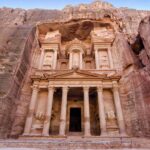
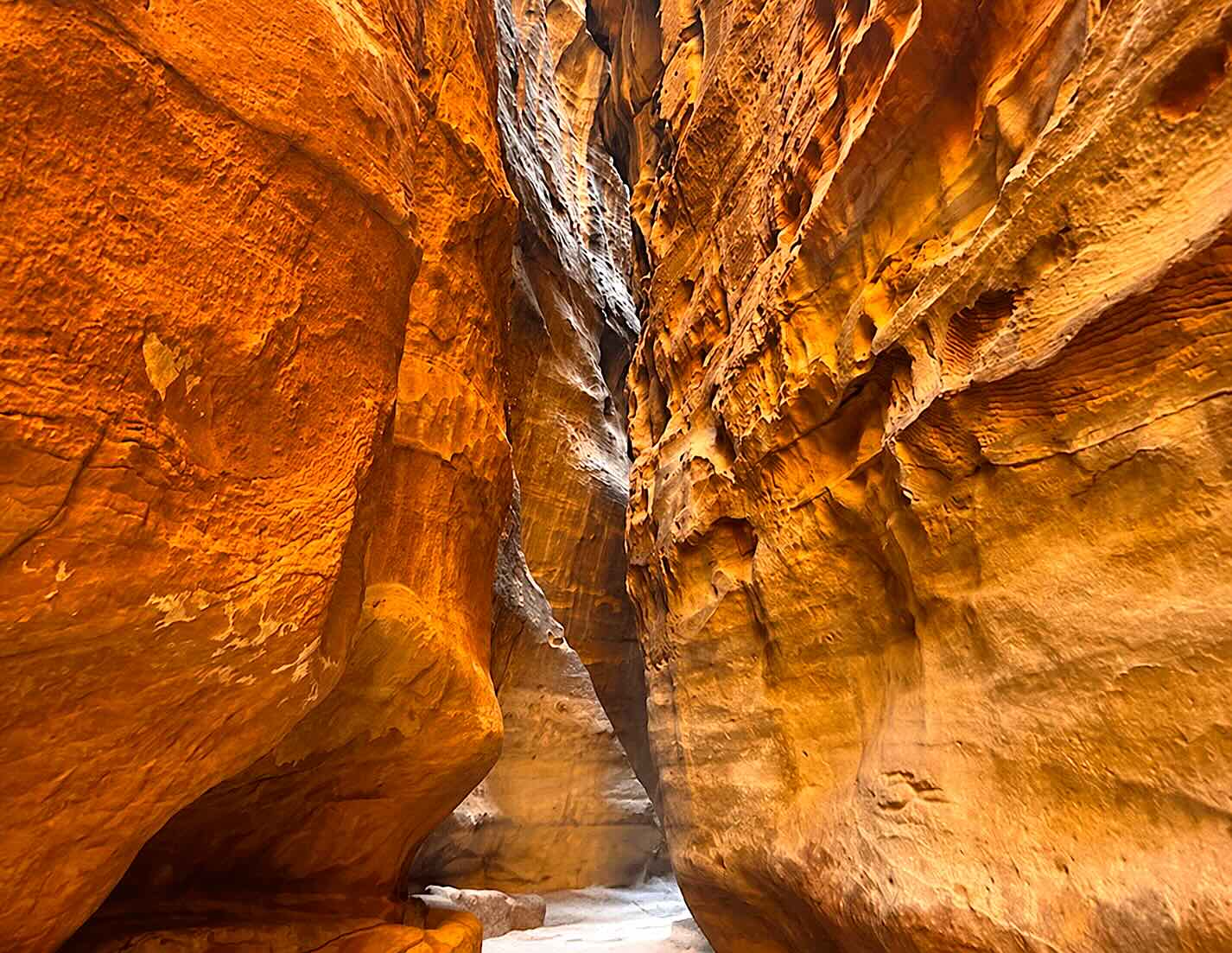
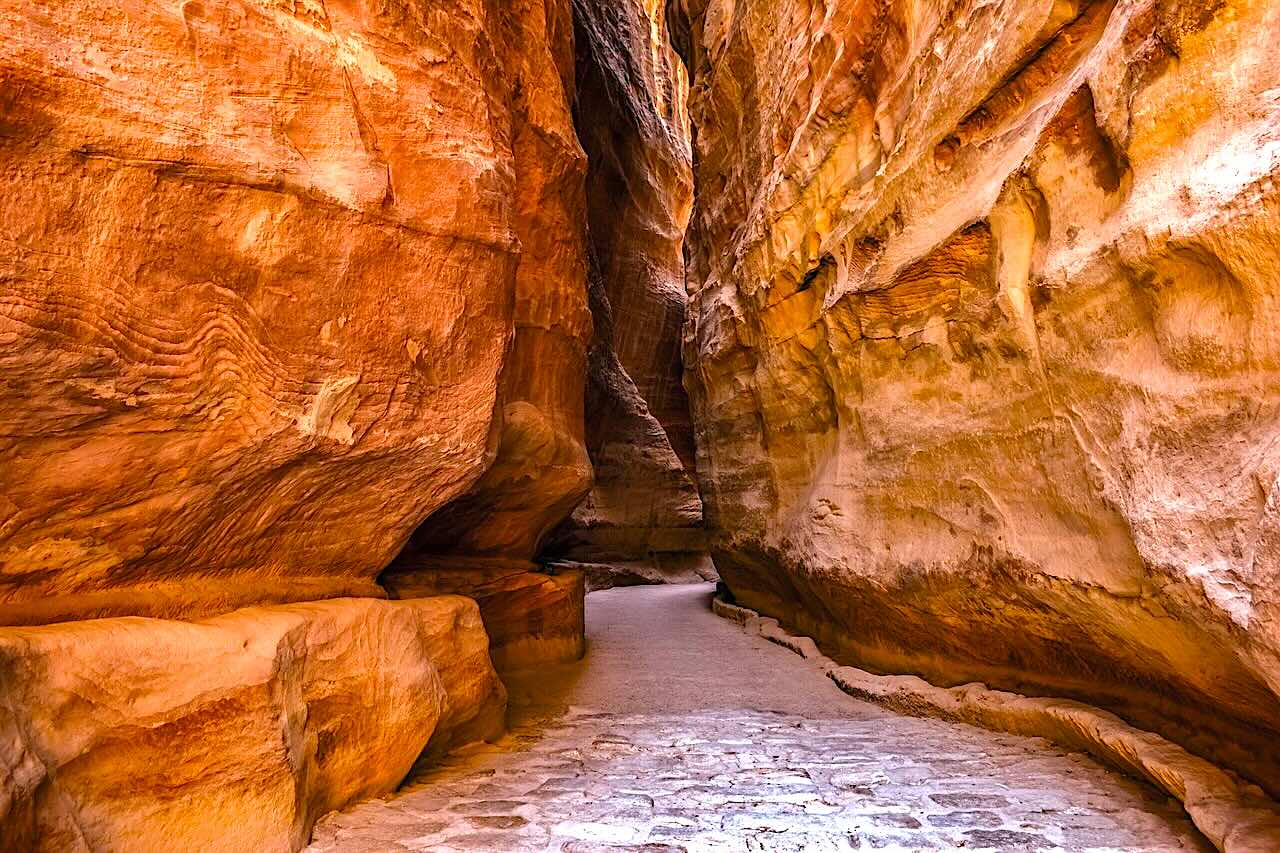
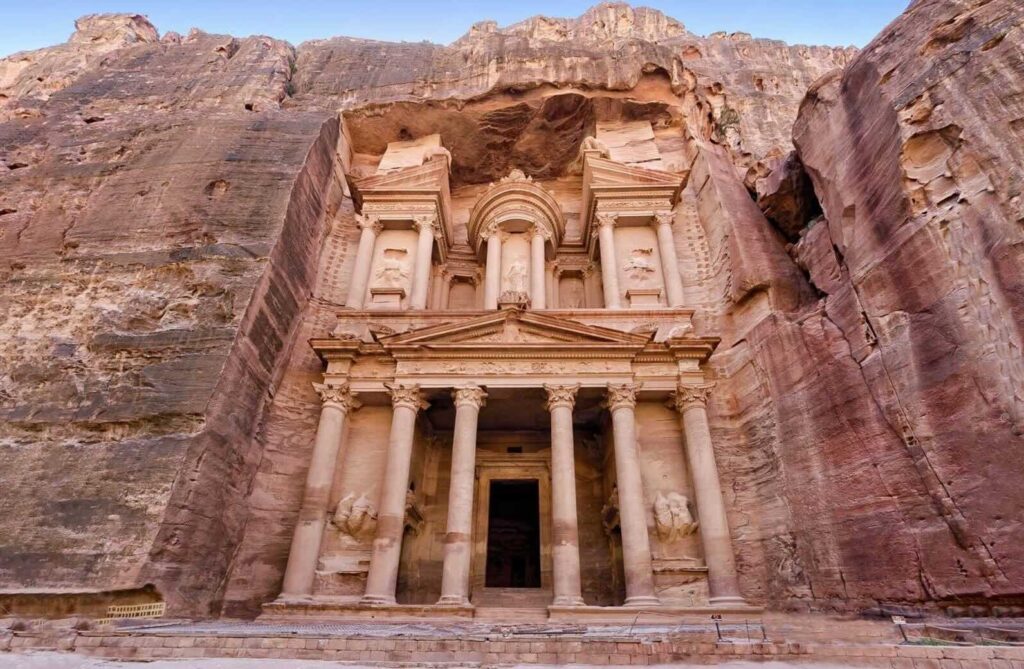
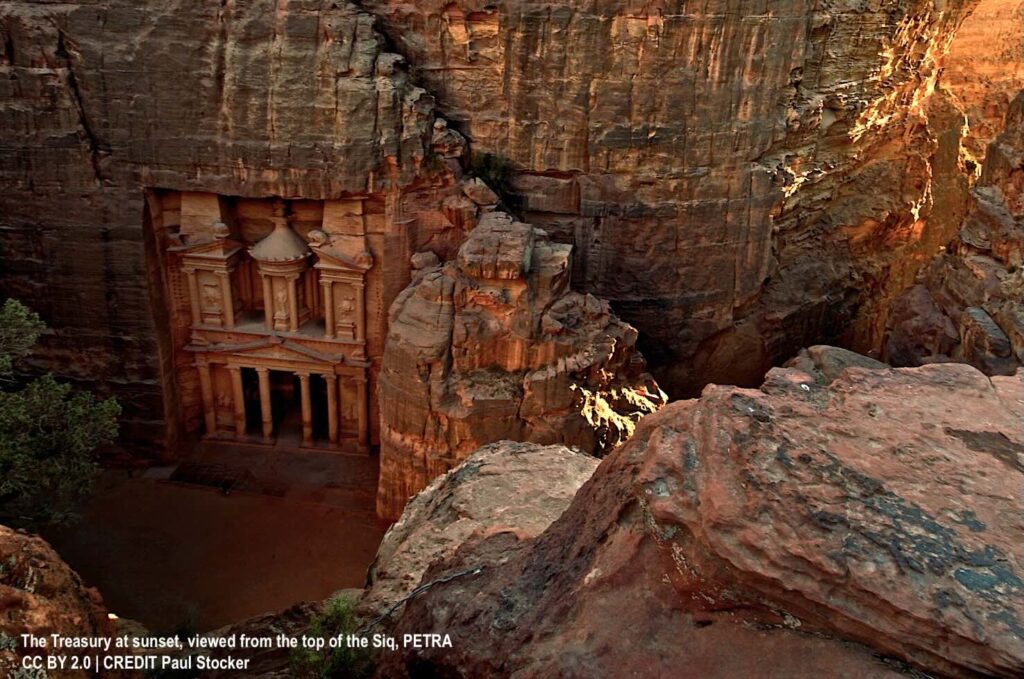
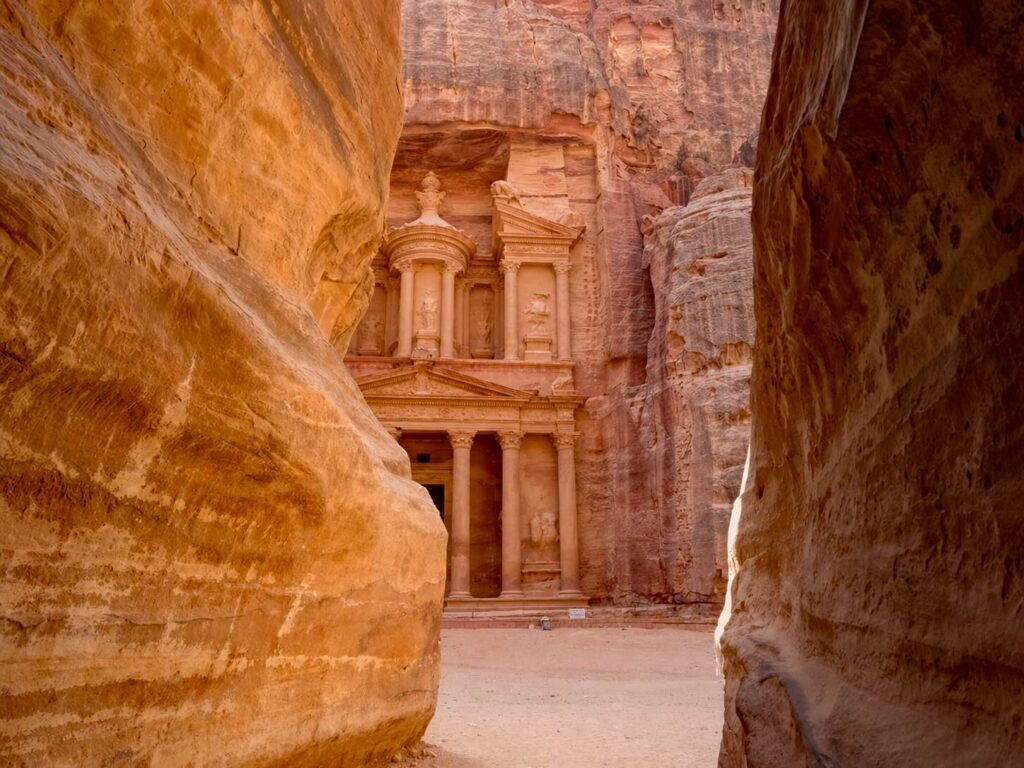
We entered through the legendary Siq – that dramatic 1.2 km sandstone gorge with towering 80–100 metre walls. The light played tricks, shifting from cool shadow to golden glow. Then came the breathtaking reveal: Al-Khazneh, the Treasury. That iconic façade burst into view exactly as the sun hit it. Hellenistic columns, urn on top, mythical figures – all carved from the living rock. We stood there, speechless.
(Note: Even in 2002 we couldn’t go inside. The interior is a plain, empty chamber – no treasures, just bare sandstone and a few side rooms. Barriers have protected it for decades.)
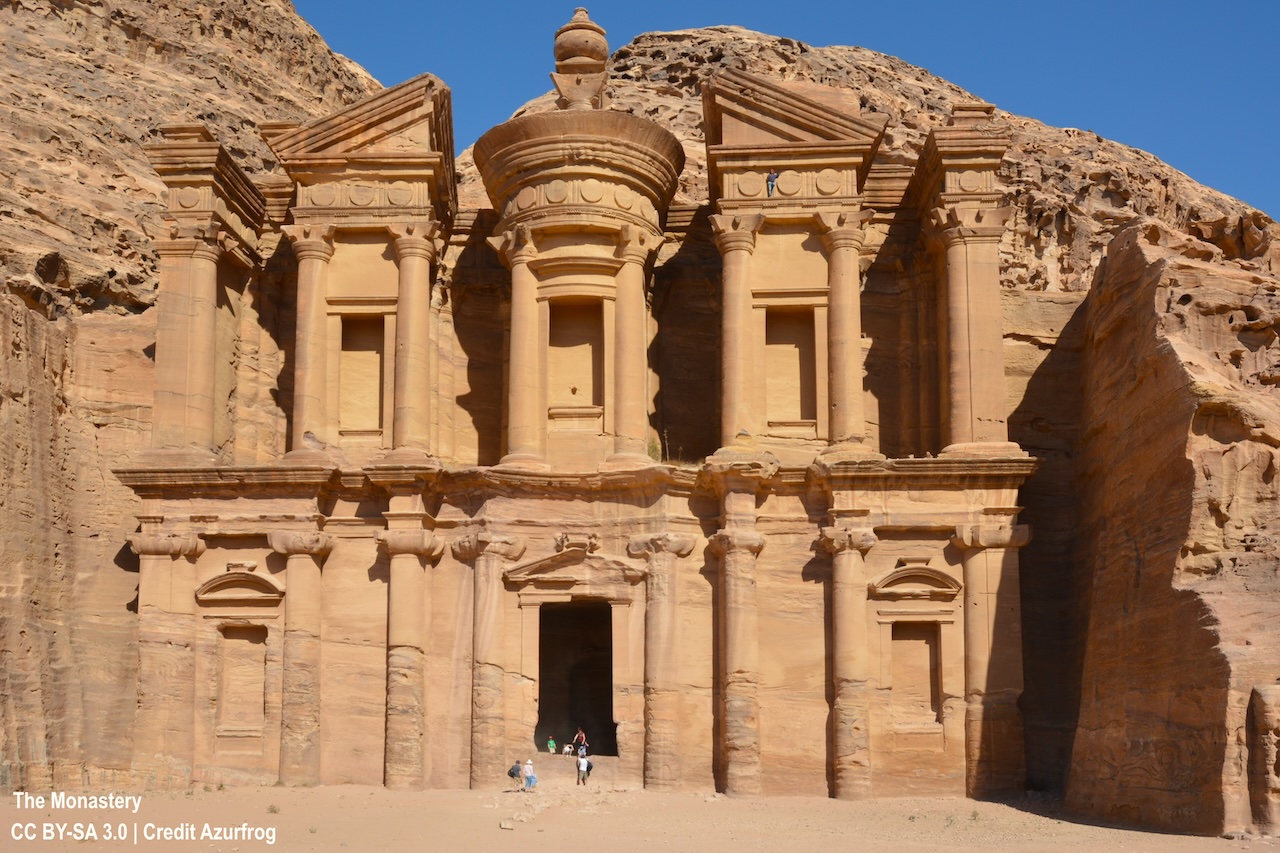
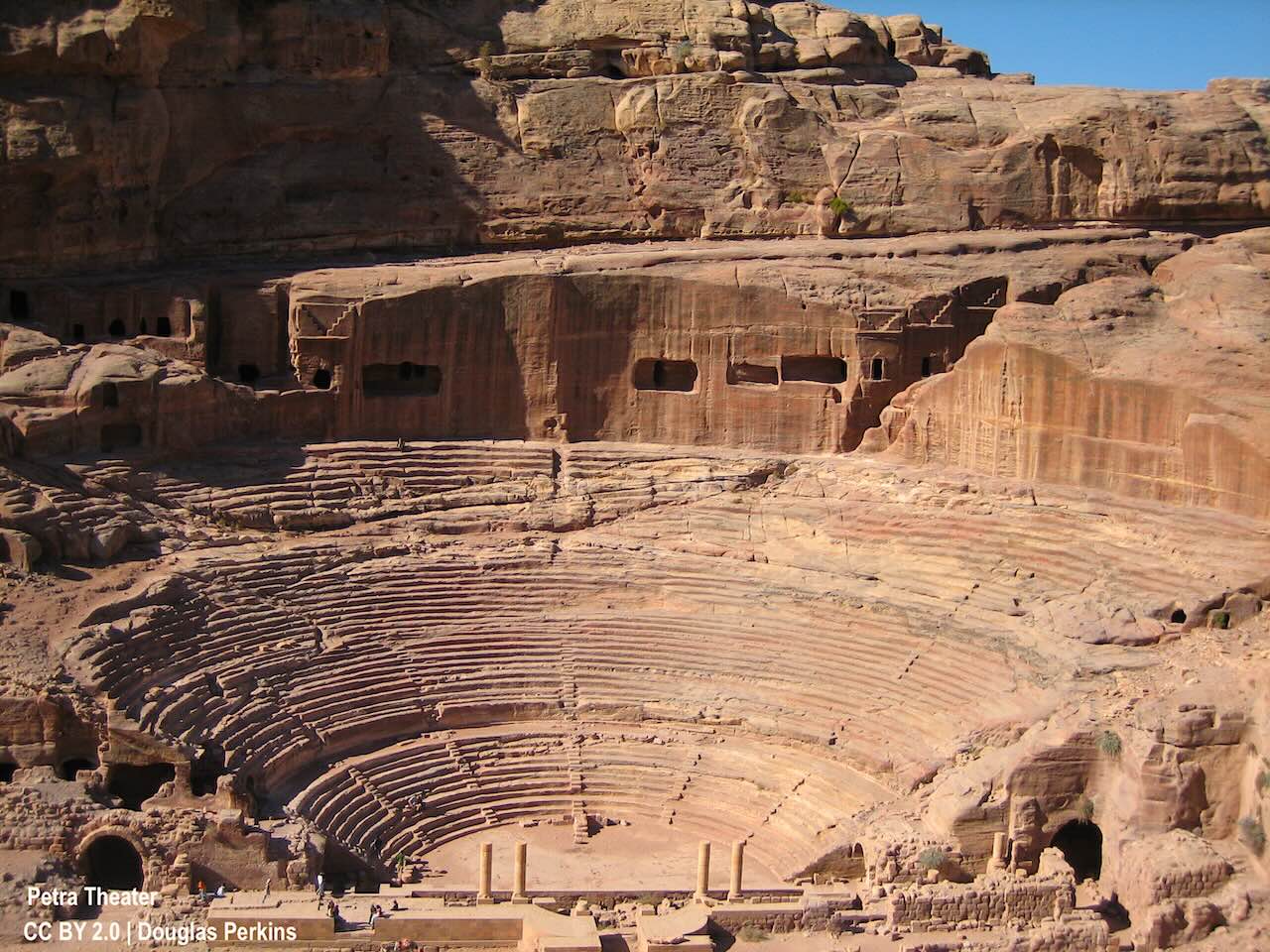
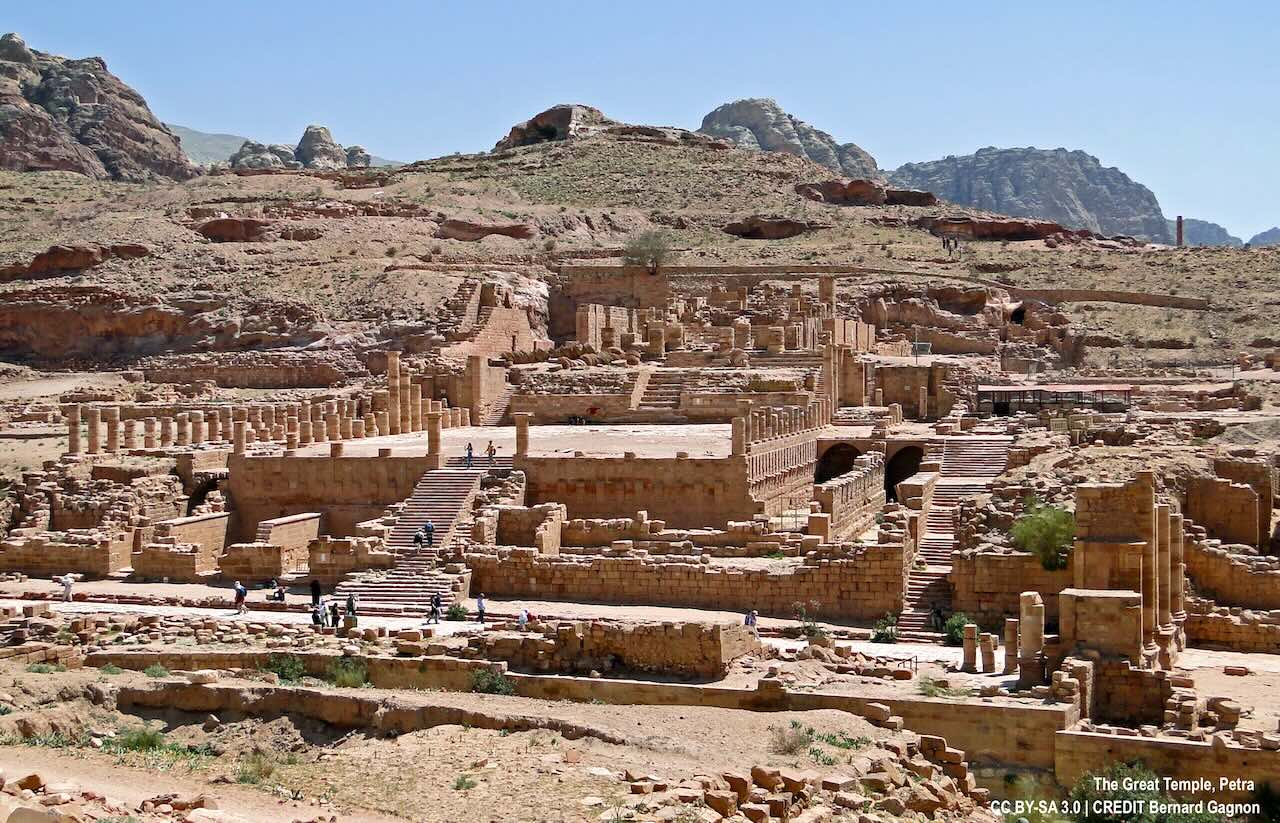
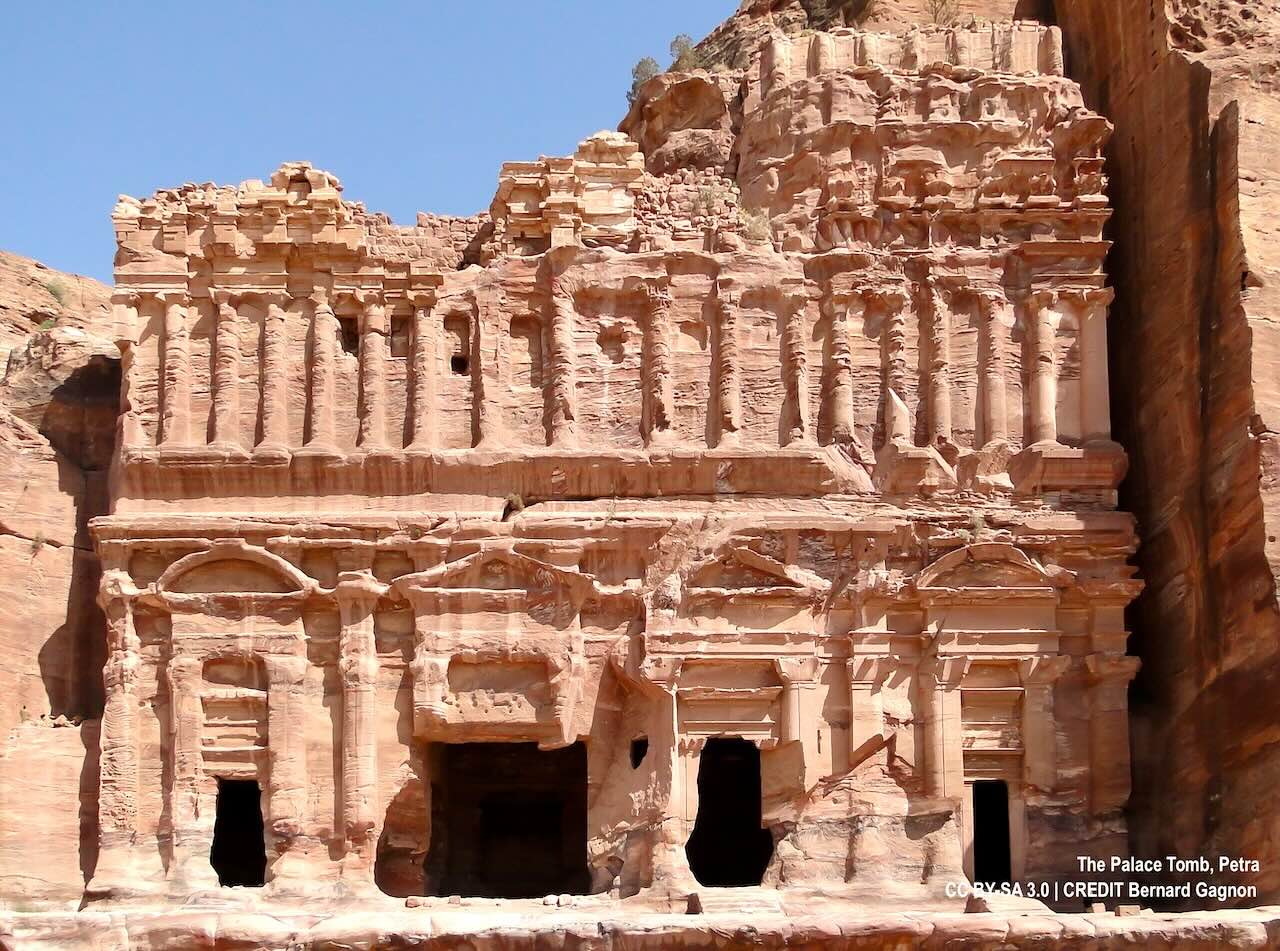
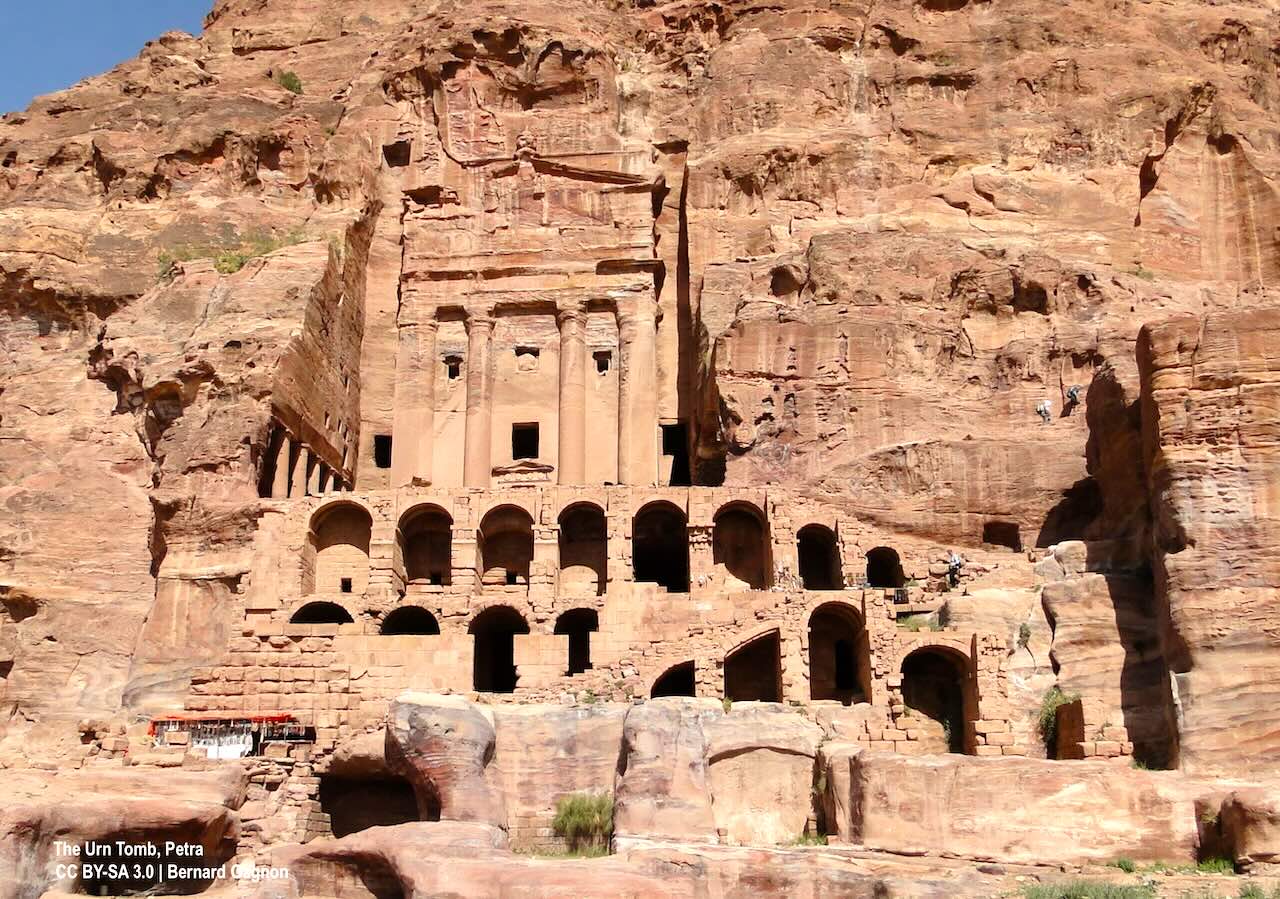
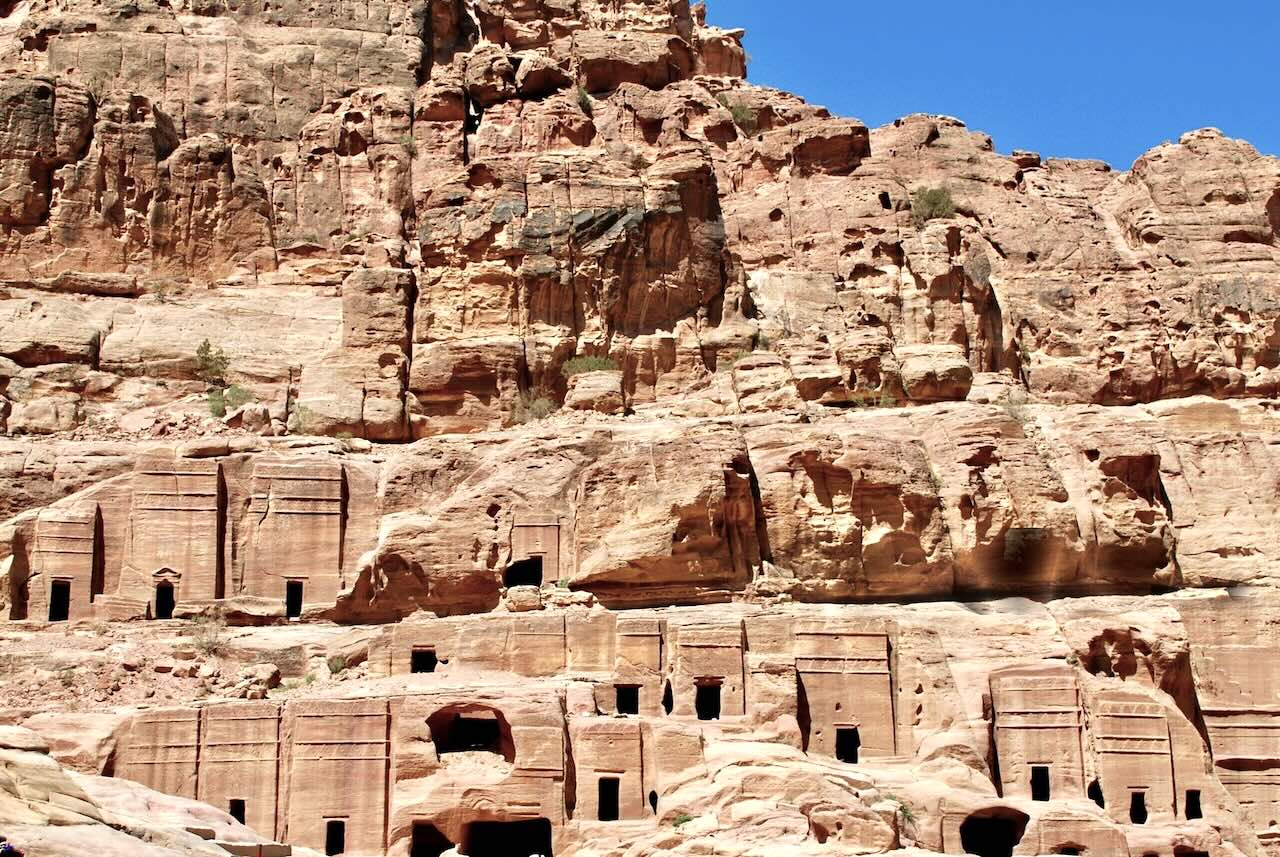
We spent the entire afternoon exploring: the Street of Façades, the 8,000-seat Theatre, Royal Tombs, and the climb up to Ad-Deir (the Monastery) for those jaw-dropping panoramic views. The Nabataean civilisation was astonishing – Arab ingenuity blended with Greek, Roman, and Assyrian influences. The site felt alive with their ghosts.
And the snow? Exactly as I remember none inside the valley itself (the basin stayed mostly clear), but the higher plateaus and the road back north to Amman had that magical light dusting. The drive home that night was dramatic – headlights cutting through cold air, snow sparkling on the roadside hills, the whole landscape feeling otherworldly after a day among 2,000-year-old ruins. We rolled into Amman late, exhausted but buzzing.
Why I’m Writing This Now – And Why You Should Go
A friend recently asked me for details about that memorable Petra afternoon as he plans his own trip. That question, along with my own desire to return to Jordan soon, sent me digging through old notes and photos.
Twenty-four years later, the world has changed dramatically. Saddam is gone, the pipeline we surveyed was never built, and Petra sees far more visitors. Yet the magic remains completely intact. The Treasury still takes your breath away. The Dead Sea still lets you float like a cork. And that winter light on rose-red rock? It is every bit as unforgettable.
If you’ve been thinking about visiting Jordan, now is a wonderful time. The country remains safe, welcoming, and full of wonders.
Deep Dive into Petra: History, Geography, Culture & Heritage of the Nabataean Civilisation
Petra (from Greek petra, meaning “rock”; ancient Nabataean name Raqmu) is one of the world’s most extraordinary ancient cities and a UNESCO World Heritage Site since 1985. It’s also one of the New Seven Wonders of the World.
Geography
Petra sits in southern Jordan’s rugged mountain desert, about 250 km south of Amman and midway between the Dead Sea and Red Sea. It occupies a natural basin in the Sharah Mountains, carved into rose-red and purple-veined sandstone cliffs along the narrow Wadi Musa (“Valley of Moses”) gorge. The site spans roughly 264 square km of canyons, wadis, and high plateaus. Its dramatic Siq – a 1.2 km-long, 80–100 m-deep natural sandstone canyon – serves as the main entrance, creating a sense of discovery that feels almost cinematic.
History & Nabataean Civilisation
Inhabited since prehistoric times (~7000 BC), the area became the capital of the Nabataean Kingdom around the 4th–2nd century BC. The Nabataeans were nomadic Arab Bedouin traders who transformed this arid wilderness into a thriving caravan hub. They controlled key incense, spice, and silk routes linking Arabia, Egypt, India, and the Mediterranean. At its peak (1st century BC–1st century AD), Petra housed 10,000–30,000 people with sophisticated infrastructure.
The Nabataeans’ genius lay in water engineering – an ingenious system of dams, channels, cisterns, and conduits that captured every drop of scarce rainfall, turning desert into gardens and supporting baths, fountains, and agriculture. They blended local Arab traditions with Hellenistic, Assyrian, and later Roman influences after the kingdom was peacefully annexed by Rome in 106 AD. Earthquakes, shifting trade routes, and the rise of sea trade led to gradual decline by the 8th century AD. Forgotten for centuries, Swiss explorer Johann Ludwig Burckhardt “rediscovered” it in 1812 (disguised as a pilgrim).
Culture & Heritage
Nabataean society was sophisticated and tolerant. Their rock-cut architecture – tombs, temples, theatres, and “high places” (sacrificial altars on mountain tops) – showcases masterful engineering and artistry. Influences appear in the Treasury’s Corinthian columns and urns, or the Monastery’s vast façade. They worshipped deities like Dushara and Al-Uzza, practiced advanced astronomy and metallurgy, and left behind Aramaic inscriptions. Petra’s heritage reflects a lost civilisation that mastered desert survival, international trade, and cultural fusion – a testament to Arab ingenuity long before the Islamic era.
An Intriguing Historical Parallel
It is striking how several great civilisations — Petra’s Nabataeans around the 8th century, the Sailendra Dynasty who built Borobudur (Buddhist) and the Sanjaya Dynasty who built Prambanan (Hindu) in Java, the Classic Maya in the 8th–9th centuries, and the Khmer Empire at Angkor — all saw their grandest achievements fade within a relatively short historical window. What’s equally remarkable is that most of these magnificent sites were largely forgotten by the outside world and only rediscovered in the 19th century: Petra in 1812, Borobudur in 1814, the great Maya cities in the 1840s, and Angkor widely publicised in 1860. Nature, changing trade routes, climate shifts, and human pressures often proved stronger than even the most impressive stone and ingenuity.
Fun Fact: The “Treasury” name comes from a local legend that the urn on top held Pharaoh’s treasure. Bedouins even shot at it hoping coins would fall out!
Lawrence of Arabia Connection: T.E. Lawrence used nearby Wadi Rum as a base during the 1917 Arab Revolt. He called it “vast, echoing and God-like.” The 1962 film Lawrence of Arabia was shot extensively there.
Tips from My January 2002 Trip – What You Should Know
Petra isn’t just a tourist tick-box. It’s a reminder that civilisations rise and fall, but human curiosity and ingenuity endure. Whether you’re chasing ancient wonders, floating in the Dead Sea, or simply escaping the ordinary, Jordan in winter delivers drama, beauty, and a story worth telling.
Suggested 4-Day Tour Plan: Dead Sea → Petra → Wadi Rum
Day 1: Arrival & Dead Sea Stay
Drive from Amman (~1 hour). Float in the Dead Sea, enjoy mud therapy, and watch the sunset. Overnight at a resort like Mövenpick or Hilton Dead Sea.
Day 2: Full-Day Petra Exploration
Transfer to Wadi Musa. Stay at Mövenpick Resort Petra. Enter via the Siq at sunrise. Explore the Treasury, Street of Façades, Theatre, Royal Tombs, and hike to Ad-Deir (Monastery) for panoramic views. Give yourself 6–8 hours.
Day 3: Wadi Rum Desert Adventure
Drive south (~1.5–2 hours). Jeep safari or camel trek through red dunes and towering mountains. Visit Lawrence’s Seven Pillars of Wisdom. Overnight in a luxury desert camp with stargazing.
Day 4: Return or Extension
Morning in Wadi Rum, then back to Amman or Aqaba.
Best Time to Visit
Spring (March–May) and autumn (September–November) are ideal: pleasant temperatures (18–28°C), blooming landscapes, and comfortable hiking in Petra and Wadi Rum. My January 2002 trip showed winter can be magical with fewer crowds and rare snow on the highlands, but pack layers. Avoid peak summer (June–August) due to extreme heat (up to 40°C+).
January can be a wonderful time to visit Petra — cooler temperatures, dramatically fewer crowds, and a real chance of seeing the rose-red rocks dusted with snow on the surrounding highlands. The light is softer, the colours deeper, and the atmosphere feels more magical than in the scorching summer months.
However, it is mid-winter, so you must come prepared. Daytime temperatures typically hover around 8–12°C (46–54°F), with nights often dropping to freezing or below. Frost is common, and light snow on the higher trails is possible. January is also Petra’s wettest month, though rain usually falls on only about five days. When it does rain, it can arrive in sudden, heavy downpours.
Essential Packing List for January:
- Warm layers (base layers, fleece, and a good windproof/waterproof jacket)
- Sturdy walking shoes with excellent grip (the rocks get very slippery when wet)
- Rain gear (poncho or proper rain jacket)
- Gloves, hat, and a warm scarf
- A small daypack with a change of clothes
Important Safety Note:
Be extremely cautious of flash floods. The Siq and many canyons were carved by these torrents over thousands of years. Heavy rain can turn the Siq into a riverbed very quickly, and the site may close for safety. Always follow official warnings and your guide’s advice.
Dress in layers, stay flexible, and you’ll enjoy one of the most atmospheric and uncrowded experiences possible at Petra.
Stay at the Mövenpick Petra (or Petra Marriott) for convenience and comfort.
Hire a guide for the first half-day in Petra; then wander freely.
The site is huge – wear good shoes and give yourself a full day.
International Connectivity
Fly into Queen Alia International Airport (AMM) in Amman, the main hub with direct flights from Europe, Asia, the Middle East, and North America (Royal Jordanian and many others). Aqaba’s King Hussein Airport is handy for southern extensions.
Mode of Transport
Private driver with a comfortable car/van is the best and most common choice (English-speaking drivers are widely available and professional — exactly as we had in 2002). Roads are excellent. Self-drive is possible but less relaxing for long distances. Taxis and shared vans work for short hops; organised tours are efficient for Petra + Wadi Rum.
Buy the Jordan Pass online in advance — covers Petra (1–3 days), visa for many nationalities, and 40+ sites.
Food
Jordanian cuisine is delicious and welcoming: mansaf (lamb with yogurt sauce over rice — the national dish), mezze platters (hummus, falafel, tabbouleh, baba ganoush), fresh grilled meats, and sweets like knafeh. Meals are communal and generous. Most food is halal. Vegetarian options are plentiful.
Recommended Hotels (Comfortable & Memorable)
Amman: Fairmont Amman, Four Seasons, or InterContinental — modern luxury with great city views.
Dead Sea: Kempinski Hotel Ishtar Dead Sea, Mövenpick Resort & Spa Dead Sea, or Hilton Dead Sea Resort & Spa — infinity pools, spas, and direct beach access.
Petra: Mövenpick Resort Petra (my 2002 choice — unbeatable location right at the entrance) or Petra Marriott.
Wadi Rum: Luxury bubble camps or traditional Bedouin camps like Sun City Camp or Bespoke Hideaways — stargazing heaven.
Culture & Heritage
Jordan is warm, hospitable, and predominantly Muslim with a rich mix of Bedouin, Arab, and ancient influences. The Nabataean legacy at Petra highlights incredible engineering and trade. Respect for elders, generosity (tea/coffee offers are constant), and family is central. modest dress (especially at religious sites) and right-hand etiquette for eating/showing respect are key.
Travel Tips, What to Do & What to Avoid
Do:
- Accept hospitality (tea/coffee) graciously; gently shake your cup side-to-side when full.
- Hire a local guide for Petra’s deeper stories.
- Buy the Jordan Pass in advance.
- Carry cash for small sites/shops.
- Learn basic Arabic: “Shukran” (thank you), “Salam” (hello).
Avoid:
- Public displays of affection, especially in conservative areas.
- Eating/drinking in public during Ramadan.
- Left hand for eating or gesturing.
- Discussing sensitive politics uninvited.
- Revealing clothing at sites (shoulders/knees covered).
- Wasting food — it’s seen as disrespectful.
Language:
English is widely spoken in tourist areas, hotels, and by drivers/guides. A smart English-speaking private driver (as we had) makes everything seamless.
Petra reminds us that civilisations rise, innovate, and fade — but their wonders endure. Whether you go for history, adventure, or pure beauty, Jordan delivers. My 2002 trip remains one of my most cherished memories. Now it’s your turn.
Have you visited or planning to? Share below — happy to answer questions!
References:
If you want deeper access, some 3D virtual tours or laser-scanned models exist online (e.g., from recent projects). Otherwise, focus on the other tombs and the Monastery (Ad-Deir), where you can walk inside many chambers. Let me know if you’d like more on those!
Google Street View Trek of Petra: Virtual walking tour → https://www.google.com/maps/about/behind-the-scenes/streetview/treks/petra/
UNESCO Petra Maps: High-level site boundary → https://whc.unesco.org/en/list/326/maps/
Official maps & trails: https://www.visitpetra.jo/en/page/18/Archeological-Maps and https://www.visitpetra.jo/en/page/59/PETRA-Digital-Offline-Map
Tattvam News is a trusted digital news platform delivering accurate, timely updates on national, international, politics, business, sports, entertainment, Travel, and technology.