9 Divine Temples to Visit During Navratri That Are Believed to Fulfil Every Wish
Updated on May 15, 2026
Adi Shakti Maa Durga is the primordial divine feminine energy, the supreme Adi Parashakti from whom the entire universe emerges, sustains, and ultimately dissolves. She is the dynamic power (Shakti) behind Lord Shiva, the creative force that balances preservation and destruction, and the compassionate Mother who protects her devotees from all evils. Maa Durga is worshipped because she embodies Shakti, the invincible power that triumphs over adharma, ignorance, and inner demons. By invoking her, devotees seek strength to overcome obstacles, protection from negativity, wisdom for righteous living, and the fulfilment of pure desires.
The Goddess is known by countless sacred names and forms: Durga, Parvati, Kali, Ambika, Jagadamba, Bhavani, Chandika, Tripurasundari, and the nine powerful Navdurga manifestations (Shailputri, Brahmacharini, Chandraghanta, Kushmanda, Skandamata, Katyayani, Kalaratri, Mahagauri, and Siddhidatri). Each name and form reflects a unique aspect of her infinite grace. Among the thousands of Devi temples across Bharat, these 9 Divine Temples hold special prominence during Navratri because many are ancient Shakti Peethas (sacred sites where parts of Goddess Sati’s divine body are believed to have fallen) or powerful centres where her living presence is intensely felt.
These temples are steeped in Puranic legends, centuries of unbroken worship, and miraculous traditions. During the sacred nine nights, the cosmic energy of Adi Shakti is believed to be most accessible here, making sincere darshan and prayers especially potent for wish fulfilment, spiritual upliftment, and divine blessings.
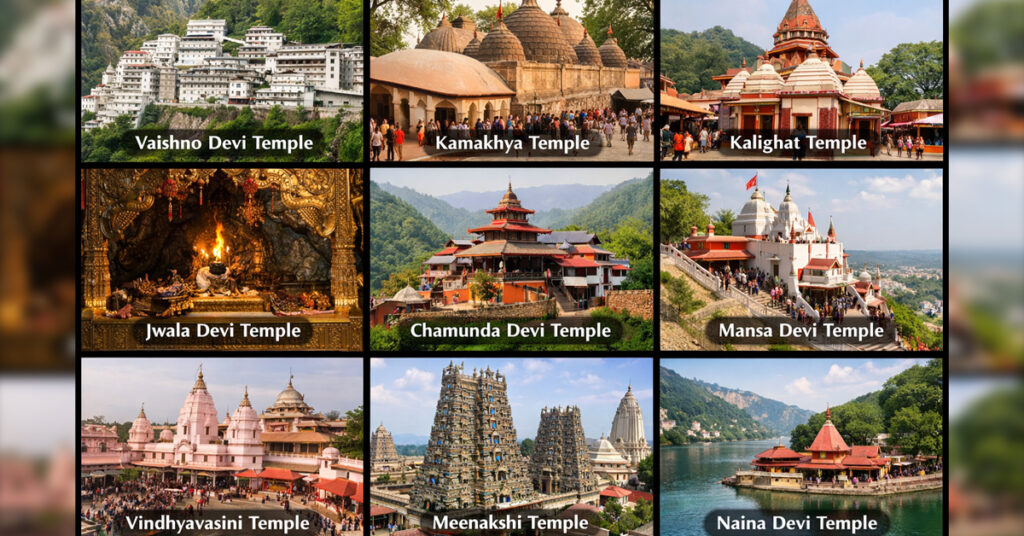
Shri Mata Vaishno Devi Temple, Jammu & Kashmir
Nestled in the Trikuta Mountains at an altitude of about 5,200 feet, this holy cave shrine is dedicated to Vaishno Devi, the combined manifestation of Mahakali, Mahalakshmi, and Mahasaraswati. Ancient belief holds that the Goddess appeared here to protect dharma and bless sincere devotees. Tradition attributes the earliest structures at the site to the Pandavas, who built temples in gratitude after receiving Her blessings (mentioned in Mahabharata lore). The sacred cave with the three Pindis (holy rock forms) was rediscovered around 700-1,000 years ago by devotee Pandit Shridhar following a divine dream.
How to reach: Reach Katra (near Jammu) by train, bus, or flight to Jammu airport. From Katra, the 13-14 km trek (or pony/helicopter option) leads to the Bhawan. Registration with the Shrine Board is mandatory.
Famous for Navratri: Massive crowds gather during both Chaitra and Sharad Navratri. Devotees believe Maa personally calls Her children here, and sincere prayers are never unanswered. It is one of the most visited shrines in India during these nine days. For more information visit: https://www.maavaishnodevi.org/
Kamakhya Temple, Guwahati, Assam
One of the most powerful Shakti Peethas, Kamakhya Temple is revered as the abode of Goddess Kamakhya (a form of Parvati), symbolising desire, creation, and feminine energy. Legend says this is where Sati’s yoni fell, making it a center of Tantric worship. No idol is present; instead, devotees worship a natural yoni-shaped stone kept moist by an underground spring. The temple’s origins trace back to ancient times (mentions from 5th century AD), with the present structure rebuilt in the 16th century by Koch king Nara Narayan (completed around 1565 AD), later patronised by Ahom kings.
How to reach: Located atop Nilachal Hill in Guwahati. Easily accessible by road from Guwahati airport or railway station (about 10-15 km). Taxis and local transport are available.
Famous for: The annual Ambubachi Mela (June), when the temple closes for three days to honour the Goddess’s symbolic menstruation. During Navratri, special tantric rituals and poojas amplify the Shakti energy, drawing devotees seeking fertility, protection, and spiritual power. For more information visit: https://www.maakamakhya.org/
Kalighat Kali Temple, Kolkata, West Bengal
This ancient Shakti Peetha is dedicated to the fierce and compassionate Maa Kali. It is believed that Sati’s right toe fell here. References to the site appear in 15th-17th century Bengali texts. The present temple structure was constructed between 1798 and 1809 under the patronage of the Sabarna Roy Choudhury family of Barisha.
How to reach: Situated in the Kalighat area of south Kolkata, it is well-connected by metro, bus, or taxi from Kolkata airport or Howrah station (about 20 25 km from airport).
Famous for: Daily worship of the fierce Dakshina Kali idol. During Navratri and Kali Puja (Amavasya after Diwali), grand celebrations and special aartis take place. Devotees come for protection from evil and to overcome fear. For more information visit: https://en.wikipedia.org/wiki/Kalighat_Temple
Jwala Devi Temple (Jwalamukhi), Kangra, Himachal Pradesh
One of the most mysterious and ancient Shakti Peethas, Jwala Devi Temple has no idol, only nine eternal flames (Jyotis) emerging naturally from rock crevices, believed to represent the nine forms of Durga. Ancient texts like the Mahabharata and Skanda Purana mention this site. Legend links it to Sati’s tongue falling here, manifesting as the divine fire. The flames have burned continuously for centuries without any visible fuel, considered a living form of the Goddess.
How to reach: Located about 30 km from Dharamshala/Kangra. Accessible by road from Pathankot or Chandigarh via bus or taxi.
Famous for Navratri: Special poojas during the nine nights honour the eternal flames. Devotees offer prayers for wish fulfilment and protection, believing the Goddess appears in the form of fire. For more information visit: https://jawalaji.in/
Chamunda Devi Temple, Near Dharamshala, Himachal Pradesh
Dedicated to the fierce warrior form of Durga who slayed the demons Chanda and Munda, this hilltop temple is mentioned in ancient Puranic traditions. The current structure has historical roots in the region’s hill kingdoms, with the site revered for centuries as a protector shrine.
How to reach: About 15-20 km from Dharamshala. Reachable by road; many devotees combine it with a visit to McLeodganj or Jwalamukhi.
Famous for: Navratri celebrations with special homas and aartis. It is believed to grant courage and victory over inner and outer enemies. For more information visit: https://en.wikipedia.org/wiki/Shri_Chamunda_Devi_Mandir
Mansa Devi Temple, Haridwar, Uttarakhand
This Shakti Peetha on a hill overlooking Haridwar is dedicated to Mansa Devi, the wish-fulfilling Goddess. Devotees tie threads (mannat) seeking Her blessings for health, prosperity, and fulfillment of desires. The temple has ancient roots linked to the Ganga plains Shakti traditions.
How to reach: Easily accessible from Haridwar railway station or bus stand. A cable car or trek leads to the hilltop.
Famous for Navratri: Special poojas and thread-tying rituals during the nine days. It is one of the popular stops in the Char Dham Yatra circuit. For more information visit: https://en.wikipedia.org/wiki/Mansa_Devi_Temple,_Haridwar
Vindhyavasini Temple, Mirzapur, Uttar Pradesh
Located in the Vindhya hills, this temple is dedicated to Goddess Vindhyavasini, a powerful form of Durga. It is considered a major Shakti Peetha associated with miracles and prosperity. The site has been a centre of Devi worship since ancient times, with strong Puranic references.
How to reach: About 70-80 km from Varanasi or Prayagraj. Well-connected by road; nearest railway station is Mirzapur.
Famous for: Grand Navratri melas and special darshan. Devotees believe sincere prayers here bring wealth and removal of obstacles. For more information visit: https://vindhyachalmata.com/
Meenakshi Temple, Madurai, Tamil Nadu
This architectural marvel is dedicated to Goddess Meenakshi (a form of Parvati) and her consort Sundareswarar (Shiva). The temple complex has ancient origins, with significant construction and expansion by the Pandya and later Nayak kings (major portions rebuilt in the 16th-17th centuries). It symbolises the divine union of Shakti and Shiva.
How to reach: Centrally located in Madurai city, easily accessible from Madurai airport or railway station.
Famous for: The Chithirai Festival (Meenakshi’s divine wedding) and vibrant Navratri celebrations with thousands of lamps and cultural performances. It is renowned for artistic beauty and spiritual energy. For more information visit: https://en.wikipedia.org/wiki/Meenakshi_Temple
Naina Devi Temple, Bilaspur, Himachal Pradesh
One of the 51 Shakti Peethas, this temple marks the place where Sati’s eyes (naina) are believed to have fallen. Ancient legends connect it to the Daksha Yagna story. The temple has been a revered pilgrimage site for centuries in the Himalayan region.
How to reach: Located near Bilaspur, about 100 km from Chandigarh. Accessible by road; many combine it with other Himachal Shakti shrines.
Famous for Navratri: Special nine-day poojas and fairs. Devotees seek blessings for vision (both physical and spiritual) and family well-being. For more information visit: https://srinainadevi.com/
Things to Know Before Visiting These Divine Temples
Planning a temple visit during Navratri requires devotion along with practical preparation. Here are key points every devotee should remember:
- Expect Heavy Crowds: Navratri sees massive gatherings. Plan early morning or late-night darshan to avoid long queues.
- Advance Bookings Are Essential: Book travel, accommodation, and special darshan passes well in advance, especially for high-traffic shrines like Vaishno Devi.
- Follow Temple Guidelines: Strictly Wear modest traditional attire, avoid restricted items, and respect local customs.
- Physical Readiness Matters: Temples involving treks (Vaishno Devi, Mansa Devi) require good health. Carry water, comfortable footwear, and light snacks.
- Stay Alert and Safe: Keep belongings secure, stay with your group, and follow official security instructions.
- Maintain Spiritual Discipline: Observe fasting, meditation, and prayers for inner purification and deeper connection with Maa.
- Check Weather and Local Conditions: Especially for hilly temples, review road access and weather updates before travel.
Navratri Worship Dates for the Next 12 Months (April 2026 – April 2027)
Sharad Navratri 2026 (the grand autumn festival celebrated widely across India): 11 October 2026 (Sunday) to 19 October 2026 (Monday), culminating in Vijaya Dashami / Dussehra on 20 October 2026.
Chaitra Navratri 2027 (also known as Vasant Navratri, marking the Hindu New Year): 7 April 2027 (Wednesday) to 15 April 2027 (Thursday), ending with Ram Navami.
Why Temple Visits During Navratri Hold Special Power
Navratri is a sacred time when cosmic energies align with human devotion. Visiting these temples is believed to strengthen spiritual bonds, remove negative energies, restore mental peace, and help achieve righteous goals. Each form of Maa Durga blesses devotees with unique graces from courage and protection to prosperity and inner strength.
Practical Tips for Your Navratri Temple Visit
- Book travel and stay early
- Maintain fasting and respectful conduct
- Wear comfortable traditional clothes and stay hydrated
Final Blessings
Navratri offers a divine opportunity to reconnect with our spiritual roots through faith and surrender. Visiting these nine powerful temples allows devotees to experience different aspects of Maa Durga’s sacred energy, whether seeking peace, prosperity, or life’s purpose. With unwavering belief, millions approach Her with hopeful hearts, knowing that sincere devotion can bring extraordinary blessings.
Jai Mata Di! May Maa Durga shower her infinite grace upon all devotees.