Escalating Skies: How Iranian Missiles Challenge Western Air Defence Systems
In the aftermath of the February 28, 2026, joint US-Israeli military operation against
Iran, global focus has shifted towards the real-world performance of modern air defence networks. The strikes,
conducted under the Israeli codename “Roaring Lion” and the US designation “Epic Fury,” targeted Iranian nuclear
facilities, leadership compounds, and military infrastructure.
As these operations unfolded, attention turned to the effectiveness of Western air
defence systems and China’s exported platforms deployed within Iran. While official narratives from involved parties
highlighted operational success, battlefield outcomes and open-source intelligence suggested a more complex
reality.
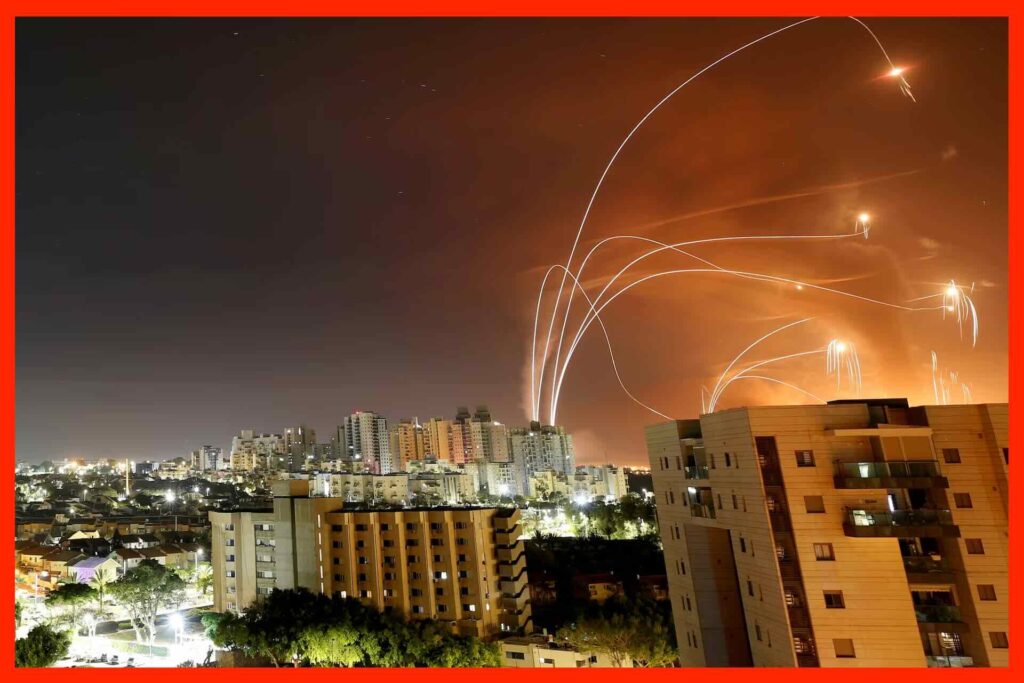
At the same time, Iran’s retaliatory missile campaign demonstrated continued ability to
penetrate layered defence networks, including Patriot, THAAD, Arrow, and Iron Dome. This analysis examines specific
incidents, operational data, and reported assessments to evaluate these developments.
US-Israeli Strikes Dismantle Chinese Air Defence Systems in Iran
Iran procured HQ-9B air defence systems from China in July 2025 under an oil-for-weapons
arrangement. These systems were intended to strengthen Iran’s air defence architecture following weaknesses exposed
during the 2025 Israel–Iran 12-day war.
The HQ-9B is marketed as a long-range surface-to-air missile system comparable to the
Russian S-300. It incorporates HT-233 engagement radars, YLC-8B anti-stealth radars, and Type 305A acquisition
radars. Together, these components form an integrated detection and interception network.
During the February 28, 2026 strikes, these systems were subjected to coordinated
electronic warfare and precision attacks. US EA-18G Growler aircraft conducted sustained jamming operations from
carrier groups, including deployments linked to the USS Abraham Lincoln. High-Speed Anti-Radiation Missiles targeted
radar emissions.
Reports indicate that four Type 305A radars and two YLC-8B units were destroyed near
Tehran and Isfahan. The HT-233 radars were heavily jammed, significantly degrading targeting capability. Iranian
state media later acknowledged “technical failures” in air defence activation.
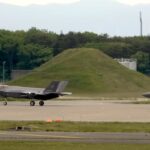
Once radar coverage was disrupted, Israeli F-35 aircraft and US Tomahawk missiles were
able to operate with limited resistance.
Neutralisation of HQ-9B Batteries and Network Failures
At least three HQ-9B batteries positioned around Natanz and Fordow were directly struck.
Israeli Air Force sorties, involving more than 200 aircraft, targeted launchers, command centres, and data nodes
integrated into the HQ-9B network.
The Israeli military described the campaign as its largest operational deployment,
referred to as “Operation Genesis.” In addition to manned aircraft, low-cost drones from Task Force Scorpion Strike
were reportedly used to saturate remaining defences.
According to Global Defense Corp analysis, compatibility issues between Chinese systems
and Iran’s existing data-link architecture limited response speed and situational awareness. These integration
challenges compounded the impact of electronic warfare.
The campaign extended into western Iran, where SA-65 systems influenced by Chinese
technology were targeted in Kermanshah. Overall, Israeli authorities reported strikes on more than 500 military
targets, including air defence assets.
Although Chinese sources on social media denied supplying HQ-9B systems to Iran,
multiple independent reports pointed to expanded deliveries during mid-2025.
These operational outcomes reflected earlier concerns raised after India’s Operation
Sindoor in May 2025, when Chinese-origin systems deployed in Pakistan failed to prevent missile penetration.
Scale of Israeli Air Operations and Missile Suppression Efforts
On March 1, 2026, the Israel Defense Forces confirmed that the Israeli Air Force had
conducted its largest operational campaign against Iran to date. More than 200 fighter aircraft were deployed to
strike nearly 500 targets across western and central Iran.
These targets included air defence installations, ballistic missile launchers, storage
facilities, and military infrastructure. Hundreds of precision-guided munitions were released with the stated
objective of establishing air superiority and degrading Iran’s strike capabilities.
In official briefings, IDF spokesperson Effie Defrin stated that the operation had
severely damaged or disrupted the use and production of approximately 1,500 missiles from Iran’s pre-conflict
inventory. Israeli assessments had earlier estimated Iran’s missile stockpile at around 2,500 units.
According to Israeli officials, this campaign formed a central component of efforts to
reduce the scale and sustainability of Iran’s retaliatory capacity in subsequent phases of the conflict.
Iranian Retaliation Breached Patriot, THAAD, and Iron Dome
Iran’s response involved launching more than 50 ballistic missiles and drones against
Israeli territory and US bases in the Gulf region. This campaign built upon tactics employed during the 2025
conflict.
During the 12-day war in 2025, Israel claimed interception rates of approximately 86 per
cent. However, independent assessments confirmed that numerous missiles reached designated targets.
Key sites affected included Tel Aviv’s Kirya military headquarters, Nevatim airbase, and
the Haifa refinery complex. At least 28 civilians were killed and several hundred were injured. Over 530 ballistic
missiles were launched during that period, with 31 impacting populated or strategic areas.
In the 2026 exchanges, similar patterns were observed. THAAD batteries deployed by the
US reportedly fired more than 150 interceptors during the earlier conflict, yet could not fully prevent
infrastructure damage.
Iran also employed hypersonic missiles such as the Fattah, reportedly equipped with
cluster warheads. These weapons utilised manoeuvrable trajectories and high-speed profiles to complicate
interception.
Salvo launches, decoys, and mixed-weapon attacks reduced system efficiency. Overload
strategies forced defenders to expend large numbers of interceptors within short timeframes.
Attacks on US Bases and Regional Targets
Iran extended its retaliation to US military facilities in the Gulf. Targets included
the headquarters of the United States Fifth Fleet in Bahrain and Al Udeid Air Base in Qatar.
Reports indicated five to six explosions inside protected zones despite Patriot air
defence deployments. Although casualty figures were not officially disclosed, damage assessments suggested partial
penetration of defensive perimeters.
In May 2025, a Houthi-linked missile supported by Iran breached combined THAAD and Arrow
coverage near Ben Gurion Airport. Eight people were injured, and transport infrastructure was damaged.
IRGC General Mohsen Rezaei publicly stated that these incidents demonstrated
vulnerabilities in American missile defence coverage, particularly against cluster and saturation attacks.
Iranian Strikes on US Radar Infrastructure in the Gulf
During Iran’s retaliatory strikes on February 28, 2026, launched after US-Israeli
operations that resulted in the killing of Supreme Leader Ayatollah Ali Khamenei, Iranian forces targeted key
American radar and communication assets across the Gulf region.
At Naval Support Activity Bahrain, which hosts the headquarters of the United States
Fifth Fleet, a Shahed-136 drone and a ballistic missile struck a radar or communication dome. The attack caused
partial structural damage amid multiple interceptions. No US casualties were officially reported.
In Qatar, Iranian missiles targeted Al Udeid Air Base, the forward headquarters of
United States Central Command. The IRGC claimed that its forces had completely destroyed the high-value AN/FPS-132
early warning radar, estimated at approximately USD 1.1 billion and capable of detecting targets at ranges of up to
5,000 kilometres.
Qatari authorities confirmed that missile debris and intercepted projectiles caused
limited damage within the base perimeter. However, widely circulated visual evidence also showed several
interception failures and direct impacts. Officials stated that most incoming threats were neutralised and that core
operational functions remained intact.
These coordinated attacks underscored the exposure of high-value US surveillance and
missile defence infrastructure to precision and saturation strikes, despite layered defensive coverage across the
region.
Economic and Strategic Costs of Missile Defence Operations
The financial burden of sustained missile defence has emerged as a major factor in the
conflict. Interceptor missiles used by systems such as THAAD, Arrow, and Patriot cost between several hundred
thousand and several million dollars per unit.
During the 2025 war, Israel reportedly depleted nearly two years’ worth of THAAD
reserves. Replacement required extensive US logistical and financial support.
The conflict resulted in estimated losses of approximately USD 20 billion for Israel.
More than 80 drones were intercepted, while interceptor stockpiles were heavily reduced.
Iran’s approach, using lower-cost missiles and drones, created an economic imbalance.
The cost-exchange ratio consistently favoured the attacker.
Furthermore, continuous high-alert operations increased maintenance demands and operator
fatigue, affecting long-term readiness.
Implications for Global Defence Markets and Strategy
The events of 2025 and 2026 highlight structural limitations in modern missile defence
doctrine. Neither Chinese export systems nor Western flagship platforms demonstrated complete reliability under
sustained, multi-domain pressure.
China’s HQ-9B, once promoted as a competitive alternative to Russian and Western
systems, suffered reputational damage following its performance in Iran and Pakistan-linked deployments.
At the same time, repeated penetrations of Israeli and US defences challenged prevailing
assumptions about comprehensive defensive coverage. Official interception claims were frequently contradicted by
satellite imagery, damage assessments, and civilian footage.
Iran’s operational approach—using older missile stockpiles to exhaust adversary
resources—reflected long-term planning aimed at weakening defensive sustainability before deploying advanced
systems.
Evolving Missile Warfare and Defence Realities
The February 2026 escalation reinforced the reality that no air defence system
intercepts every threat. Under saturation conditions involving ballistic missiles, drones, and decoys, even the most
advanced networks fail to maintain complete effectiveness. Multi-layered systems deployed by Israel and the United
States typically record interception rates in the range of 85–95 per cent. However, during heavy and coordinated
barrages, a measurable number of projectiles routinely penetrate these defences.
However, the complete destruction of several air defence systems remains undesirable and
reflects serious systemic deficiencies, as observed in the case of Chinese-supplied platforms.
Iran’s continued reliance on mixed-age arsenals demonstrated that effectiveness does not
depend solely on advanced technology but also on deployment strategy and operational coordination.
As regional tensions persist, future conflicts are likely to involve larger drone
swarms, more sophisticated decoys, and integrated cyber-electronic attacks.
In this environment, missile defence will continue to play a critical role. However, it
cannot substitute for intelligence dominance, strategic depth, and political stability.
The 2025 – 26 Iran – Israel confrontation therefore provides a detailed case study in the
practical limits of modern air defence under sustained high-intensity warfare.
ALSO READ:
Khamenei
Killed in Airstrikes: Iran Faces Leadership Vacuum After US-Israel Strike