Escalation Near Okinawa: Chinese Jets Target Japan With Fire Control RADAR
A Dangerous Pacific Flashpoint Emerges
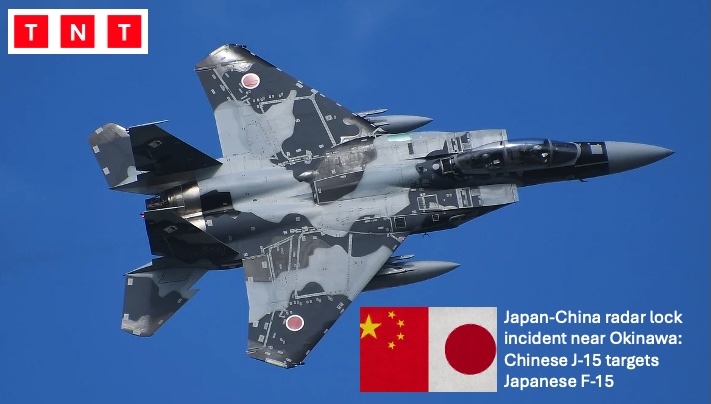
Tension in the Indo-Pacific surged sharply on 6 December 2025 after two Chinese J-15 fighter jets, launched from the aircraft carrier Liaoning, locked their fire-control radar on Japan Air Self-Defence Force (JASDF) F-15 fighters south of Okinawa. This alarming incident unfolded during intense Chinese carrier operations near critical maritime corridors linked to Taiwan. The Japan-China radar lock immediately triggered a higher alert posture in Tokyo and opened a fresh chapter in an already volatile security environment.
Japan scrambled its F-15s to monitor carrier activities in the region. What followed was not routine interaction. The Chinese jets initiated direct fire-control locking — a move that defence experts classify as a combat-ready action, not surveillance or signalling by mere presence. Therefore, the event has raised urgent questions about Beijing’s intent, Tokyo’s response trajectory, and the future of regional stability.
Exact Timeline of the Incident
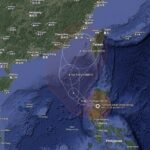
According to Japan’s Defence Ministry, the first radar lock occurred around 16:30 (4:30 p.m.) JST, lasting approximately three minutes. The second incident began around 18:37 (6:37 p.m.) JST, continuing intermittently for nearly thirty minutes. Both took place in international airspace southeast of Okinawa, an area that is central to Japan’s defence strategy and China’s expanding military footprint.
Japan’s Defence Minister, Shinjiro Koizumi, confirmed that this is the first publicly acknowledged case of Chinese aircraft targeting Japanese fighters with fire-control radar. He described the act as “dangerous” and “beyond the threshold of safe conduct,” emphasising that such manoeuvres significantly raise the risk of unintended escalation.
Why the Radar Lock Matters
When a fighter aircraft uses fire-control radar, the system calculates a firing solution for missiles or guns. This is a step taken only when preparing to engage a target. The Japan-China radar lock therefore marks a shift from competitive manoeuvring to the edge of armed confrontation.
The timing makes it even more consequential:
- China’s naval and aerial presence around Taiwan has increased sharply.
- Japan has declared that a Chinese attack on Taiwan could trigger Japanese involvement.
- The region is witnessing a transition from signalling to operational readiness.
As a result, the December 6 event has moved the security environment of East Asia into an era where miscalculation could rapidly lead to broader conflict.
Okinawa: From Buffer Zone to Potential Ignition Point
For decades, Okinawa served as the quiet buffer between Japan and China. However, recent Chinese military patterns — particularly carrier group deployments through the Miyako Strait and near Taiwan — have transformed the region’s character. The Japan-China radar lock now suggests that this zone is evolving into a potential ignition point.
Japanese analysts note that the Liaoning’s activities exhibited a level of boldness rarely seen before. The carrier did not merely transit the area. Instead, it positioned itself to conduct prolonged flight operations, including J-15 take-offs and landings that increasingly overlapped with Japan’s air defence identification zone.
China’s Response and the Battle for Narrative Control
China rejected Japan’s accusations, claiming that its pilots acted according to international law and were responding to “provocative” Japanese monitoring missions. Beijing asserted that its training operations were lawful and suggested that Japan exaggerated the threat.
However, Japan’s Defence Ministry published exact timings, aircraft types, and radar behaviour patterns, providing a level of operational detail that contradicts China’s attempt to minimise the incident. The clarity of Tokyo’s account has strengthened its credibility among regional and Western allies.
Regional Security Implications
This incident comes at a decisive moment for the Indo-Pacific:
- Australia has urged restraint and reaffirmed its commitment to regional stability.
- The United States, Japan’s primary treaty ally, is monitoring the situation.
- Taiwan views the development as additional evidence of China’s growing willingness to pressure regional forces.
If tensions rise further, supply chains, maritime routes, and alliance structures may all undergo significant transformation. Countries across the Indo-Pacific are already reassessing their defence partnerships, and this episode will accelerate that process.
A Short Fuse in the Western Pacific
The Japan-China radar lock has exposed how narrow the margin for error has become in the Western Pacific. China’s intent appears assertive. Japan’s response shows preparedness. The region is moving closer to a point where miscalculation could push major powers into confrontation.
What unfolded south of Okinawa on 6 December 2025 was more than a diplomatic dispute or an aerial encounter. It was a strategic warning that the balance of power in Asia is entering a dangerous phase — one that could shape global security for years to come.